
Tuesday, 25 Aug 2026
  • My Feed
  • My Saves
  • History
  • Contact Us
Subscribe
The News Network Africa
  • Home
  • Opinion

    The Implications of Trump’s Gold Card Proposal on U.S. Citizenship and African Countries.

    By
    Eric Mafundo

    What Can Stop the M23 Rebels from Advancing as Diplomacy fails.

    By
    Eric Mafundo

    African Development Bank Group develops original idea to present climate solutions to 30th Conference of the Parties (COP30) participants

    By
    Hayley Sky

    South Sudan president fires military chief after three months, reinstates predecessor

    By
    Hayley Sky

    Is Opposition in Uganda just A group of Social Media Content Creators or Comedians?

    By
    Eric Mafundo

    From Streets to Stardom: How Olympic Champion Tebogo Transformed His Life Through Sport.

    By
    Eric Mafundo
  • Politics
    Somali Poetry Revival: Young Artists in Mogadishu Use Buraanbur to Tackle Modern Issues

    Somali Poetry Revival: Young Artists in Mogadishu Use Buraanbur to Tackle Modern Issues

    By
    Hayley Sky
    Boxer Anthony Joshua injured in deadly car crash in Nigeria

    Boxer Anthony Joshua injured in deadly car crash in Nigeria

    By
    Hayley Sky
    Uganda sends 1,000 more soldiers to east Congo near M23 conflict, sources say

    Uganda sends 1,000 more soldiers to east Congo near M23 conflict, sources say

    By
    Reporter
    Guinea-Bissau President Issues Ultimatum: ECOWAS Mission on the Chopping Block.

    Guinea-Bissau President Issues Ultimatum: ECOWAS Mission on the Chopping Block.

    By
    Eric Mafundo
    Sudan’s fertile region where food is rotting amid famine and war

    Sudan’s fertile region where food is rotting amid famine and war

    By
    Hayley Sky
    ‘Bombed from the sky’: Nigerians decry another deadly airstrike on civilians

    ‘Bombed from the sky’: Nigerians decry another deadly airstrike on civilians

    By
    nna
  • Business

    The Future of Journalism in Africa: Insights from Reuters’ Cutting-Edge Reporting

    By
    Hayley Sky
    China benefits most from its relations with Africa: Where’s the imbalance?

    China benefits most from its relations with Africa: Where’s the imbalance?

    By
    Eric Mafundo
    Farewell to a Legend: Thousands Gather to Honor Malian Star Amadou Bagayoko.

    Farewell to a Legend: Thousands Gather to Honor Malian Star Amadou Bagayoko.

    By
    Eric Mafundo
    Social interaction is essential for healthy childhood development

    Social interaction is essential for healthy childhood development

    By
    Hayley Sky
    Mnangagwa’s Strategic Move: New Army Chief Appointed Ahead of Potential Protests in Zimbabwe.

    Mnangagwa’s Strategic Move: New Army Chief Appointed Ahead of Potential Protests in Zimbabwe.

    By
    Eric Mafundo
    The Japadhola: The Bridge Between Uganda and Kenya Through Culture, Language, and History

    The Japadhola: The Bridge Between Uganda and Kenya Through Culture, Language, and History

    By
    Churchill Nkagumaho
  • Pages
    • Advertise with US

Archives

  • August 2026
  • July 2026
  • June 2026
  • May 2026
  • April 2026
  • March 2026
  • February 2026
  • January 2026
  • December 2025
  • November 2025
  • October 2025
  • September 2025
  • August 2025
  • May 2025
  • April 2025
  • March 2025
  • February 2025
  • January 2025
  • December 2024

Categories

  • Agriculture
  • Business
  • Culture
  • Health
  • Lifestyle
  • Minerals
  • News
  • Opinion
  • Politics
  • Sports
  • Technology
  • Travel
  • Uganda
  • 🔥
  • News
  • Politics
  • Business
  • Lifestyle
  • Culture
  • Opinion
  • Travel
  • Minerals
  • Uganda
  • Health
Font ResizerAa
The News Network AfricaThe News Network Africa
  • My Saves
  • My Feed
  • History
  • Travel
  • Opinion
  • Politics
  • Health
  • Technology
  • News
Search
  • Pages
    • Home
    • Advertise with Us
  • Personalized
    • My Feed
    • My Saves
    • History
  • Categories
    • News
    • Business
    • Minerals
    • Culture
    • Opinion
    • Politics
    • Agriculture
    • Health
    • Technology
    • Travel
Have an existing account? Sign In
Follow US
© 2025 The News Network Africa. All Rights Reserved.
The News Network Africa > Blog > Culture > Uganda > The Alur: The Royal Heritage and Lakeside Culture of Uganda’s Northwestern Kingdom
Uganda

The Alur: The Royal Heritage and Lakeside Culture of Uganda’s Northwestern Kingdom

Hayley SkyChurchill Nkagumaho
Last updated: 11 July 2026 11:12
Hayley Sky
Churchill Nkagumaho
Share
The Alur: The Royal Heritage and Lakeside Culture of Uganda’s Northwestern Kingdom
SHARE

Along the shores of Lake Albert and the fertile plains of Uganda’s northwestern frontier lives the Alur, a proud Luo-speaking people whose history is deeply intertwined with one of East Africa’s oldest traditional monarchies. Known for their strong sense of identity, respect for leadership, and vibrant cultural traditions, the Alur have preserved a remarkable heritage that continues to thrive in the modern era.

Contents
Who Are the Alur?Origins and HistoryThe Alur KingdomClans and Social OrganizationLanguageTraditional HomesFood and CuisineTraditional DressMusic and DanceMarriage and Family LifeSpiritual BeliefsEconomic ActivitiesFamous Sons and DaughtersPreserving Alur HeritageDid You Know?Quick FactsConclusion

For centuries, the Alur have combined agriculture, fishing, livestock keeping, and trade with a sophisticated traditional political system centered on kingship. Their rich oral history, music, and customs have made them one of Uganda’s most fascinating cultural communities.

- Advertisement -

Today, the Alur remain proud custodians of a heritage that connects Uganda with the neighboring Democratic Republic of the Congo, where many Alur communities also live.


Who Are the Alur?

The Alur are a Luo-speaking people belonging to the Western Nilotic language family.

- Advertisement -

In Uganda, they are found mainly in:

  • Zombo District
  • Nebbi District
  • Pakwach District
  • Parts of Buliisa District

Large Alur communities also live across the border in the Democratic Republic of the Congo, making them one of the major cross-border ethnic communities in the Great Lakes region.
- Advertisement -

The Alur are among Uganda’s officially recognized cultural communities and maintain a vibrant traditional kingdom.


Origins and History

The Alur trace their ancestry to Luo-speaking migrants who moved south from the Upper Nile region several centuries ago.

As they settled around the Lake Albert basin, they established organized chiefdoms that gradually developed into the Alur Kingdom. Unlike many neighboring Luo-speaking communities, the Alur adopted a centralized monarchy while maintaining strong clan structures.

Their strategic location encouraged trade with neighboring communities such as the Acholi, Langi, Banyoro, Lugbara, and people living across present-day Congo.

Fishing, farming, hunting, and regional commerce became the foundation of their economy.


The Alur Kingdom

One of the defining features of Alur society is their traditional monarchy.

The kingdom is headed by the Rwoth, the cultural king of the Alur people.

The monarchy serves to:

  • Preserve Alur traditions
  • Promote cultural education
  • Encourage unity
  • Protect historical sites
  • Support peaceful conflict resolution

Although the kingdom does not exercise political authority, it remains an important symbol of Alur identity and cultural continuity.


Clans and Social Organization

The Alur are organized into numerous clans that form the foundation of community life.

The clan system regulates:

  • Marriage
  • Family relationships
  • Land ownership
  • Inheritance
  • Cultural ceremonies
  • Community leadership

Clan elders remain respected custodians of customary law and oral history.


Language

The Alur speak Alur (Lur), a Western Nilotic language closely related to Acholi, Adhola, and Lango.

The language is widely spoken in:

  • Homes
  • Schools
  • Churches
  • Community gatherings
  • Local radio stations

Alur oral literature includes proverbs, folktales, songs, praise poetry, and historical narratives that continue to preserve the community’s identity.


Traditional Homes

Traditionally, Alur families built circular houses using mud walls and grass-thatched roofs.

A homestead commonly included:

  • Family houses
  • Granaries
  • Livestock shelters
  • Outdoor kitchens
  • Meeting spaces

Modern brick houses have become increasingly common, but traditional compounds remain part of rural life.


Food and Cuisine

The fertile Lake Albert basin supports a wide variety of crops and fishing activities.

Traditional foods include:

  • Cassava
  • Millet
  • Sorghum
  • Sweet potatoes
  • Maize
  • Beans
  • Groundnut sauce
  • Fresh fish
  • Beef
  • Goat meat
  • Chicken

Fish from Lake Albert has long been one of the defining features of Alur cuisine.

Meals are traditionally shared among extended family members and visitors.


Traditional Dress

Modern clothing is common throughout Alur communities.

Traditional attire is still worn during:

  • Royal ceremonies
  • Weddings
  • Cultural festivals
  • Community celebrations

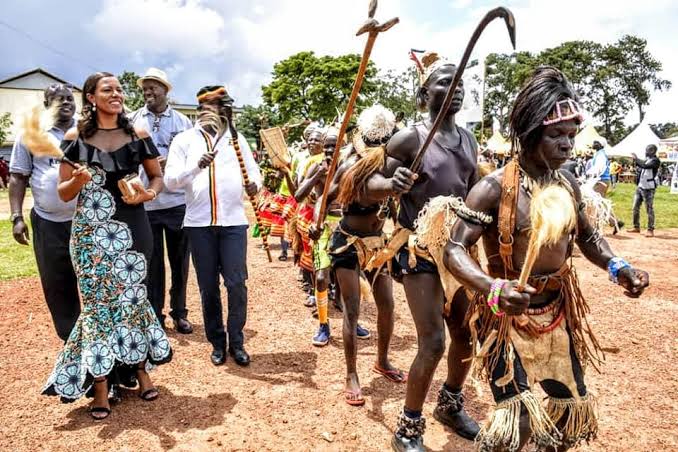
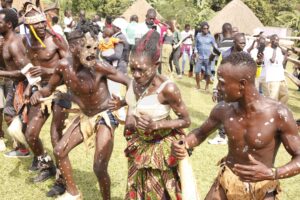
Colorful garments, beadwork, ceremonial staffs, and traditional ornaments symbolize respect for Alur heritage.


Music and Dance

Music occupies a central place in Alur culture.

Traditional performances feature:

  • Drumming
  • Singing
  • Flutes
  • Harps
  • Rhythmic dancing

Music accompanies:

  • Royal ceremonies
  • Weddings
  • Harvest festivals
  • Birth celebrations
  • Community gatherings

Songs celebrate bravery, leadership, family life, and historical achievements.


Marriage and Family Life

Marriage is regarded as an important alliance between families and clans.

Traditional ceremonies include:

  • Family introductions
  • Bridewealth negotiations
  • Blessings by elders
  • Music and dance
  • Community feasts

Bridewealth traditionally consists of cattle or other agreed gifts that strengthen family relationships.

The extended family plays an important role in raising children and preserving cultural traditions.


Spiritual Beliefs

Historically, the Alur believed in a supreme creator while honoring ancestral spirits and sacred places.

Today, Christianity is the dominant religion, particularly Catholicism and Anglicanism, although traditional cultural beliefs continue to influence family ceremonies and community customs.


Economic Activities

The Alur economy is built on agriculture, fishing, and trade.

Major economic activities include:

  • Fishing
  • Cassava farming
  • Maize cultivation
  • Tobacco farming
  • Livestock keeping
  • Cross-border trade
  • Education
  • Public service
  • Tourism

The Lake Albert fishery remains one of the region’s most valuable natural resources.


Famous Sons and Daughters

The Alur have produced respected leaders in education, religion, medicine, politics, business, and public administration.

Notable figures include:

  • Dr. Christine Dranzoa – renowned academic, conservationist, and the founding Vice Chancellor of Muni University.
  • Many Alur educators, entrepreneurs, religious leaders, and civil servants continue to contribute to Uganda’s development.

Preserving Alur Heritage

The Alur Kingdom, together with cultural organizations and educational institutions, continues to promote the Alur language, traditional dances, oral history, music, and royal customs.

Annual cultural celebrations and educational initiatives help ensure that younger generations remain connected to their heritage.


Did You Know?

  • The Alur Kingdom is one of Uganda’s officially recognized traditional cultural institutions.
  • The Alur live in both Uganda and the Democratic Republic of the Congo.
  • Fishing on Lake Albert has sustained Alur communities for centuries.
  • The Alur language belongs to the Western Nilotic branch of the Luo language family.
  • The Alur monarchy remains an important symbol of unity and cultural identity.

Quick Facts

FeatureInformation
RegionNorthwestern Uganda
LanguageAlur (Lur)
Ethnic GroupWestern Nilotic (Luo)
Cultural InstitutionAlur Kingdom
Traditional LeaderRwoth
Main Economic ActivitiesFishing, agriculture, livestock, trade
Famous LandmarkLake Albert

Conclusion

The Alur are one of Uganda’s most historically significant communities, blending a rich Luo heritage with the enduring traditions of a respected monarchy. Their language, customs, music, and lakeside way of life have shaped generations of families living along the Lake Albert basin.

As they continue to preserve their royal traditions while embracing education, conservation, and economic development, the Alur remain an important part of Uganda’s cultural identity. Their story reflects the strength of tradition, the value of unity, and the enduring legacy of one of East Africa’s oldest cultural kingdoms.

Email Us on editorial@nnafrica.com
Share This Article
Facebook Whatsapp Whatsapp Telegram Email Copy Link
Previous Article The Langi: The Resilient People of the Lango Plains and Keepers of a Proud Nilotic Heritage The Langi: The Resilient People of the Lango Plains and Keepers of a Proud Nilotic Heritage
Next Article Morocco: Where Ancient Medinas, Amazigh Heritage, and Imperial Cities Tell the Story of North Africa’s Cultural Crossroads Morocco: Where Ancient Medinas, Amazigh Heritage, and Imperial Cities Tell the Story of North Africa’s Cultural Crossroads

Latest Posts

Africa will rise to the top globally through stronger Intra-African trade, Gautam Karve, Editor-in-Chief, World Media Organization
News
The Kakwa: The Borderland People of Uganda and Keepers of a Rich Central Sudanic Heritage
Lifestyle Uganda
Nigeria: Where Ancient Kingdoms, Hundreds of Cultures, and Living Traditions Shape Africa’s Giant
Culture News
Social interaction is essential for healthy childhood development
News Opinion

Opinions

PRIDE and Family Chaos: Saying sorry heals and mends friendships
Lifestyle Opinion
The Tongue, the main reason for divorce today
Lifestyle Opinion
Constitutions must serve citizens, not political power
Opinion
ANUSHKA KARANDE: How Technology Is Creating a Better Future for Africa
Opinion Technology

You Might Also Like

The Madi: The River People of the Nile and Keepers of an Enduring Cultural Legacy
Uganda

The Madi: The River People of the Nile and Keepers of an Enduring Cultural Legacy

By
Churchill Nkagumaho
The Pian: A Legacy of Resilience and Tradition in Eastern Karamoja
Uganda

The Pian: A Legacy of Resilience and Tradition in Eastern Karamoja

By
Churchill Nkagumaho
The Banyoro: The Ancient Kingdom That Shaped East Africa’s History
CultureUganda

The Banyoro: The Ancient Kingdom That Shaped East Africa’s History

By
Churchill Nkagumaho
The Karamojong: Uganda’s Proud Pastoral Warriors and Keepers of Ancient Traditions
Uganda

The Karamojong: Uganda’s Proud Pastoral Warriors and Keepers of Ancient Traditions

By
Churchill Nkagumaho
The News Network Africa
X-twitter Facebook Rss

About US


The News Network Africa: Your instant connection to breaking stories and live updates. Stay informed with our real-time coverage across minerals, culture, politics, business, tech, entertainment, and more. Your reliable source for 24/7 news.

Top Categories
  • News
  • Opinion
  • Politics
  • Tech
  • Health
  • Travel
Usefull Links
  • Advertise with Us
  • Complaint
  • Privacy Policy
  • Cookie Policy
  • Submit a Tip

© The News Network Africa. All Rights Reserved.

Welcome Back!

Sign in to your account

Username or Email Address
Password

Lost your password?