

Few countries have captured the world’s imagination quite like Egypt. For more than 5,000 years, this extraordinary nation has stood at the crossroads of Africa, Asia, and the Mediterranean, shaping human civilization through innovation, architecture, art, religion, and scholarship.
While millions know Egypt for its pyramids and pharaohs, the country’s story extends far beyond its ancient monuments. Modern Egypt is a vibrant nation where centuries-old traditions blend seamlessly with bustling cities, colorful markets, rich cuisine, and a deep sense of cultural pride.
Stretching along the life-giving Nile River, Egypt is a place where every village, temple, and desert landscape tells a story. It is a destination where history lives not only in museums but also in everyday life, making it one of Africa’s most compelling cultural treasures.
The Nile: The River That Built a Civilization
No feature defines Egypt more than the Nile.
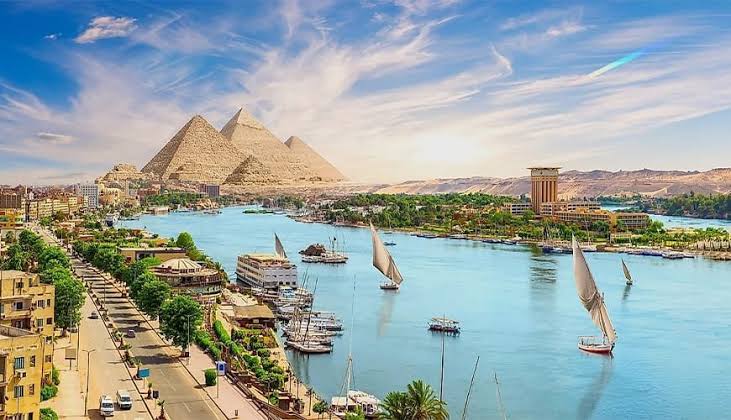
Flowing from the heart of Africa to the Mediterranean Sea, the Nile transformed an otherwise arid landscape into one of the world’s earliest centers of civilization. Ancient Egyptians depended on its annual floods to fertilize farmland, support agriculture, and connect communities.
Even today, nearly all of Egypt’s population lives close to the river. Farmers continue cultivating its fertile banks, while fishermen, traders, and river transport remain part of everyday life.
The Nile is more than a waterway—it is Egypt’s heartbeat, linking the country’s past, present, and future.
Beyond the Pyramids: The Legacy of Ancient Egypt
The Great Pyramids of Giza may be Egypt’s most recognizable landmarks, but they represent only a small part of the country’s extraordinary history.
Ancient Egypt produced remarkable achievements in mathematics, medicine, astronomy, engineering, and architecture. Monumental temples, intricate hieroglyphics, and elaborate tombs continue to reveal the sophistication of one of humanity’s greatest civilizations.
The Valley of the Kings, Luxor, Abu Simbel, and countless archaeological sites showcase a legacy that continues to fascinate scholars and travelers alike.
Egypt’s ancient heritage remains a powerful source of national pride and cultural identity.
Cairo: A City Where History Meets Modern Africa
Egypt’s capital, Cairo, is one of Africa’s largest and most dynamic cities.
Its streets combine ancient mosques, medieval markets, colonial architecture, and modern skyscrapers into a vibrant urban landscape unlike anywhere else.
The famous Khan el-Khalili Bazaar has welcomed merchants for centuries, offering handcrafted jewelry, spices, textiles, perfumes, and traditional crafts.
Alongside its historic neighborhoods, Cairo has become a center for education, business, arts, and innovation, reflecting Egypt’s role as one of Africa’s leading cultural capitals.
The Traditions That Continue to Shape Egyptian Life
Although Egypt has embraced modernization, many traditions remain deeply rooted in family and community life.
Hospitality is considered a sacred value. Guests are welcomed warmly, often with tea, coffee, and generous meals prepared for family and friends.
Respect for elders, strong family relationships, and community celebrations remain central to Egyptian society.
Religious holidays, weddings, and local festivals continue to bring neighborhoods together, preserving customs that have endured for generations.
Egyptian Cuisine: A Journey Through Thousands of Years
Food tells the story of Egypt’s diverse cultural heritage.
Traditional dishes such as koshari, ful medames, molokhia, grilled meats, fresh bread, and stuffed vegetables combine flavors influenced by Africa, the Middle East, and the Mediterranean.
Markets overflow with dates, olives, herbs, spices, and citrus fruits, while the Nile provides fresh fish enjoyed across the country.
Sharing meals is an essential part of Egyptian culture, strengthening family bonds and celebrating hospitality.
For visitors, exploring Egyptian cuisine offers an authentic taste of the nation’s rich history.
Art, Music, and Literature That Inspired the Arab World
Egypt has long been regarded as the cultural heart of the Arab-speaking world.
Its musicians, filmmakers, writers, and artists have influenced generations across Africa and the Middle East.
Traditional music featuring the oud, qanun, and tabla continues to accompany weddings and cultural celebrations, while contemporary Egyptian cinema and literature remain internationally respected.
Storytelling, poetry, and artistic expression continue to thrive, reflecting both ancient heritage and modern creativity.
The Deserts That Hold Hidden Wonders
Beyond the fertile Nile Valley lies a vast desert landscape filled with extraordinary beauty.
The Western Desert is home to dramatic rock formations and tranquil oases, while the Sinai Peninsula offers towering mountains and sacred religious sites.
For centuries, Bedouin communities have adapted to these harsh environments, preserving traditions of camel herding, desert navigation, and hospitality.
Their knowledge of the desert continues to form an important part of Egypt’s cultural diversity.
Faith and Spirituality Across the Ages
Religion has shaped Egyptian society for thousands of years.
Ancient Egypt was home to one of the world’s earliest organized religious systems. Today, Islam is the country’s predominant religion, while Egypt is also home to one of the oldest Christian communities in the world through the Coptic Orthodox Church.
Mosques, churches, and historic religious sites stand side by side, reflecting centuries of spiritual heritage.
Religious festivals and traditions continue to play an important role in community life across the nation.
A New Generation Preserving Egypt’s Heritage
Egypt’s youthful population is embracing innovation while protecting the country’s extraordinary cultural legacy.
Young entrepreneurs are revitalizing traditional crafts, promoting cultural tourism, preserving archaeological sites, and using digital platforms to introduce Egypt’s heritage to global audiences.
Universities, museums, and cultural organizations continue working to ensure that ancient knowledge remains relevant in the modern world.
This commitment to preserving history while embracing progress defines Egypt’s contemporary identity.
Why Egypt Remains One of Africa’s Greatest Cultural Destinations
Egypt is far more than a land of pyramids.
It is a country where one of humanity’s oldest civilizations continues to inspire modern life, where the Nile still nourishes millions, and where ancient traditions remain woven into everyday experiences.
Its cities blend history with innovation. Its deserts conceal timeless stories. Its cuisine reflects centuries of cultural exchange. And its people continue to celebrate a heritage admired across the globe.
For travelers seeking to understand Africa’s profound influence on world civilization, Egypt offers an unforgettable journey through history, culture, and human achievement.
From the banks of the Nile to the towering pyramids of Giza, Egypt remains a timeless reminder that Africa is home to some of the world’s greatest stories.
Email Us on editorial@nnafrica.com