

At the heart of Uganda lies a kingdom whose influence has stretched across centuries. From royal palaces and sacred cultural sites to a language spoken by millions, the Baganda have played a central role in shaping Uganda’s political, cultural, and economic identity.
As Uganda’s largest ethnic community, the Baganda are renowned for their well-organized kingdom, rich traditions, entrepreneurial spirit, and deep respect for family and culture. Their heritage continues to influence daily life far beyond the borders of Buganda.
The story of the Baganda is not just the story of one people—it is a story deeply woven into the history of Uganda itself.
Who Are the Baganda?
The Baganda are the largest ethnic community in Uganda and are indigenous to the Buganda Kingdom, located in the country’s central region.
The kingdom covers several districts, including Kampala, Wakiso, Mukono, Masaka, Mpigi, Luwero, Mityana, Mubende, Kalungu, Butambala, Gomba, Kyotera, Rakai, Sembabule, Nakaseke, and parts of Buikwe and Kayunga.
Today, Baganda communities can be found across Uganda and throughout the world, contributing to business, education, politics, religion, and the arts.
The Origins of the Buganda Kingdom
The Buganda Kingdom is believed to have emerged between the 13th and 14th centuries, growing from a collection of clans into one of East Africa’s most organized and influential kingdoms.
According to Buganda tradition, the kingdom traces its origins to Kintu, the legendary first ruler whose story remains central to Ganda identity.
Over time, successive Kabakas expanded the kingdom through diplomacy, trade, and military strength, making Buganda one of the most powerful kingdoms in the Great Lakes region before colonial rule.
The Kabaka: Symbol of Unity
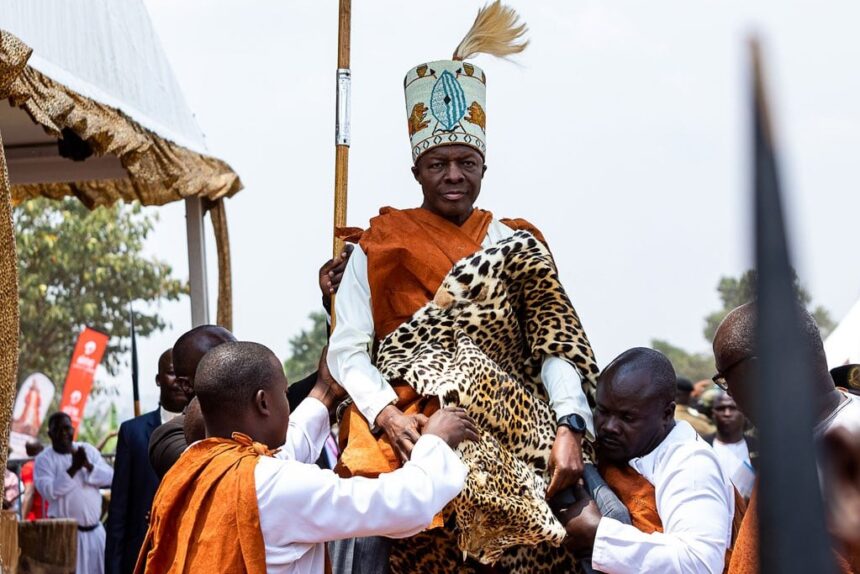
The King of Buganda is known as the Kabaka.
For centuries, the Kabaka has served as the cultural leader and symbol of unity for the Baganda people. Although the kingdom no longer exercises political authority over Uganda, it remains one of Africa’s most respected traditional institutions.
The Buganda Kingdom continues to play an important role in promoting culture, education, environmental conservation, and community development.
Clans: The Foundation of Ganda Society
One of the defining features of Buganda is its clan system.
The kingdom is traditionally made up of more than 50 clans, each with its own history, responsibilities, totems, and customs.
A person’s clan plays an important role in identity, marriage, cultural ceremonies, and family relationships.
Marriage between members of the same clan is traditionally prohibited, helping strengthen relationships between different clans throughout the kingdom.
Language
The Baganda speak Luganda, one of Uganda’s most widely spoken languages.
Luganda serves not only as the language of the Buganda Kingdom but also as a common language in many parts of Uganda, particularly in central Uganda and the capital city, Kampala.
Its rich collection of proverbs, folktales, songs, and poetry reflects centuries of cultural wisdom.
Traditional Homes
Historically, Baganda homes were constructed using reeds, poles, grass, and bark cloth.
Modern homes have largely replaced these traditional structures, but many cultural sites still preserve examples of historic Ganda architecture.
The family compound remains an important center of social life, bringing together several generations.
Food and Cuisine
Baganda cuisine is among the most celebrated in Uganda.
Popular traditional foods include:
- Matooke (steamed green bananas)
- Groundnut sauce
- Luwombo (a slow-cooked stew prepared in banana leaves)
- Sweet potatoes
- Cassava
- Posho
- Beans
- Smoked fish
- Fresh vegetables
Meals are often served on banana leaves, reflecting long-standing cultural traditions.
Traditional Dress
The Baganda have distinctive ceremonial attire.
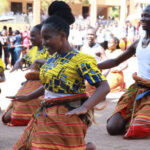
Women traditionally wear the gomesi, a colorful dress with wide sleeves and a sash tied around the waist. The gomesi is worn during weddings, cultural ceremonies, and other important celebrations.
Men traditionally wear the kanzu, a long white robe often paired with a jacket for formal occasions.
These garments remain symbols of pride and elegance throughout Uganda.
Music and Dance
Music and dance occupy a special place in Ganda culture.
Traditional dances include:
- Bakisimba
- Nankasa
- Muwogola
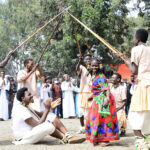
These dances are performed during royal ceremonies, weddings, festivals, and cultural celebrations.
Traditional instruments include drums, xylophones, harps, thumb pianos, and flutes, creating rhythms that have influenced Ugandan music for generations.
Marriage Customs
Marriage is regarded as the union of two families rather than simply two individuals.
Traditional introductions, known as kwanjula, are among the most celebrated ceremonies in Uganda.
During the ceremony:
- Families formally meet.
- Gifts are exchanged.
- Marriage intentions are announced.
- Elders offer blessings and guidance.
Many couples today combine traditional ceremonies with religious weddings.
Spiritual Beliefs
Before the arrival of Christianity and Islam, the Baganda practiced traditional religion centered on Katonda (the Creator), ancestral spirits, and various deities associated with nature and daily life.
Today, Christianity and Islam are the dominant religions, while traditional beliefs continue to influence certain cultural ceremonies and customs.
Economic Activities
For centuries, the Baganda have been successful farmers, traders, and craftsmen.
Today they participate in nearly every sector of Uganda’s economy, including:
- Agriculture
- Trade
- Manufacturing
- Banking
- Technology
- Education
- Healthcare
- Government
- Tourism
- Creative arts
The central region remains Uganda’s economic powerhouse.
Preserving Ganda Culture
The Buganda Kingdom continues to promote the preservation of language, traditional music, dance, history, and cultural values through schools, museums, community programs, and annual cultural events.
Young Baganda increasingly embrace higher education and global opportunities while remaining proud of their cultural identity.
Did You Know?
- The Baganda are Uganda’s largest ethnic community.
- Luganda is one of the most widely spoken indigenous languages in East Africa.
- The Buganda Kingdom has survived for more than 700 years.
- The kwanjula ceremony is one of Uganda’s best-known traditional marriage customs.
- Bark cloth, traditionally made from the mutuba tree, is one of Buganda’s oldest cultural treasures and is recognized by UNESCO as an important element of intangible cultural heritage.
Quick Facts
| Feature | Information |
|---|---|
| Region | Central Uganda |
| Kingdom | Buganda Kingdom |
| Language | Luganda |
| Traditional Leader | Kabaka |
| Traditional Food | Matooke and Luwombo |
| Traditional Dress | Gomesi (women), Kanzu (men) |
Conclusion
The Baganda have shaped Uganda’s history, politics, culture, and economy for centuries. From the enduring institution of the Buganda Kingdom to the widespread influence of Luganda, music, cuisine, and traditional ceremonies, their legacy is deeply embedded in the nation’s identity.
As Uganda continues to grow and modernize, the Baganda remain proud custodians of a vibrant heritage that bridges the past and the future. Their traditions continue to inspire millions, making Buganda not only a kingdom of history but a living symbol of Uganda’s cultural richness.
Email Us on editorial@nnafrica.com