

Flowing from Lake Victoria, the mighty River Nile has long shaped the lives of the Basoga, one of Uganda’s largest and most influential ethnic communities. For centuries, the fertile lands of Busoga have supported thriving farming communities, vibrant trade, and a culture deeply rooted in family, respect, and tradition.
The Basoga are renowned for their warm hospitality, rich oral traditions, energetic dances, and strong cultural institutions. Their homeland has also played an important role in Uganda’s economic development, thanks to its fertile soils, sugar industry, and strategic location along the Nile.
Today, the Basoga continue to preserve a proud heritage while embracing education, innovation, and modern development.
Who Are the Basoga?
The Basoga are the indigenous people of the Busoga sub-region in eastern Uganda.
Their homeland includes the districts of Jinja, Kamuli, Iganga, Bugweri, Kaliro, Buyende, Luuka, Namutumba, Mayuge, Bugiri, and parts of Namayingo.
Busoga borders Lake Victoria to the south and the River Nile to the west, giving the region abundant natural resources and fertile agricultural land.
The Basoga are one of Uganda’s largest ethnic communities and have made significant contributions to the country’s politics, business, education, sports, and culture.
The Origins of Busoga
Unlike Buganda, which developed under a single centralized monarchy, Busoga historically consisted of several chiefdoms ruled by hereditary chiefs.
These chiefdoms shared language, culture, and traditions but maintained their own leadership.
In the twentieth century, these chiefdoms came together under a united cultural institution known as the Busoga Kingdom.
Today, the kingdom serves as a symbol of unity and cultural preservation for the Basoga people.
The Kyabazinga: A Symbol of Unity
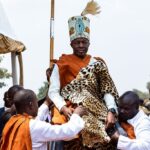
The cultural leader of Busoga is known as the Kyabazinga.
Unlike hereditary monarchies, the Kyabazinga is chosen from among the hereditary rulers of Busoga’s traditional chiefdoms.
The institution promotes:
- Cultural preservation
- Education
- Youth empowerment
- Health initiatives
- Community development
The Kyabazinga remains an important symbol of unity for the Basoga people.
Language
The Basoga speak Lusoga, a Bantu language closely related to Luganda and several other languages spoken in central and eastern Uganda.
Lusoga is widely spoken throughout Busoga and is taught in schools and used in radio broadcasts, literature, and cultural events.
The language contains a rich tradition of folktales, proverbs, songs, and poetry that preserve the history and values of the Basoga people.
Clans and Family Life
Like many Bantu communities, the Basoga are organized into clans.
Clans play an important role in:
- Identity
- Marriage
- Inheritance
- Cultural ceremonies
- Conflict resolution
Respect for elders is central to Basoga culture, and extended families continue to play an important role in raising children and preserving traditions.
Traditional Homes
Historically, Basoga homes were built using reeds, poles, mud, and grass thatching.
Modern houses have become common, but many rural communities still preserve aspects of traditional architecture.
Homesteads often include gardens, fruit trees, and spaces for family gatherings.
Food and Cuisine
Busoga is blessed with fertile land, making agriculture central to daily life.
Popular traditional foods include:
- Sweet potatoes
- Cassava
- Matooke
- Millet
- Posho
- Beans
- Groundnut sauce
- Smoked fish
- Tilapia from Lake Victoria
- Nile perch
- Fresh vegetables
The River Nile and nearby lakes have made fishing an important source of food and income for many Basoga families.
Traditional Dress
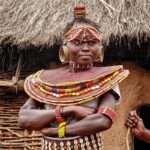
Today, most Basoga wear modern clothing, but traditional attire remains important during ceremonies.
Women often wear the gomesi for weddings and cultural celebrations, while men wear the kanzu during formal occasions.
Traditional beadwork and handmade accessories continue to be worn during important cultural events.
Music and Dance
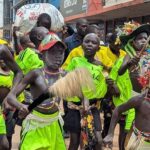
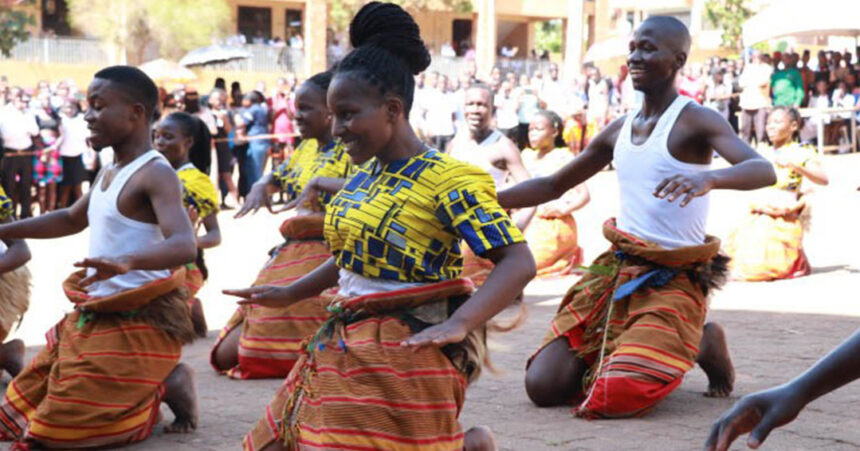
The Basoga are famous for lively music and energetic dances that celebrate community life.
Traditional performances are common during:
- Weddings
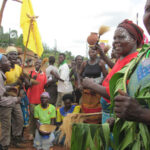
- Harvest celebrations
- Naming ceremonies
- Royal events
- Cultural festivals
Drums, xylophones, rattles, and traditional string instruments provide the rhythms that accompany dance and storytelling.
Music remains one of the strongest expressions of Basoga identity.
Marriage Customs
Marriage is viewed as the joining of two families.
One of the most important traditions is the introduction ceremony, where the families meet to formalize the relationship before marriage.
Traditional marriage customs emphasize:
- Respect for elders
- Family unity
- Gift exchanges
- Blessings from parents and clan leaders
Many couples today combine traditional customs with church or mosque weddings.
Spiritual Beliefs
Before the spread of Christianity and Islam, the Basoga believed in Katonda, the supreme creator, and respected ancestral spirits.
Today, Christianity and Islam are the dominant religions, while some traditional customs continue to be observed during cultural ceremonies.
Economic Activities
The Basoga are among Uganda’s most productive agricultural communities.
Major economic activities include:
- Sugarcane farming
- Rice cultivation
- Maize farming
- Fishing
- Trade
- Manufacturing
- Education
- Tourism
- Transport
- Small businesses
The city of Jinja, often called the source of the Nile city, remains one of Uganda’s most important industrial and tourism centers.
Preserving Basoga Heritage
The Busoga Kingdom, together with cultural organizations and community leaders, continues to promote Lusoga, traditional music, dance, history, and cultural education.
Festivals, cultural competitions, and school programs encourage younger generations to appreciate and preserve their heritage.
These efforts ensure that Basoga traditions remain vibrant in a rapidly changing world.
Did You Know?
- The Basoga are one of Uganda’s largest ethnic communities.
- The Busoga Kingdom unites several historic chiefdoms.
- Jinja is famous worldwide as the source of the River Nile.
- Busoga is one of Uganda’s leading sugar-producing regions.
- Lusoga is closely related to Luganda, making the two languages mutually intelligible to many speakers.
Quick Facts
| Feature | Information |
|---|---|
| Region | Eastern Uganda |
| Cultural Institution | Busoga Kingdom |
| Cultural Leader | Kyabazinga |
| Language | Lusoga |
| Main Economic Activities | Farming, fishing, trade, tourism |
| Traditional Foods | Cassava, sweet potatoes, fish, matooke |
Conclusion
The Basoga have built a vibrant culture around the life-giving waters of the Nile and the fertile lands of eastern Uganda. Their traditions, language, music, and strong sense of community have made Busoga one of the country’s most culturally significant regions.
As Uganda continues to develop, the Basoga remain proud custodians of a rich heritage that celebrates unity, resilience, and the enduring bond between people, land, and water.
Email Us on editorial@nnafrica.com