

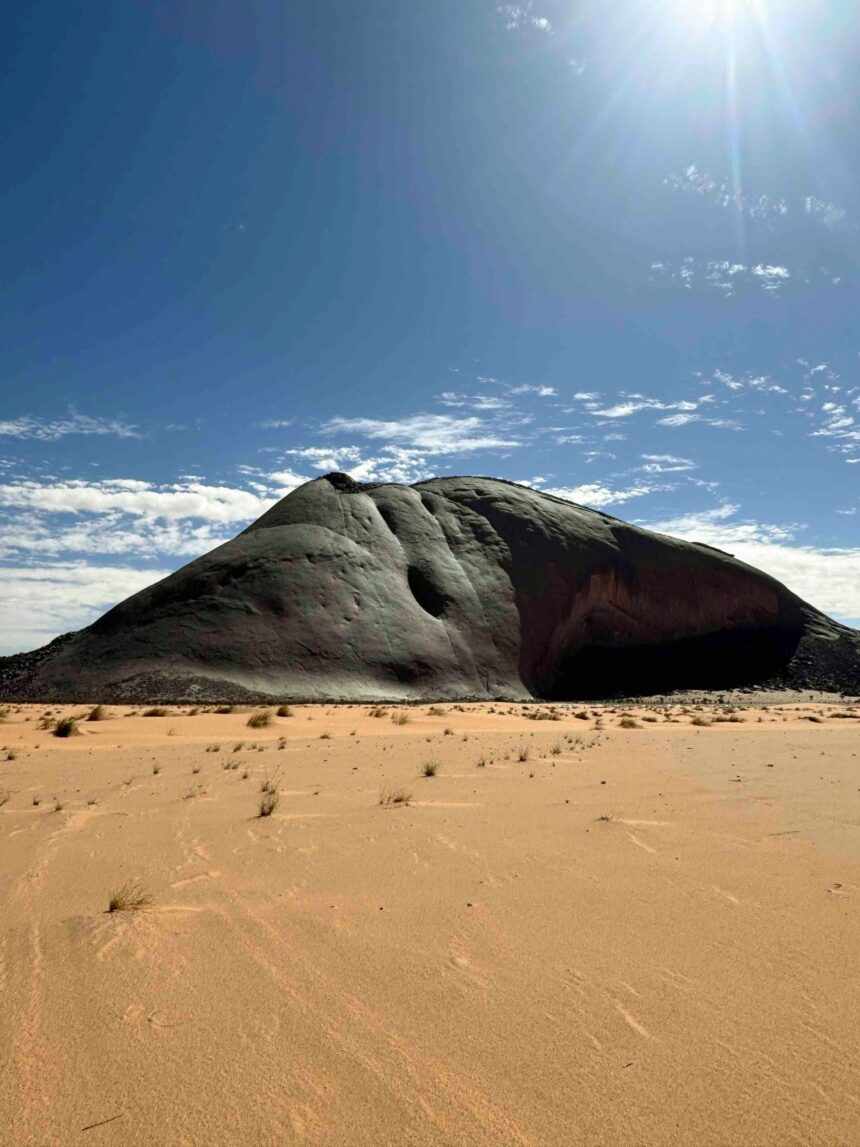
At first glance, Mauritania appears to be a land of endless golden dunes stretching toward the horizon. But beneath the vast expanse of the Sahara lies one of Africa’s most fascinating cultural landscapes—a country where ancient caravan cities, nomadic traditions, and centuries of scholarship continue to shape everyday life.
Located at the meeting point of North Africa and West Africa, Mauritania has long served as a bridge between civilizations. Camel caravans once crossed its deserts carrying gold, salt, manuscripts, and ideas, while scholars transformed remote settlements into renowned centers of Islamic learning.
Today, Mauritania remains a country where the rhythm of desert life continues to inspire resilience, hospitality, and a deep respect for tradition. For students, researchers, teachers, tourists, and the African diaspora, it offers an extraordinary opportunity to explore one of Africa’s most enduring cultural treasures.
Why Mauritania Became the Gateway of the Sahara
For centuries, Mauritania occupied a strategic position along the trans-Saharan trade routes.
Merchants traveling between West Africa and North Africa crossed its deserts with caravans of camels carrying salt, gold, textiles, spices, and books.
These journeys were more than commercial expeditions. They connected cultures, spread knowledge, and encouraged the exchange of languages, religious ideas, and technologies across the continent.
The legacy of these historic routes can still be seen in Mauritania’s ancient towns and enduring traditions.
Ancient Caravan Cities That Became Centres of Learning
Hidden within the desert are some of Africa’s most remarkable historic settlements.
Cities such as Chinguetti, Ouadane, Tichitt, and Oualata flourished as trading posts and intellectual centers, attracting merchants, scholars, and pilgrims from across the Islamic world.
Their stone buildings, narrow streets, and historic libraries continue to preserve handwritten manuscripts that document centuries of African scholarship in subjects ranging from astronomy and mathematics to law and theology.
These ancient cities stand as enduring reminders of Mauritania’s important role in preserving knowledge.
The Moors: Custodians of Desert Traditions
Much of Mauritania’s cultural identity has been shaped by the Moorish communities, whose traditions reflect centuries of life in the Sahara.
Hospitality occupies a central place in daily life. Welcoming guests with tea, conversation, and generosity is regarded as both a social responsibility and a source of pride.
Traditional clothing, including the flowing boubou robes worn by men and the colorful melhafa garments worn by women, reflects both cultural identity and practical adaptation to the desert climate.
These customs continue to connect modern Mauritanians with their ancestral heritage.
The Camel: The Ship of the Desert
Few animals have influenced Mauritanian life as profoundly as the camel.
For generations, camels provided transportation across the Sahara, carried trade goods over vast distances, and supplied milk that remains an important part of the traditional diet.
Camel racing, breeding, and herding continue to play significant roles in many rural communities.
Even today, the camel symbolizes endurance, independence, and the remarkable relationship between people and the desert.
A Land of Remarkable Natural Wonders
Although the Sahara dominates much of Mauritania, the country’s landscapes are surprisingly diverse.
Towering sand dunes give way to rocky plateaus, seasonal wetlands, and Atlantic coastal ecosystems rich in marine life.
One of the country’s greatest environmental treasures is Banc d’Arguin National Park, where migratory birds from Europe and Africa gather in one of the world’s most important coastal wetlands.
The park also supports traditional fishing communities that have lived sustainably along the Atlantic coast for generations.
Music and Oral Traditions Across the Desert
Music has long been a powerful expression of Mauritanian identity.
Traditional instruments such as the ardin, a harp played mainly by women, and the tidinit, a stringed lute, accompany songs celebrating history, family, hospitality, and faith.
Oral historians preserve the stories of ancestors, tribal leaders, and historic journeys across the Sahara, ensuring that knowledge passes from one generation to the next.
These musical traditions remain an essential part of weddings, festivals, and community celebrations.
Cuisine Inspired by Desert and Coast
Mauritanian cuisine reflects the country’s varied geography.
Inland communities traditionally prepare meals featuring millet, rice, dates, camel milk, goat meat, and lamb, while coastal regions enjoy fresh fish and seafood from the Atlantic Ocean.
Mint tea occupies a special place in Mauritanian society.
Preparing and serving tea is both an art and a ritual, symbolizing friendship, patience, and respect. Conversations over several rounds of tea remain an important part of family and community life.
Faith and Community Life
Islam has profoundly influenced Mauritania’s culture, education, architecture, and daily routines for centuries.
Mosques, traditional schools, and community gatherings continue to play important roles in preserving religious knowledge and strengthening social cohesion.
Alongside faith, respect for elders, strong family relationships, and community cooperation remain among the country’s most enduring values.
These principles continue to shape life in both rural villages and growing urban centers.
Protecting a Heritage That Spans Centuries
Across Mauritania, communities, historians, and conservation organizations are working to preserve ancient libraries, historic caravan towns, and traditional knowledge.
Efforts to restore historic buildings, safeguard manuscripts, and promote sustainable tourism help ensure that future generations can continue learning from this extraordinary heritage.
These initiatives recognize that preserving history is also an investment in education, identity, and cultural pride.
Why Mauritania Is One of Africa’s Hidden Cultural Gems
Mauritania is a country where history stretches across endless dunes, where ancient cities continue to tell stories of scholarship and trade, and where hospitality remains one of the highest cultural values.
Its caravan routes helped connect continents, its libraries preserved priceless knowledge, and its people continue to celebrate traditions shaped by centuries of life in the Sahara.
For students, researchers, teachers, tourists, and members of the African diaspora, Mauritania offers an unforgettable journey into one of Africa’s least explored yet most rewarding cultural landscapes.
In Mauritania, every desert trail recalls an ancient caravan, every cup of tea reflects a tradition of welcome, and every historic town reminds the world that the Sahara has long been a place of learning, exchange, and human achievement.
Email Us on editorial@nnafrica.com