

When most people think of Chad, they imagine endless deserts stretching beyond the horizon. While the Sahara certainly defines much of the country’s northern landscape, Chad’s true identity is far richer than sand dunes and arid plains. It is a land where ancient empires flourished, camel caravans connected continents, and dozens of cultures have coexisted for centuries.
Known as the “Dead Heart of Africa” because of its landlocked position, Chad has, in reality, always been one of the continent’s great crossroads. Traders from North Africa, West Africa, and Central Africa crossed its deserts carrying gold, salt, spices, textiles, and ideas that transformed entire civilizations.
Today, Chad remains one of Africa’s most culturally diverse nations, where ancient traditions continue to shape everyday life despite the rapid changes of the modern world.
Why Chad Was Once the Gateway Between North and Central Africa
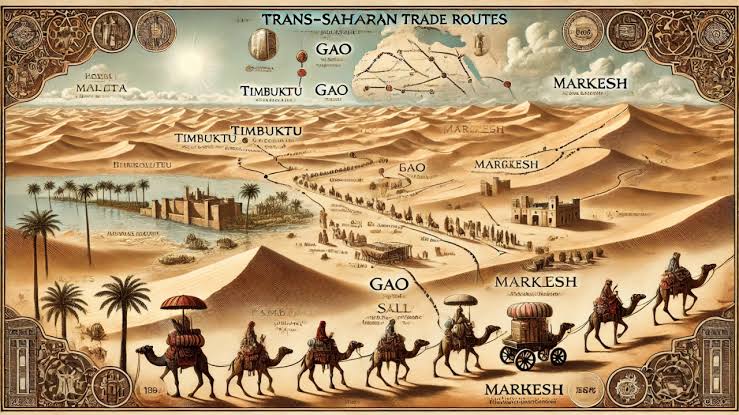
Long before highways and airports, Chad’s deserts served as one of Africa’s busiest commercial corridors.
Camel caravans crossed the Sahara carrying valuable goods between Mediterranean cities and kingdoms deep within Africa. These trade routes helped establish powerful empires and introduced new ideas, religions, and technologies to communities across the region.
Cities and settlements grew around these trading networks, becoming important centers of commerce and cultural exchange.
The legacy of these ancient caravan routes can still be seen today in Chad’s multicultural society and long-standing trading traditions.
The Kingdoms That Built Chad’s Rich Cultural Heritage
Chad’s history is marked by some of Africa’s most influential pre-colonial empires.
The Kanem-Bornu Empire, which flourished for centuries around Lake Chad, became one of the continent’s greatest centers of trade, learning, and Islamic scholarship. Other kingdoms, including Baguirmi and Ouaddaï, also played major roles in shaping the region’s political and cultural landscape.
These kingdoms established sophisticated systems of governance, diplomacy, and commerce that connected Chad to North Africa and the Middle East.
Although these empires no longer exist, their influence remains visible in local customs, architecture, and cultural identity.
The Nomadic Traditions That Continue to Define Desert Life
For many communities in northern Chad, life has always revolved around movement.
Nomadic groups have crossed the Sahara for generations, following seasonal grazing lands and maintaining traditions that allow them to survive in one of the world’s harshest environments.
Camels remain essential companions, providing transportation, trade, and livelihood across vast desert landscapes.
These nomadic cultures have developed extraordinary knowledge of the desert, including navigation, water conservation, and survival techniques passed down through countless generations.
Their way of life represents one of Africa’s oldest living cultural traditions.
More Than 200 Ethnic Groups, One Remarkable Nation
One of Chad’s greatest strengths is its cultural diversity.
The country is home to more than 200 ethnic groups, each with its own language, customs, music, and traditions.
Communities such as the Sara, Toubou, Zaghawa, Arab, Kanembu, and many others contribute to a rich cultural mosaic that stretches from the Sahara to the fertile southern regions.
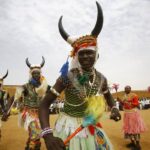
This diversity is reflected in colorful clothing, traditional ceremonies, architecture, and local cuisine, making Chad one of Africa’s most culturally fascinating countries.
Lake Chad: The Lifeline That Sustains Millions
Despite the country’s desert reputation, water has always played a central role in Chad’s history.
Lake Chad, one of Africa’s most famous lakes, has supported civilizations for thousands of years. Fishermen, farmers, and traders have depended on its waters for food, transportation, and economic activity.
Although the lake has changed dramatically over time due to climate variations and human activity, it remains an important symbol of life and resilience.
Communities surrounding the lake continue to preserve traditions that have evolved alongside this remarkable natural resource.
The Music and Storytelling That Preserve Chad’s History
Across Chad, music and oral storytelling remain powerful ways of preserving history and cultural identity.
Traditional musicians perform during weddings, harvest celebrations, and religious festivals using drums, string instruments, and rhythmic songs that have been passed down through generations.
Elders continue to share folktales and historical narratives that teach younger generations about courage, honesty, leadership, and community values.
These oral traditions ensure that Chad’s rich heritage continues to live on, even in communities where written records have historically been limited.
What Traditional Chadian Cuisine Reveals About Daily Life
Food reflects the country’s remarkable geographical diversity.
In the north, meals often feature dates, millet, and dairy products suited to desert life. Southern regions produce sorghum, maize, cassava, vegetables, and a variety of fruits that enrich local diets.
Staple dishes frequently include millet porridge served with meat or vegetable sauces, while fish remains popular in communities around Lake Chad.
Meals are typically shared among family members, reinforcing values of hospitality, cooperation, and community that are deeply rooted in Chadian society.
Festivals That Celebrate Identity and Heritage
Throughout the year, communities across Chad organize festivals that celebrate cultural traditions, religious observances, and seasonal events.
Traditional dances, camel races, music performances, and colorful ceremonies bring together people from different backgrounds while strengthening community bonds.
These gatherings offer younger generations an opportunity to learn about their heritage and keep centuries-old customs alive.
Visitors fortunate enough to witness these celebrations experience the warmth and diversity that define Chadian culture.
A Young Nation Embracing the Future
Like many African countries, Chad has a youthful population eager to shape the nation’s future.
Young entrepreneurs, artists, educators, and community leaders are combining modern ideas with traditional values to create new opportunities.
Technology, education, and cultural initiatives are helping preserve local languages and customs while opening doors to innovation and economic development.
This blend of tradition and progress reflects a society determined to honor its past while building for the future.
Why Chad Deserves a New Place on Africa’s Cultural Map
Chad is often viewed through the lens of geography or political challenges, yet its greatest treasures are found in its people and traditions.
It is a country where ancient kingdoms laid the foundations of civilization, where camel caravans connected continents, and where hundreds of cultures continue to enrich national life.
From the endless dunes of the Sahara to the fertile shores of Lake Chad, every region tells a different story of resilience, adaptation, and cultural pride.
For travelers seeking an authentic African experience beyond the familiar destinations, Chad offers something truly exceptional: a journey through living history.
Its deserts whisper the stories of ancient traders, its communities preserve traditions that have survived for centuries, and its people continue to prove that culture can flourish even in the most challenging landscapes.
Email Us on editorial@nnafrica.com