

Stretching across the vast savannahs of northern Uganda is Acholiland, the ancestral home of the Acholi, one of the country’s most influential and culturally rich communities. Known for their courage, powerful oral traditions, vibrant music, and deep respect for community, the Acholi have shaped Uganda’s history for centuries.
The Acholi are renowned not only for their resilience in overcoming historical challenges but also for their enduring commitment to peace, reconciliation, and cultural preservation. Their traditions, passed from one generation to the next through storytelling, dance, and communal life, continue to inspire both Ugandans and visitors from around the world.
Today, the Acholi remain proud custodians of a heritage that blends ancient customs with modern aspirations.
Who Are the Acholi?
The Acholi are a Western Nilotic (Luo-speaking) people indigenous to northern Uganda.
Their homeland includes:
- Gulu District
- Kitgum District
- Pader District
- Agago District
- Lamwo District
- Amuru District
- Nwoya District
- Omoro District
Closely related Acholi communities also live across the border in South Sudan.
The Acholi are among Uganda’s largest ethnic groups and have made significant contributions to the country’s politics, education, military, arts, literature, and public service.
Origins and History
The Acholi trace their ancestry to Luo-speaking peoples who migrated southwards into present-day northern Uganda several centuries ago.
Over time, they established settlements across the fertile plains, organizing themselves into chiefdoms led by hereditary chiefs known as Rwodi (singular: Rwot).
Rather than forming a single centralized kingdom, the Acholi developed a network of autonomous chiefdoms united by shared language, customs, and cultural values.
Agriculture, livestock keeping, hunting, and trade formed the foundation of their economy and society.
Traditional Leadership
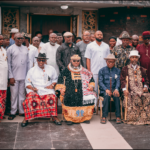
The Acholi are traditionally governed through hereditary chiefdoms.
Each chiefdom is led by a Rwot, who serves as:
- Cultural leader
- Custodian of traditions
- Mediator in disputes
- Guardian of customary land
- Symbol of community unity
Today, the Acholi Cultural Institution (Ker Kwaro Acholi) works alongside traditional chiefs to preserve Acholi customs, language, and history.
Clans and Social Organization
The Acholi have more than fifty clans, each with its own history, customs, and totems.
The clan system plays an important role in:
- Marriage
- Family identity
- Land ownership
- Conflict resolution
- Cultural ceremonies
Respect for elders is deeply embedded in Acholi society, with older generations entrusted to preserve oral history and customary law.
Language
The Acholi speak Luo (Acholi), commonly known as Leb Acholi.
The language belongs to the Western Nilotic branch and is closely related to Alur, Adhola, and other Luo languages spoken across East Africa.
Acholi is widely used in:
- Homes
- Schools
- Churches
- Local radio stations
- Literature
- Music
Its rich oral tradition includes folktales, proverbs, riddles, praise poetry, and historical narratives.
Traditional Homes
Traditionally, Acholi families lived in circular huts made from mud, wooden poles, and grass thatch.
A typical homestead included:
- Family houses
- Granaries
- Livestock enclosures
- Outdoor cooking areas
- Meeting spaces
Although modern homes are increasingly common, traditional compounds remain part of rural Acholi life.
Food and Cuisine
Agriculture has sustained the Acholi for generations.
Popular traditional foods include:
- Millet bread
- Simsim (sesame) paste
- Cassava
- Sweet potatoes
- Sorghum
- Beans
- Cowpeas
- Groundnuts
- Beef
- Goat meat
- Chicken
Sesame (simsim) is particularly important in Acholi cuisine and is used in several traditional dishes.
Meals are often shared communally, reflecting values of generosity and hospitality.
Traditional Dress
Modern clothing is widely worn today.
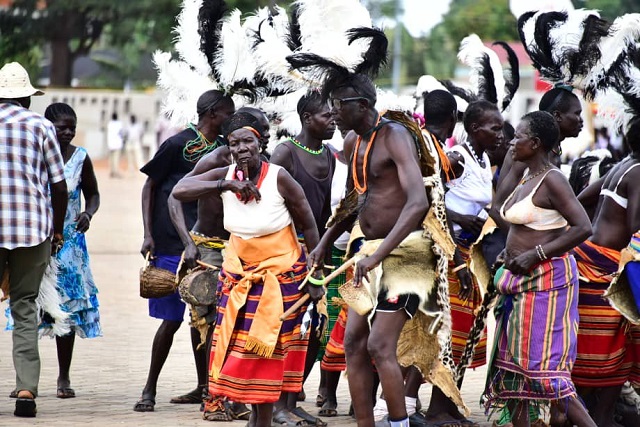
During weddings, cultural festivals, and traditional ceremonies, Acholi people wear colorful traditional attire enhanced with:
- Beadwork
- Animal-skin accessories
- Necklaces
- Bracelets
- Ceremonial ornaments
Traditional dress reflects pride in Acholi identity and cultural heritage.
Music and Dance
The Acholi possess one of Uganda’s richest musical traditions.
Traditional performances accompany:
- Weddings
- Harvest celebrations
- Installation of chiefs
- Community festivals
- Reconciliation ceremonies
Among the best-known dances are:
- Larakaraka – a vibrant courtship dance performed by young men and women.
- Bwola – a majestic royal dance historically performed during important ceremonies and celebrations.
- Otole – a traditional warrior dance celebrating courage and unity.
Large royal drums, calabashes, horns, and traditional harps accompany these performances.
Marriage and Family Life
Marriage is regarded as a partnership between families and clans.
Traditional ceremonies involve:
- Family introductions
- Bridewealth negotiations
- Blessings from elders
- Music and dance
- Community feasting
Bridewealth traditionally includes cattle, goats, or other agreed gifts that strengthen relationships between families.
Extended families continue to play a central role in raising children and preserving cultural values.
Spiritual Beliefs
Historically, the Acholi believed in Jok, spiritual forces associated with the creator, ancestors, and the natural world.
Today, Christianity is the dominant religion, with Catholic, Anglican, and Pentecostal churches playing major roles in community life. Islam is also practiced by a minority.
Traditional values of reconciliation, respect, and communal responsibility remain influential.
Economic Activities
The Acholi economy is primarily based on agriculture.
Major activities include:
- Maize farming
- Sesame cultivation
- Cassava production
- Sunflower growing
- Cotton farming
- Livestock keeping
- Fishing
- Trade
- Tourism
- Education
- Public service
Northern Uganda has experienced significant agricultural growth in recent years, making farming an increasingly important source of income.
Famous Sons and Daughters
The Acholi have produced many distinguished Ugandans, including:
- Prof. Okot p’Bitek – internationally acclaimed poet and author of Song of Lawino.
- Norbert Mao – lawyer and politician.
- Gen. Tito Okello – former Head of State of Uganda.
- Numerous educators, musicians, religious leaders, athletes, entrepreneurs, and public servants have also made lasting contributions to Uganda.
Preserving Acholi Heritage
Ker Kwaro Acholi, together with community leaders, educators, and cultural organizations, promotes the Acholi language, music, dances, oral history, and traditional conflict-resolution practices.
Annual cultural festivals, museums, and educational programs encourage younger generations to preserve their heritage while embracing modern opportunities.
Did You Know?
- The Acholi have more than 50 recognized clans.
- The Larakaraka dance is one of Uganda’s most famous traditional courtship dances.
- Bwola is among Uganda’s most celebrated royal dances.
- Acholi oral literature is studied in universities around the world.
- The Acholi are widely respected for traditional reconciliation practices such as Mato Oput, which emphasize forgiveness and restoring community relationships after serious conflicts.
Quick Facts
| Feature | Information |
|---|---|
| Region | Northern Uganda |
| Language | Acholi (Luo) |
| Ethnic Group | Western Nilotic |
| Traditional Leadership | Rwot (Chief) |
| Cultural Institution | Ker Kwaro Acholi |
| Main Economic Activities | Agriculture, livestock keeping, trade |
| Famous Dances | Larakaraka, Bwola, Otole |
Conclusion
The Acholi are one of Uganda’s most influential cultural communities, with a heritage built on courage, storytelling, music, leadership, and reconciliation. Their traditions have shaped northern Uganda for centuries and continue to inspire scholars, tourists, and the African diaspora.
As they preserve their language, customs, and rich oral traditions while embracing education and development, the Acholi demonstrate that culture is not only a record of the past but also a foundation for the future.
Email Us on editorial@nnafrica.com