


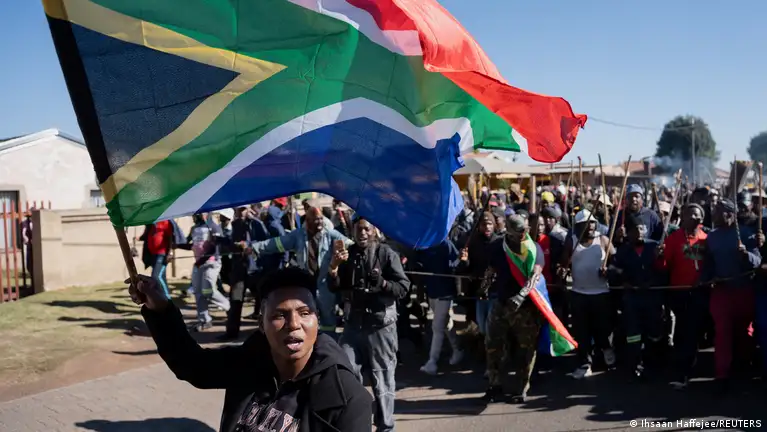
A growing crisis is unfolding in South Africa, and its impact is being felt far beyond the country’s borders.
Across major cities and townships, debates over immigration, unemployment, crime, and economic opportunity have intensified. At the center of the controversy is a difficult question that many African nations are now asking: How can countries balance economic pressures with the free movement of people?
The issue has sparked heated political discussions, community protests, and renewed concerns about xenophobia—the fear or dislike of foreigners.
Why South Africa Attracts Migrants
For decades, South Africa has been viewed as one of Africa’s economic powerhouses.
People from across the continent have moved there seeking employment, education, business opportunities, and a better quality of life. Migrants from Zimbabwe, Mozambique, Malawi, the Democratic Republic of Congo, Ethiopia, Somalia, Nigeria, and many other countries have built businesses and communities throughout South Africa.
Many have become successful entrepreneurs, creating jobs and contributing to local economies.
Yet the growing number of migrants has also become a source of tension.
The Economic Pressure Cooker
South Africa faces one of the highest unemployment rates in the world, particularly among young people.
Millions of citizens struggle to find stable jobs, while rising living costs continue to place pressure on households.
In this environment, some communities believe foreign nationals are competing for scarce employment opportunities and public services.
Whether those perceptions are accurate or not, they have become a powerful political issue.
As economic frustrations grow, migrants often become easy targets for public anger.
The Return of Xenophobic Tensions
South Africa has experienced outbreaks of xenophobic violence several times over the past two decades.
Businesses owned by foreign nationals have occasionally been attacked, while communities have witnessed clashes fueled by misinformation, fear, and economic frustration.
Many Africans living in South Africa now worry that tensions could escalate further if economic conditions fail to improve.
Human rights organizations warn that blaming migrants for broader economic challenges risks deepening divisions without solving the underlying problems.
The Political Dimension
Migration has become one of the most debated issues in South African politics.
Political parties increasingly discuss border security, undocumented migration, and immigration reform as they seek support from frustrated voters.
Some politicians argue stricter immigration controls are necessary to protect jobs and public resources.
Others believe migration is being unfairly blamed for problems caused by deeper economic and governance challenges.
The debate is likely to remain a major issue in future elections.
The African Union’s Challenge
The crisis also raises difficult questions for the continent.
African leaders have long promoted greater regional integration, cross-border trade, and freedom of movement as key drivers of economic growth.
However, migration pressures are testing those ambitions.
If countries become more restrictive, it could slow efforts to build stronger regional economies and weaken cooperation among African nations.
The Human Stories Behind the Headlines
Lost amid political arguments are the lives of ordinary people.
Many migrants left their home countries to escape conflict, economic hardship, or political instability. Others arrived with little more than hope and determination.
Many South Africans facing unemployment and poverty are also struggling to secure a better future for their families.
The result is a situation where two groups facing economic hardship often find themselves competing for limited opportunities.
What Happens Next?
The future of South Africa’s migration debate will depend largely on economic conditions.
If job creation accelerates and living standards improve, tensions may ease.
If unemployment remains high and public frustration continues to grow, migration could become an even more divisive issue.
What happens in South Africa matters to the entire continent.
As Africa becomes increasingly interconnected, the challenge of managing migration fairly and effectively will not be limited to one country. It will become a defining issue for many nations in the years ahead.
The real question is no longer whether migration will shape Africa’s future.
It is how Africa chooses to respond.
Email Us on editorial@nnafrica.com