

At the foot of the majestic Mount Moroto, where rugged peaks overlook vast plains, lives one of the most influential communities in Uganda’s Karamoja sub-region—the Matheniko. For generations, they have maintained a way of life centered on livestock, family, and respect for tradition while adapting to the opportunities and challenges of the modern world.
The Matheniko are widely recognized for their vibrant cultural ceremonies, colorful beadwork, and strong pastoral heritage. Their customs, passed down through generations, continue to shape daily life and strengthen community bonds.
Their story reflects the enduring spirit of a people deeply connected to their land and proud of their identity.
Who Are the Matheniko?
The Matheniko are one of the major communities within the Karamoja cultural cluster. They are primarily found in Moroto District, particularly around Mount Moroto, one of Uganda’s most iconic mountains.
Although they share ancestry and language with neighboring communities such as the Karamojong, Bokora, Jie, Dodoth, and Pian, the Matheniko have developed their own traditions, clan identities, and local customs.
Moroto Town, the largest urban center in Karamoja, has become an important hub for education, trade, and government services, bringing the Matheniko into regular contact with people from across Uganda while allowing them to preserve their cultural heritage.
Origins and History
The Matheniko trace their roots to the Eastern Nilotic migrations that brought pastoral communities into northeastern Uganda centuries ago.
Their ancestors settled around the fertile grazing lands surrounding Mount Moroto, where they developed a pastoral lifestyle based on seasonal movement, livestock keeping, and close cooperation among clans.
Stories of migration, family ancestry, and historical events continue to be preserved through oral tradition, with elders serving as the custodians of community history.
The Central Role of Livestock
For the Matheniko, cattle remain the cornerstone of cultural and economic life.
Livestock provide:
- Food and nutrition
- Bridewealth during marriage
- Family wealth
- Social recognition
- A source of pride and identity
Young boys and girls often grow up learning how to care for animals, a responsibility that teaches discipline, cooperation, and respect for nature.
Traditional songs frequently praise exceptional cattle, celebrating their beauty, strength, and importance to the family.
Language
The Matheniko speak a dialect of Ngakarimojong, part of the Eastern Nilotic language family.
The language is rich in proverbs, songs, and oral traditions that teach respect, courage, generosity, and responsibility.
While English and Kiswahili are increasingly spoken in schools and workplaces, the local language remains the foundation of Matheniko cultural identity.
Traditional Homes
Matheniko families traditionally live in manyattas—large circular homesteads enclosed with thorn fences that protect livestock from predators and theft.
Within the enclosure are grass-thatched huts built using poles, mud, and locally available materials. The arrangement of the homestead reflects the community’s emphasis on family unity and collective responsibility.
Food and Cuisine
The Matheniko diet combines livestock products with locally grown crops.
Popular foods include:
- Sorghum porridge
- Millet bread
- Fresh milk
- Fermented milk
- Roasted beef and goat
- Beans
- Cowpeas
- Honey
- Wild fruits
Meals are often shared among extended family members, reinforcing the values of hospitality and togetherness.
Traditional Dress and Beadwork
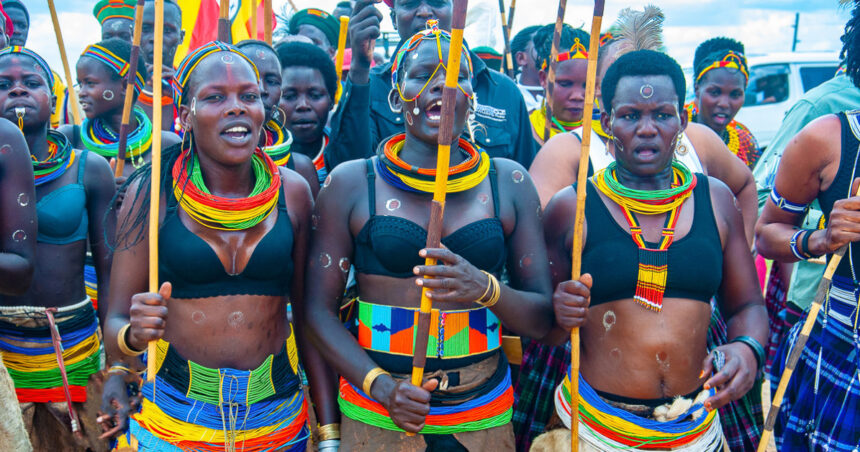
The Matheniko are famous for their colorful clothing and impressive beadwork.
Men traditionally wear brightly colored wraps, while women create elaborate necklaces, bracelets, waist ornaments, and earrings using beads of various colors and patterns.
These ornaments often communicate age, family status, and important milestones in a person’s life.
Music and Dance
Music is at the heart of Matheniko culture.
Traditional songs celebrate:
- Community unity
- Heroic achievements
- Marriage
- Livestock
- Harvests
- Important life events
Dances feature rhythmic chanting, energetic jumping, clapping, and coordinated movements that encourage participation from people of all ages.
Music also serves as a way of preserving history and teaching younger generations about community values.
Marriage and Family
Marriage is viewed as a partnership that unites families and strengthens clan relationships.
Bridewealth, traditionally paid in cattle, remains a respected custom that symbolizes commitment, gratitude, and mutual respect between families.
Family elders oversee negotiations and provide guidance to ensure harmony within the community.
Spiritual Beliefs
Traditionally, the Matheniko believed in a supreme creator and observed ceremonies seeking blessings for rain, healthy livestock, peace, and prosperity.
Today, Christianity is widely practiced, though many families continue to value traditional customs that celebrate community life and ancestral heritage.
Economic Activities
The Matheniko economy has become increasingly diverse while maintaining its pastoral roots.
Today, many community members participate in:
- Livestock farming
- Crop cultivation
- Trade
- Tourism
- Handicrafts
- Education
- Public service
- Small businesses
The growth of Moroto Town has created new opportunities for employment and entrepreneurship while supporting the preservation of cultural traditions.
Protecting Culture for Future Generations
Community leaders and cultural organizations are actively promoting the Matheniko language, music, crafts, and oral history through schools, festivals, and cultural events.
Young people are increasingly pursuing higher education and professional careers while remaining proud ambassadors of their heritage.
This commitment to preserving tradition ensures that Matheniko culture continues to thrive in the twenty-first century.
Did You Know?
- The Matheniko homeland surrounds the magnificent Mount Moroto.
- Beadwork is one of the community’s most recognizable forms of artistic expression.
- Cattle songs remain an important part of community celebrations.
- Moroto is considered the cultural and administrative heart of the Karamoja sub-region.
Quick Facts
| Feature | Information |
|---|---|
| Region | Moroto District |
| Language | Ngakarimojong (Matheniko dialect) |
| Cultural Group | Karamoja Cluster |
| Traditional Occupation | Pastoralism and farming |
| Main Livestock | Cattle, goats, and sheep |
| Traditional Home | Manyatta |
Conclusion
The Matheniko stand as proud custodians of Karamoja’s living heritage. Their traditions, shaped by generations of pastoral life and strengthened by deep family ties, continue to flourish despite a rapidly changing world.
Their resilience, artistry, and respect for community make them an essential part of Uganda’s cultural identity. As the nation embraces development and diversity, the Matheniko remind us that preserving heritage is just as important as building the future.
Email Us on editorial@nnafrica.com