

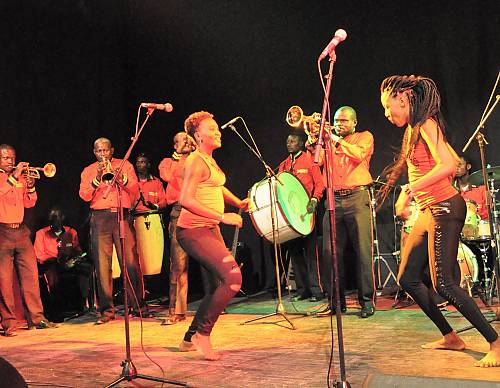
The Democratic Republic of the Congo (DRC) is often described as the heart of Africa—and for good reason. Covering an area larger than Western Europe, it is home to one of the world’s greatest rainforests, Africa’s second-longest river, extraordinary wildlife, and more than 250 ethnic groups whose traditions have shaped the continent for centuries.
Yet perhaps no country has influenced African culture quite like the DRC. Its music has inspired generations of artists across the continent, its forests shelter some of Earth’s rarest wildlife, and its rivers have connected communities long before roads existed.
While international headlines often focus on the country’s challenges, the Democratic Republic of the Congo is also a story of creativity, resilience, and one of the richest cultural heritages anywhere in Africa.
Why the Congo River Is the Lifeblood of a Nation
Few natural landmarks define a country as profoundly as the Congo River defines the Democratic Republic of the Congo.
Stretching more than 4,700 kilometres, it is Africa’s second-longest river and the world’s deepest. For centuries, it has served as a highway connecting remote communities, transporting goods, supporting fisheries, and sustaining millions of people.
Villages and cities have flourished along its banks, while generations have depended on its waters for farming, fishing, and trade.
Even today, the Congo River remains central to the country’s economy, culture, and identity.
A Rainforest That Breathes for the Planet
The Democratic Republic of the Congo contains the largest share of the Congo Basin rainforest, often called the “lungs of Africa.”
This immense forest stores vast amounts of carbon, regulates regional climate, and supports thousands of plant and animal species found nowhere else on Earth.
For many indigenous communities, the forest is not simply a place to live—it is a sacred home that provides food, medicine, and spiritual guidance.
Traditional ecological knowledge has enabled forest communities to live sustainably within this remarkable environment for countless generations.
More Than 250 Peoples, One Remarkable Nation
The Democratic Republic of the Congo is one of the most culturally diverse countries in the world.
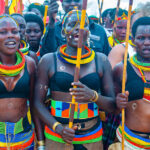
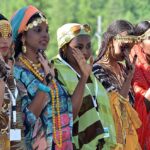
More than 250 ethnic groups contribute unique languages, customs, artistic traditions, and ceremonies to the nation’s cultural landscape.
Among the largest communities are the Kongo, Luba, Mongo, Lunda, Tetela, Hema, Mangbetu, and many others.
This diversity has created an extraordinary blend of traditions expressed through music, dance, storytelling, fashion, architecture, and cuisine.
Despite regional differences, a shared sense of resilience and cultural pride unites communities across this vast nation.
The Birthplace of Africa’s Modern Music Revolution
Few countries have shaped African music as profoundly as the Democratic Republic of the Congo.
Congolese rumba, later evolving into soukous, transformed popular music across Africa during the twentieth century.
Its infectious guitar melodies, energetic rhythms, and vibrant dance styles spread from Kinshasa to Lagos, Nairobi, Johannesburg, and beyond.
Even today, Congolese musicians continue to influence artists throughout Africa and the global African diaspora.
Music is more than entertainment in the DRC—it is a language of celebration, storytelling, and national identity.
Traditional Art That Speaks Across Generations
Art has long played a central role in Congolese culture.
Wood carvings, ceremonial masks, woven textiles, pottery, and sculptures are created using techniques passed down through generations.
Many artistic works carry spiritual meanings or commemorate important historical events and community traditions.
Traditional craftsmanship remains highly respected, with artisans preserving ancient skills while adapting their work for contemporary audiences.
These artistic traditions continue to attract collectors and cultural enthusiasts from around the world.
Virunga and the Wildlife That Captivates the World
The Democratic Republic of the Congo is home to some of Africa’s most extraordinary wildlife.
Its protected areas include mountain gorillas, forest elephants, chimpanzees, okapis, bonobos, and countless bird species.
Virunga National Park, Africa’s oldest national park, has become internationally renowned for its biodiversity and conservation efforts.
For many local communities, wildlife is deeply connected to folklore, spiritual beliefs, and cultural identity.
Protecting these natural treasures has become a shared responsibility for conservationists and local residents alike.
Congolese Cuisine: A Celebration of the Land
Food in the Democratic Republic of the Congo reflects the country’s incredible natural abundance.
Cassava, plantains, maize, rice, peanuts, beans, and fresh fish form the foundation of many traditional meals.
Popular dishes vary across regions but are united by the use of fresh local ingredients and communal dining traditions.
Meals often bring extended families together, reinforcing values of generosity, hospitality, and social connection.
Markets throughout the country offer vibrant displays of tropical fruits, vegetables, spices, and locally prepared delicacies.
Faith, Festivals, and Community Life
Religion and traditional customs coexist throughout the Democratic Republic of the Congo.
Christianity is widely practiced, while many communities also maintain cultural ceremonies honoring ancestors and local traditions.
Festivals feature colourful clothing, energetic dances, drumming, storytelling, and communal feasts that celebrate both faith and cultural identity.
These events strengthen community bonds and ensure that younger generations remain connected to their heritage.
A New Generation Building on Ancient Foundations
The Democratic Republic of the Congo has one of Africa’s youngest populations.
Across cities such as Kinshasa, Lubumbashi, and Goma, young entrepreneurs, musicians, filmmakers, designers, and innovators are shaping the country’s future.
Digital technology has opened new opportunities for Congolese artists to share their work globally while preserving local traditions.
This fusion of creativity and cultural pride continues to redefine the country’s image on the international stage.
Why the Democratic Republic of the Congo Is Africa’s Cultural Powerhouse
The Democratic Republic of the Congo is more than Africa’s second-largest country. It is one of the continent’s greatest cultural engines.
Its rivers sustain millions, its forests protect the planet, its music inspires generations, and its traditions continue to shape communities across a vast and diverse landscape.
For travelers willing to explore beyond the headlines, the DRC offers unforgettable experiences rooted in authenticity, creativity, and resilience.
It is a nation where drums echo through ancient forests, artists transform history into masterpieces, and the mighty Congo River continues to carry the stories of Africa’s heart.
The Democratic Republic of the Congo is not simply a destination—it is one of the defining cultural landscapes of the African continent.
Email Us on editorial@nnafrica.com