

For decades Africa has sold itself to the world through its wildlife, beaches and spectacular landscapes. Yet one of the continent’s largest untapped tourism assets attracts millions of people every year without featuring prominently in many national tourism strategies. It is not wildlife or wine. It is faith.
Religious and sacred tourism has quietly become one of the fastest-growing segments of global travel, with pilgrimage destinations generating billions of dollars annually. Europe has long understood this. Asia has built thriving visitor economies around temples and sacred sites. Africa, despite possessing extraordinary spiritual diversity and some of the world’s largest religious gatherings, has yet to unlock similar economic value.
Researchers from the Tourism Research in Economics, Environs and Society (TREES) research unit at the North-West University believe that could change.
Prof. Lisebo Tseane-Gumbi, Dr Walter Wessels and Dr Michael Chambwe are participating in SacredTravels4Growth, an Erasmus+ initiative funded by the European Union that seeks to strengthen higher education, tourism research and sustainable development through religious and cultural tourism. But the project’s ambition extends well beyond academia.
“The project recognises that pilgrimage routes, sacred heritage and religious destinations can contribute to sustainable tourism development, local economic growth, cultural preservation, community empowerment and intercultural understanding,” explains Dr Walter Wessels.
That seemingly simple observation challenges the way tourism is traditionally viewed. Across much of Africa, tourism has long depended heavily on wildlife, coastal destinations and nature-based attractions. While enormously successful, this also leaves many destinations vulnerable to seasonality, changing travel patterns and increasing competition.
Religious tourism offers something different.
“Many sacred sites are located in smaller towns and rural communities that often experience high unemployment and limited economic activity,” says Dr Wessels. “Developing tourism infrastructure around these sites can stimulate local economies.”
That matters because pilgrimage tourists rarely consume tourism in isolation. They require accommodation, restaurants, transport, guides, local crafts and cultural experiences. Instead of concentrating spending inside major tourism hubs or luxury resorts, pilgrimage routes often spread economic activity across dozens of communities.
The economic multiplier can therefore be substantial.
The SacredTravels4Growth project focuses heavily on developing local skills rather than simply promoting destinations.
“Tourism stakeholders, municipalities and local communities will be able to receive training in religious and sacred tourism practices, strategic management of sacred and religious sites, visitor management and marketing approaches designed specifically for the faithful and spiritual traveller,” says Dr Wessels.
The beneficiaries are not only tourism officials.
“This helps local entrepreneurs, guides, accommodation providers and faith-based organisations participate more effectively in the tourism economy.”
For rural communities across Africa, that translates into tangible opportunities.
“New employment opportunities can be created through guided tours, accommodation, food services, transport, crafts and cultural performances.”
Perhaps the greatest opportunity lies in diversification.
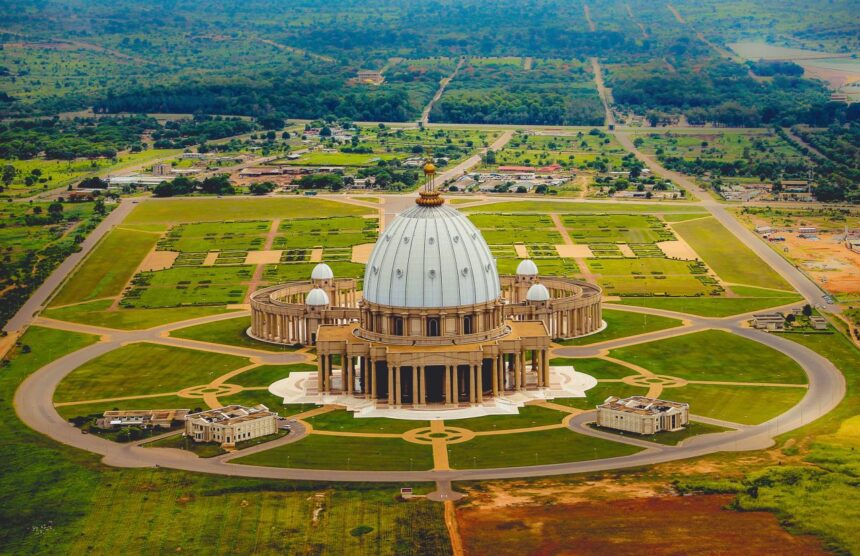
Africa is home to internationally recognised religious landmarks and pilgrimage destinations, from the rock-hewn churches of Lalibela in Ethiopia and the Basilica of Our Lady of Peace in Côte d’Ivoire to the annual Zion Christian Church pilgrimage to Moria in South Africa, the ancient mosques of North Africa, and countless sacred indigenous sites across the continent. Yet many of these remain isolated attractions rather than components of integrated tourism products.
Dr Wessels believes that can change.
“By packaging these experiences into thematic routes and pilgrimage-style journeys, tourism authorities can encourage longer visitor stays and increased spending across multiple regions.”
The comparison with Spain is particularly instructive.
During a recent study visit to Santiago de Compostela, the researchers observed how the famous Camino de Santiago functions not merely as a destination but as an economic ecosystem.
“The pilgrimage route is not merely a single destination, but a connected network of towns, villages, heritage attractions, accommodation providers, restaurants and local businesses that collectively support local economies,” Dr Wessels explains.
The Camino’s success depends on more than churches.
“Pilgrims experience not only the physical journey, but also the history, spirituality, legends and cultural traditions associated with the route.”
Africa possesses similar stories.
Its religious history encompasses Christianity, Islam, Hinduism, Judaism, indigenous African belief systems and numerous other faith traditions that have shaped societies for centuries. These histories also intersect with trade, migration, liberation movements, reconciliation and cultural exchange. Yet these narratives are seldom connected into coherent visitor experiences.
“By developing themed religious and heritage routes that connect churches, mosques, temples, monasteries, liberation heritage sites and sacred indigenous spaces, African countries could create authentic tourism experiences that encourage visitors to travel beyond major cities and support rural communities.”
Infrastructure also matters.
“The success of the Camino de Santiago is supported by clear route markers, affordable accommodation, transport access, visitor centres and information services,” says Dr Wessels.
Such relatively modest investments can generate long-term economic returns while simultaneously protecting heritage.
There is another dimension often overlooked in tourism debates.
Many forms of mass tourism favour large operators and multinational hotel groups. Religious tourism, by contrast, tends to favour local enterprise.
“There is greater support for small and medium-sized enterprises rather than larger, more corporate tourism enterprises,” Dr Wessels notes.
Community members can establish guesthouses, guiding services, cultural experience businesses, traditional craft outlets and food markets. Because these businesses are locally owned, more tourism revenue remains within communities instead of leaking elsewhere.
The approach aligns naturally with sustainable development.
“Community-based tourism models encourage local participation in planning and decision-making, helping ensure that development is socially equitable and environmentally responsible.”
Universities have an important role to play.
Historically, much research into pilgrimage tourism has focused on Europe, Asia and the Middle East. Africa’s spiritual landscapes have received comparatively little scholarly attention.
“African universities play a critical role in shaping the future of religious and pilgrimage tourism by providing the knowledge, innovation and critical perspectives needed to ensure tourism development is relevant to African contexts and beneficial to local communities,” says Dr Wessels.
That includes documenting traditions, developing tourism curricula and addressing difficult policy questions surrounding commercialisation, overcrowding and the protection of sacred spaces.
The TREES research unit hopes to become a continental leader in this work.
According to Dr Wessels, the unit develops “African-centred tourism knowledge” through interdisciplinary research into community tourism, religious tourism, sustainable destination management, township tourism and rural development.
It is also exploring digital tourism marketing, artificial intelligence, storytelling and visitor experience design—areas likely to define the industry’s future competitiveness.
Ultimately, SacredTravels4Growth is about more than attracting additional tourists.
It challenges a longstanding assumption that tourism is primarily about selling scenery.
Instead, it suggests that economic growth may increasingly come from selling meaning.
If African countries succeed in transforming their churches, mosques, temples, monasteries, sacred landscapes and pilgrimage routes into coherent visitor experiences, they could create employment, strengthen rural economies, preserve cultural heritage and diversify tourism without relying solely on traditional attractions.
For a continent searching for new engines of inclusive growth, that may prove to be one of its most valuable journeys.
Email Us on editorial@nnafrica.com