

In the rolling hills and fertile valleys of Uganda’s West Nile region lives the Lugbara, one of the country’s largest ethnic communities outside the Bantu and Luo-speaking groups. Renowned for their hospitality, farming traditions, craftsmanship, and strong family values, the Lugbara have cultivated a vibrant culture that has endured for centuries.
Bordering both the Democratic Republic of the Congo and South Sudan, the Lugbara have long been a bridge between different peoples and cultures. Despite these interactions, they have preserved their own language, customs, and traditions, creating a unique identity that continues to flourish in modern Uganda.
Today, the Lugbara are recognized for their contributions to education, business, public service, religion, and agriculture, while remaining proud custodians of their cultural heritage.
Who Are the Lugbara?
The Lugbara are a Central Sudanic-speaking people indigenous to the West Nile region of northwestern Uganda.
Their homeland includes:
- Arua City
- Arua District
- Maracha District
- Terego District
- Madi-Okollo District
- Yumbe District (parts)
Large Lugbara communities also live across the border in the Democratic Republic of the Congo.
The Lugbara are one of the largest Central Sudanic-speaking communities in East Africa and have maintained a strong cultural identity despite centuries of regional interaction.
Origins and History
The Lugbara are believed to have inhabited the West Nile region for many centuries, with oral traditions tracing their ancestry to peoples who gradually settled between the Nile and the Congo Basin.
Unlike many neighboring communities that developed centralized kingdoms, the Lugbara organized themselves into independent chiefdoms and clans led by respected elders.
Their strategic location made them active participants in regional trade, exchanging agricultural produce, livestock, iron tools, and other goods with neighboring peoples including the Alur, Madi, Kakwa, and communities in present-day Congo and South Sudan.
Traditional Leadership
Traditionally, the Lugbara did not have a single king.
Leadership was exercised through:
- Clan elders
- Community chiefs
- Family heads
- Councils of respected elders
These leaders were responsible for:
- Resolving disputes
- Preserving customs
- Supervising land matters
- Guiding community ceremonies
- Maintaining social harmony
Consensus and dialogue have long been central principles of Lugbara governance.
Clans and Social Organization
The Lugbara have numerous clans that form the foundation of community life.
The clan system governs:
- Marriage
- Family identity
- Inheritance
- Land ownership
- Conflict resolution
- Cultural ceremonies
Respect for elders remains one of the strongest values within Lugbara society.
Language
The Lugbara speak Lugbara, a Central Sudanic language that differs significantly from Uganda’s Bantu and Nilotic languages.
The language is widely spoken throughout West Nile and is used in:
- Homes
- Schools
- Churches
- Local radio
- Community gatherings
Lugbara oral traditions include folktales, proverbs, songs, riddles, and historical narratives that preserve the wisdom and identity of the community.
Traditional Homes
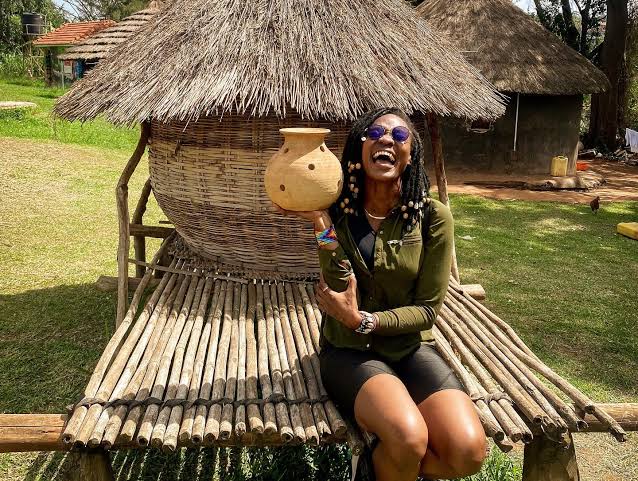
Traditionally, Lugbara families built circular houses using mud walls, wooden poles, and grass-thatched roofs.
A typical homestead included:
- Family houses
- Granaries
- Livestock shelters
- Outdoor kitchens
- Courtyards for family gatherings
Modern brick and iron-roofed homes are increasingly common across the region.
Food and Cuisine
Agriculture remains central to Lugbara life.
Popular traditional foods include:
- Cassava
- Millet
- Sorghum
- Maize
- Sweet potatoes
- Beans
- Groundnuts
- Sesame
- Chicken
- Goat meat
- Beef
Fresh vegetables and seasonal fruits are also important parts of the Lugbara diet.
Meals are traditionally shared among family members and visitors, reflecting the community’s strong culture of hospitality.
Traditional Dress
Although modern clothing is widely worn today, traditional attire remains important during:
- Weddings
- Cultural festivals
- Community celebrations
- Traditional ceremonies
Colorful garments, beads, bracelets, necklaces, and ceremonial ornaments are worn with pride during these occasions.
Music and Dance
Music is an essential part of Lugbara cultural life.
Traditional performances include:
- Drumming
- Singing
- Flute music
- Rhythmic dancing
Music accompanies:
- Weddings
- Harvest festivals
- Initiation ceremonies
- Community celebrations
- Cultural festivals
Songs celebrate family, farming, bravery, friendship, and important historical events.
Marriage and Family Life
Marriage is regarded as an important alliance between families.
Traditional marriage ceremonies involve:
- Family introductions
- Bridewealth negotiations
- Blessings by elders
- Music and dancing
- Community feasting
Bridewealth traditionally consists of livestock and other agreed gifts that strengthen relationships between families.
The extended family continues to play a vital role in raising children and preserving cultural values.
Spiritual Beliefs
Historically, the Lugbara believed in a supreme creator and respected ancestral spirits and sacred places.
Today, Christianity is the dominant religion, particularly Catholicism and Anglicanism, although traditional beliefs continue to influence cultural ceremonies and family life. Islam is also practiced by a minority of the population.
Economic Activities
The Lugbara economy is largely based on agriculture and trade.
Major economic activities include:
- Cassava farming
- Tobacco cultivation
- Maize production
- Groundnut farming
- Livestock keeping
- Trade
- Cross-border commerce
- Education
- Public service
- Small businesses
Their proximity to international borders has made trade an important source of income for generations.
Famous Sons and Daughters
The Lugbara have produced many distinguished Ugandans in politics, education, medicine, religion, sports, and business.
Notable figures include:
- Cardinal Emmanuel Wamala – one of Uganda’s most respected Catholic leaders, whose family roots trace to the wider West Nile region through ancestry and service, though he is not ethnically Lugbara. (For historical accuracy, avoid listing him as Lugbara in publication.)
- Brig. Gen. Moses Ali – veteran politician and long-serving government minister, widely associated with the West Nile region.
- Numerous educators, healthcare professionals, entrepreneurs, artists, and civil servants have also contributed to Uganda’s development.
Preserving Lugbara Heritage
Community leaders, cultural associations, schools, and local organizations continue to promote the Lugbara language, traditional music, dances, folklore, and oral history.
Annual cultural festivals celebrate Lugbara heritage and encourage younger generations to preserve their identity while embracing modern education and economic opportunities.
Did You Know?
- The Lugbara are among Uganda’s largest Central Sudanic-speaking communities.
- Their language is unrelated to the Bantu and Luo languages spoken by many neighboring communities.
- West Nile has long been an important center for cross-border trade.
- The Lugbara are well known for their hospitality and strong family traditions.
- Traditional storytelling remains an important way of preserving Lugbara history and values.
Quick Facts
| Feature | Information |
|---|---|
| Region | West Nile, Northwestern Uganda |
| Language | Lugbara |
| Ethnic Group | Central Sudanic |
| Traditional Leadership | Clan elders and community chiefs |
| Main Economic Activities | Agriculture, trade, livestock keeping |
| Major Crops | Cassava, maize, tobacco, groundnuts |
Conclusion
The Lugbara are a resilient and culturally rich people whose traditions have flourished for centuries in Uganda’s West Nile region. Their language, customs, music, and strong community values continue to distinguish them as one of the country’s most unique ethnic communities.
As they preserve their heritage while embracing education, innovation, and regional cooperation, the Lugbara continue to make valuable contributions to Uganda’s development. Their story is one of cultural pride, resilience, and a lasting connection to the fertile lands of West Nile.
Email Us on editorial@nnafrica.com