

Saturday, 5 Sep 2026
  • My Feed
  • My Saves
  • History
  • Contact Us
Subscribe
The News Network Africa
  • Home
  • Opinion

    Morocco’s unemployment rate rises to 13.3% in 2024 as drought hits farmers

    By
    Hayley Sky

    Volkswagen’s African unit makes record Polo exports to Europe, Asia

    By
    nna

    Nigeria’s Dangote Refinery Increases Petrol Output to 650,000 bpd, Exports Begin

    By
    Reporter

    Congo jails three Chinese citizens in illegal mining crackdown

    By
    Hayley Sky

    Ham Kiggundu Sued Over Owino Market Demolition, Land Grabbing

    By
    Hayley Sky

    Nigerian Operators to Bring Upstream Know-How to African Energy Week (AEW) in Cape Town

    By
    Hayley Sky
  • Politics
    CELEBRATING BLACK HISTORY MONTH: Honoring African Leaders and their Contributions

    CELEBRATING BLACK HISTORY MONTH: Honoring African Leaders and their Contributions

    By
    Eric Mafundo
    Uganda’s Mud Wrestling Sensation: From Local Roots to Global Fame.

    Uganda’s Mud Wrestling Sensation: From Local Roots to Global Fame.

    By
    Eric Mafundo
    Mali’s Military Coup: The Suppression of Political Parties and the Road to Uncertainty.

    Mali’s Military Coup: The Suppression of Political Parties and the Road to Uncertainty.

    By
    Eric Mafundo
    At least 20 Nigerian soldiers killed in attack on remote army base

    At least 20 Nigerian soldiers killed in attack on remote army base

    By
    Correspondent
    2025 UACE:  Results Released as Female Candidates Outperform Males

    2025 UACE: Results Released as Female Candidates Outperform Males

    By
    Hayley Sky
    Kenyan Cardinal to Miss Papal Vote Due to Ill Health: A Rare Absence.

    Kenyan Cardinal to Miss Papal Vote Due to Ill Health: A Rare Absence.

    By
    Eric Mafundo
  • Business
    Senegal has signed a deal with separatist rebels.But will it end one of Africa’s longest conflicts?

    Senegal has signed a deal with separatist rebels.But will it end one of Africa’s longest conflicts?

    By
    Eric Mafundo
    Angola’s Rhythms of Resilience: Inside the Culture That Turned Struggle into Celebration

    Angola’s Rhythms of Resilience: Inside the Culture That Turned Struggle into Celebration

    By
    K Allen
    Burna Boy: From Nigerian Icon to Boston’s Celebrated Artist.

    Burna Boy: From Nigerian Icon to Boston’s Celebrated Artist.

    By
    Eric Mafundo
    Shadows Over the Sahel: Mali Accuses Algeria of Sponsoring Terror Amid Drone Warfare

    Shadows Over the Sahel: Mali Accuses Algeria of Sponsoring Terror Amid Drone Warfare

    By
    Eric Mafundo
    Op-Ed: Africa’s Energy Wealth: Why Good Governance Must Power a Just Transition

    Op-Ed: Africa’s Energy Wealth: Why Good Governance Must Power a Just Transition

    By
    Hayley Sky
    Egypt: Where the Nile Gave Birth to One of the World’s Greatest Civilizations

    Egypt: Where the Nile Gave Birth to One of the World’s Greatest Civilizations

    By
    K Allen
  • Pages
    • Advertise with US

Archives

  • September 2026
  • August 2026
  • July 2026
  • June 2026
  • May 2026
  • April 2026
  • March 2026
  • February 2026
  • January 2026
  • December 2025
  • November 2025
  • October 2025
  • September 2025
  • August 2025
  • May 2025
  • April 2025
  • March 2025
  • February 2025
  • January 2025
  • December 2024

Categories

  • Agriculture
  • Business
  • Culture
  • Health
  • Lifestyle
  • Minerals
  • News
  • Opinion
  • Politics
  • Sports
  • Technology
  • Travel
  • Uganda
  • 🔥
  • News
  • Politics
  • Business
  • Lifestyle
  • Culture
  • Opinion
  • Travel
  • Uganda
  • Minerals
  • Health
Font ResizerAa
The News Network AfricaThe News Network Africa
  • My Saves
  • My Feed
  • History
  • Travel
  • Opinion
  • Politics
  • Health
  • Technology
  • News
Search
  • Pages
    • Home
    • Advertise with Us
  • Personalized
    • My Feed
    • My Saves
    • History
  • Categories
    • News
    • Business
    • Minerals
    • Culture
    • Opinion
    • Politics
    • Agriculture
    • Health
    • Technology
    • Travel
Have an existing account? Sign In
Follow US
© 2025 The News Network Africa. All Rights Reserved.
The News Network Africa > Blog > Culture > Uganda > The Madi: The River People of the Nile and Keepers of an Enduring Cultural Legacy
Uganda

The Madi: The River People of the Nile and Keepers of an Enduring Cultural Legacy

Churchill Nkagumaho
Last updated: 22 July 2026 14:02
Churchill Nkagumaho
Share
The Madi: The River People of the Nile and Keepers of an Enduring Cultural Legacy
SHARE

Flowing through the heart of northwestern Uganda, the River Nile has shaped the lives of the Madi people for centuries. Living along its fertile banks and surrounding plains, the Madi have developed a rich culture rooted in agriculture, fishing, craftsmanship, and strong family traditions.

Contents
Who Are the Madi?Origins and HistoryTraditional LeadershipClans and Social OrganizationLanguageTraditional HomesFood and CuisineTraditional DressMusic and DanceMarriage and Family LifeSpiritual BeliefsEconomic ActivitiesFamous Sons and DaughtersPreserving Madi HeritageDid You Know?Quick FactsConclusion

Known for their hospitality, peaceful coexistence, and respect for elders, the Madi have preserved a unique identity despite centuries of interaction with neighboring communities in Uganda and South Sudan. Their traditions, language, music, and oral history continue to define one of Uganda’s most fascinating indigenous cultures.

- Advertisement -

Today, the Madi remain proud custodians of a heritage that reflects resilience, unity, and a deep connection to the Nile.


Who Are the Madi?

The Madi are a Central Sudanic-speaking people indigenous to the West Nile region of northwestern Uganda.

- Advertisement -

Their homeland includes:

  • Adjumani District
  • Moyo District
  • Parts of Obongi District

Large Madi communities also live across the border in South Sudan, reflecting centuries of shared history before modern international boundaries were established.

The Madi are one of Uganda’s officially recognized indigenous communities and remain an important part of the country’s cultural diversity.

- Advertisement -

Origins and History

The Madi are believed to have lived in the Nile Valley for many centuries.

Oral traditions describe gradual settlement along the fertile riverbanks, where farming, fishing, hunting, and livestock keeping supported thriving communities.

Unlike centralized kingdoms, traditional Madi society developed around clans and local chiefdoms led by respected elders. Community leadership emphasized consultation, cooperation, and peaceful conflict resolution.

The River Nile also encouraged trade with neighboring peoples, including the Acholi, Lugbara, Kakwa, and communities in present-day South Sudan.


Traditional Leadership

Traditionally, the Madi did not have a single king.

Leadership was provided by:

  • Clan elders
  • Community chiefs
  • Family heads
  • Councils of elders

These leaders were responsible for:

  • Preserving customary law
  • Resolving disputes
  • Managing communal land
  • Organizing ceremonies
  • Promoting social harmony

Their authority was based on wisdom, integrity, and community trust.


Clans and Social Organization

Clan identity remains central to Madi culture.

Clans guide:

  • Marriage
  • Family identity
  • Inheritance
  • Cultural ceremonies
  • Conflict resolution
  • Community responsibilities

Respect for elders remains one of the strongest values within Madi society.


Language

The Madi speak Ma’di, a Central Sudanic language that is also spoken by communities in South Sudan.

The language remains widely used in:

  • Homes
  • Schools
  • Churches
  • Community meetings
  • Local radio stations

Ma’di preserves a rich oral tradition through folktales, riddles, songs, praise poetry, and proverbs that teach wisdom and preserve history.


Traditional Homes

Historically, Madi families built circular houses using mud walls, wooden poles, reeds, and grass thatching.

Traditional homesteads commonly included:

  • Family houses
  • Granaries
  • Livestock shelters
  • Outdoor kitchens
  • Family courtyards

Modern brick houses are becoming more common, although traditional compounds remain an important part of rural life.


Food and Cuisine

The fertile Nile Valley supports diverse agricultural activities.

Traditional foods include:

  • Cassava
  • Millet
  • Sorghum
  • Maize
  • Sweet potatoes
  • Beans
  • Groundnuts
  • Sesame
  • Fish
  • Chicken
  • Goat meat

Fresh fish from the Nile has long been an important part of the Madi diet.

Meals are traditionally shared among family members and visitors as an expression of hospitality.


Traditional Dress

Modern clothing is widely worn today.

Traditional attire continues to be displayed during:

  • Weddings
  • Cultural festivals
  • Community celebrations
  • Traditional ceremonies

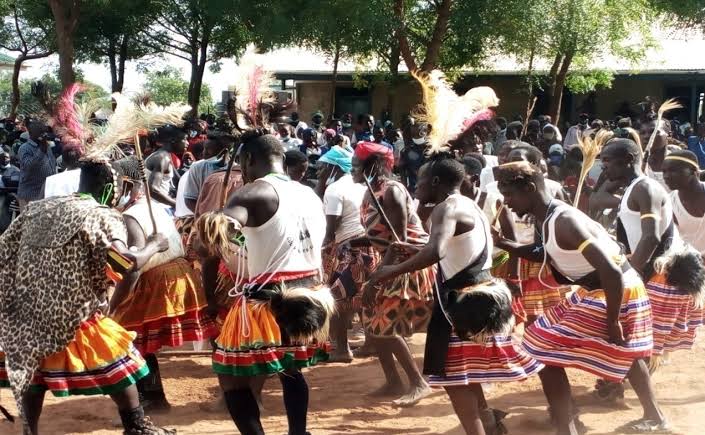
Colorful garments, beads, necklaces, bracelets, and ceremonial ornaments reflect pride in Madi heritage.


Music and Dance

Music and dance remain central to Madi cultural life.

Traditional performances feature:

  • Drumming
  • Singing
  • Flutes
  • Rhythmic dancing

Music accompanies:

  • Weddings
  • Harvest festivals
  • Birth celebrations
  • Cultural ceremonies
  • Community gatherings

Songs celebrate family life, successful harvests, historical events, and community unity.


Marriage and Family Life

Marriage is considered a union between two extended families.

Traditional ceremonies involve:

  • Family introductions
  • Bridewealth negotiations
  • Blessings from elders
  • Music and dancing
  • Community feasting

Bridewealth traditionally includes cattle, goats, or other agreed gifts that strengthen family relationships.

The extended family continues to play a vital role in raising children and preserving traditions.


Spiritual Beliefs

Historically, the Madi believed in a supreme creator and respected ancestral spirits and sacred places.

Today, Christianity is the dominant religion, particularly Catholicism and Anglicanism, although traditional beliefs continue to influence cultural practices and family ceremonies.


Economic Activities

The Madi economy is primarily based on agriculture.

Major economic activities include:

  • Cassava farming
  • Maize cultivation
  • Millet production
  • Groundnut farming
  • Fishing
  • Livestock keeping
  • Trade
  • Education
  • Public service
  • Small businesses

Cross-border trade with South Sudan has also become an important source of livelihood for many families.


Famous Sons and Daughters

The Madi have produced respected leaders in education, religion, public administration, healthcare, and politics.

Among the most notable is:

  • Gen. Tito Lutwa Okello – former military leader and Head of State of Uganda, whose roots are associated with the Madi-Acholi border region.

Many Madi professionals continue to serve Uganda in medicine, education, business, diplomacy, and community leadership.


Preserving Madi Heritage

Community leaders, schools, churches, and cultural organizations continue to promote the Ma’di language, traditional music, dances, folklore, and oral history.

Annual cultural festivals and educational programs encourage younger generations to preserve their heritage while embracing modern opportunities.


Did You Know?

  • The Madi live on both sides of the Uganda–South Sudan border.
  • The River Nile has shaped Madi culture and livelihoods for centuries.
  • Ma’di belongs to the Central Sudanic language family.
  • Fishing and agriculture remain central to the Madi economy.
  • Oral storytelling continues to play an important role in preserving Madi history.

Quick Facts

FeatureInformation
RegionWest Nile, Northwestern Uganda
LanguageMa’di
Ethnic GroupCentral Sudanic
Traditional LeadershipClan elders and community chiefs
Main Economic ActivitiesAgriculture, fishing, trade
Famous LandmarkRiver Nile

Conclusion

The Madi are a resilient and culturally rich people whose history has long been intertwined with the River Nile. Their language, traditions, music, and communal values reflect centuries of adaptation, cooperation, and respect for their environment.

As they continue to preserve their cultural identity while embracing education, development, and regional cooperation, the Madi remain an important part of Uganda’s national story. Their heritage stands as a testament to the enduring relationship between people, culture, and one of Africa’s greatest rivers.

Email Us on editorial@nnafrica.com
Share This Article
Facebook Whatsapp Whatsapp Telegram Email Copy Link
Previous Article Niger: Where the Sahara, the Great River, and Ancient Caravan Kingdoms Preserve the Spirit of the Sahel Niger: Where the Sahara, the Great River, and Ancient Caravan Kingdoms Preserve the Spirit of the Sahel
Next Article Africa’s next tourism boom may begin in its churches Africa’s next tourism boom may begin in its churches

Latest Posts

The Kebu: Uganda’s Lesser-Known Community and a Heritage Worth Preserving
Culture Uganda
The Aringa: The West Nile People with a Rich Cultural Heritage
Culture Uganda
Uzbekistan Deepens Interest in African Markets as Trade and Investment Ties Grow
Business
Nepal Floods: Global Warming & Warning to the World, Gautam Karve, Editor-in-Chief, World Media Organization 
News

Opinions

Social interaction is essential for healthy childhood development
News Opinion
PRIDE and Family Chaos: Saying sorry heals and mends friendships
Lifestyle Opinion
The Tongue, the main reason for divorce today
Lifestyle Opinion
Constitutions must serve citizens, not political power
Opinion

You Might Also Like

The Iteso: The Proud People of Teso and Guardians of Eastern Uganda’s Rich Cultural Heritage
Uganda

The Iteso: The Proud People of Teso and Guardians of Eastern Uganda’s Rich Cultural Heritage

By
Churchill Nkagumaho
The Kumam: The Resilient People of the Lake Kyoga Basin and Their Rich Cultural Heritage
Uganda

The Kumam: The Resilient People of the Lake Kyoga Basin and Their Rich Cultural Heritage

By
Churchill Nkagumaho
The Baganda: The Kingdom That Shaped Modern Uganda
Uganda

The Baganda: The Kingdom That Shaped Modern Uganda

By
Churchill Nkagumaho
The Karamojong: Uganda’s Proud Pastoral Warriors and Keepers of Ancient Traditions
Uganda

The Karamojong: Uganda’s Proud Pastoral Warriors and Keepers of Ancient Traditions

By
Churchill Nkagumaho
The News Network Africa
X-twitter Facebook Rss

About US


The News Network Africa: Your instant connection to breaking stories and live updates. Stay informed with our real-time coverage across minerals, culture, politics, business, tech, entertainment, and more. Your reliable source for 24/7 news.

Top Categories
  • News
  • Opinion
  • Politics
  • Tech
  • Health
  • Travel
Usefull Links
  • Advertise with Us
  • Complaint
  • Privacy Policy
  • Cookie Policy
  • Submit a Tip

© The News Network Africa. All Rights Reserved.

Welcome Back!

Sign in to your account

Username or Email Address
Password

Lost your password?