


For many Africans, South Africa has long represented hope.
From the bustling streets of Johannesburg to the vibrant neighborhoods of Cape Town and Durban, millions have crossed borders in search of jobs, education, safety, and a chance to build a better life. Zimbabweans, Nigerians, Congolese, Ethiopians, Somalis, Mozambicans, Malawians, and many others have made South Africa their second home.
But today, that dream is becoming increasingly uncertain.
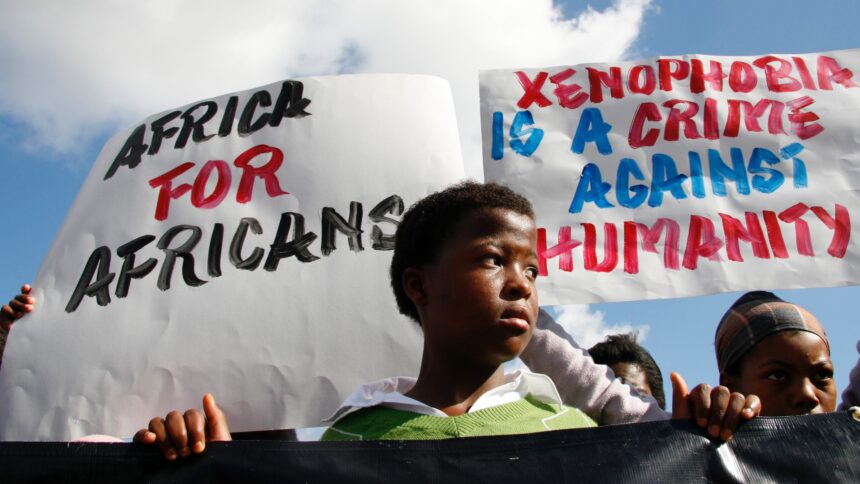
A new wave of anti-foreigner sentiment has once again placed migrants at the center of a heated national debate. Violent attacks, community protests, political rhetoric, and growing public frustration over unemployment have created an atmosphere of fear for many foreign nationals living in Africa’s most industrialized economy.
For thousands of families, the question is no longer how to build a future in South Africa—but whether it is safe to stay.
A Land of Opportunity Under Pressure
South Africa remains one of Africa’s largest economies, offering opportunities that are often difficult to find elsewhere on the continent.
Its developed financial sector, manufacturing industries, universities, and healthcare system have attracted migrants for decades. Many have established successful businesses, employed local workers, and contributed to economic growth.
Yet the country’s economic challenges have become increasingly severe.
High unemployment, particularly among young people, rising food prices, electricity shortages, and slow economic growth have left many South Africans frustrated. As these pressures mount, immigration has become one of the country’s most divisive political issues.
Why Are Tensions Rising?
Many South Africans believe undocumented migration places additional strain on public services, healthcare facilities, housing, and employment opportunities.
Political groups have increasingly called for tighter border controls and stricter enforcement of immigration laws. Community organizations have organized demonstrations demanding action against illegal immigration.
At the same time, migrant communities argue they are unfairly blamed for problems rooted in deeper economic and governance challenges.
Experts note that there is little evidence that migrants are the primary cause of South Africa’s unemployment crisis. Instead, factors such as slow economic growth, corruption, inequality, and limited job creation play much larger roles.
Nevertheless, public perception often shapes political reality.
Lives Turned Upside Down
Behind every headline is a human story.
Small business owners who spent years building successful shops now worry they could lose everything overnight.
Parents fear sending their children to school in neighborhoods where tensions are high.
Workers who contribute to South Africa’s economy wonder whether they will still have jobs tomorrow.
Many migrants left countries affected by conflict, political instability, or economic hardship, believing South Africa offered safety and opportunity.
Instead, some now find themselves living in uncertainty once again.
A Challenge for the Whole Continent
This is not simply South Africa’s problem.
Migration is increasing across Africa as people move in search of employment, education, security, and business opportunities. The African Continental Free Trade Area (AfCFTA) aims to encourage greater economic integration and mobility across borders.
However, rising hostility toward migrants could undermine these ambitions.
If African countries become less welcoming to one another, regional trade, investment, and labour mobility could all suffer.
The crisis therefore raises an important question: Can Africa achieve greater unity while managing the social and economic pressures that migration brings?
Political Stakes Continue to Rise
Immigration is expected to remain a defining issue in South African politics.
Several political parties have promised tougher immigration policies, while others argue that protecting human rights and strengthening the economy should take priority over blaming foreign nationals.
The debate is likely to shape election campaigns and influence government policy for years to come.
For African leaders watching from across the continent, South Africa’s experience offers important lessons about balancing border security, economic growth, and regional cooperation.
What Comes Next?
The future depends largely on South Africa’s ability to create jobs, improve public services, strengthen border management, and address the underlying causes of public frustration.
Protecting both citizens and lawful migrants will require effective governance, community dialogue, and regional cooperation.
Without meaningful solutions, cycles of fear and violence could continue, damaging South Africa’s international reputation and weakening Africa’s vision of continental unity.
Final Thoughts
South Africa remains a country of immense opportunity, resilience, and influence.
But as economic hardship and political pressure grow, so too does the challenge of maintaining social cohesion in one of Africa’s most diverse societies.
The choices made today will affect not only millions of South Africans but also countless Africans who still look to the Rainbow Nation as a place where hard work can build a better future.
Whether that dream survives may depend on how the country responds to one of its most difficult challenges yet.
Email Us on editorial@nnafrica.com