


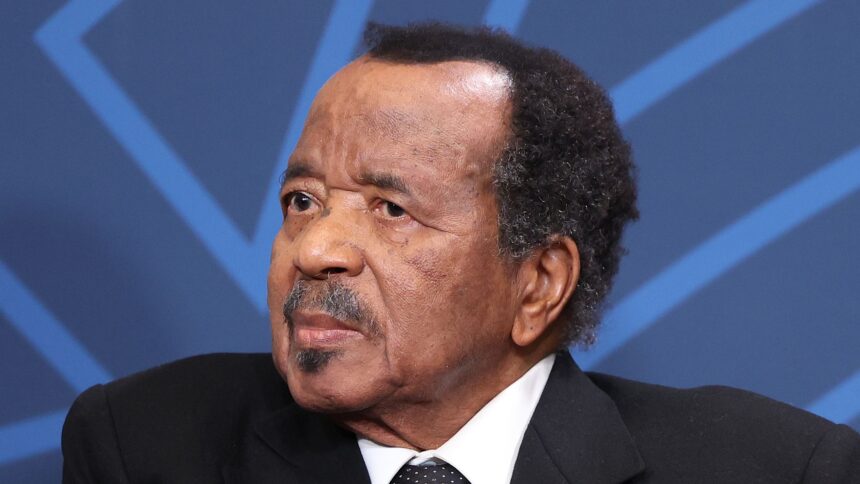
For more than four decades, one man has dominated Cameroon’s political landscape.
President Paul Biya has been in power since 1982, making him one of the world’s longest-serving leaders and one of Africa’s most enduring political figures.
But as the 93-year-old leader continues to govern the Central African nation, a question is increasingly being asked both inside and outside Cameroon:
Who will lead the country after Paul Biya?
The question has gained urgency following recent constitutional changes that reintroduced the position of vice president, a move that many analysts see as potentially reshaping the country’s succession process.
Why the Succession Debate Matters
Cameroon is one of Africa’s most influential countries.
With a population of more than 28 million people, significant natural resources, and a strategic location in Central Africa, any political transition could have implications beyond its borders.
For years, discussions about succession remained largely speculative.
Today, however, constitutional reforms and growing public debate have brought the issue into the spotlight.
The New Vice Presidency
In 2026, Cameroon’s parliament approved a constitutional amendment restoring the office of vice president for the first time in decades.
Under the new arrangement, the vice president would automatically assume the presidency if the sitting president dies, resigns, or becomes incapacitated. The vice president is appointed by the president rather than elected directly by voters.
Supporters argue the reform provides stability and continuity.
Critics say it concentrates significant power in the hands of the presidency and raises new questions about how succession will be managed.
The Names Being Discussed
Franck Biya
Among the most discussed figures is Franck Biya, the president’s son.
Although social media claims that he had already been appointed vice president were later debunked by fact-checkers and Cameroonian officials, his name continues to feature prominently in discussions about the country’s political future.
Supporters view him as someone who could provide continuity.
Critics argue that any move toward a family succession would spark controversy and debate.
Senior Government Loyalists
Several long-serving members of Cameroon’s political establishment are also viewed as potential contenders.
Over the years, experienced ministers, advisers, and ruling-party figures have built significant influence within the state apparatus.
Some analysts believe the eventual successor could emerge from this group rather than from outside the existing political system.
Opposition Figures
The opposition also sees the succession debate as an opportunity for political change.
Politicians who have challenged the ruling establishment in previous elections continue to advocate for reforms, greater political competition, and generational renewal.
Whether opposition candidates can unite around a common vision remains one of the major questions facing Cameroon’s political future.
A Country Facing Multiple Challenges
The succession conversation is unfolding at a time when Cameroon faces several significant challenges.
The country continues to deal with security concerns, economic pressures, and political tensions that have persisted for years.
Many citizens, particularly younger Cameroonians, are increasingly focused on issues such as employment opportunities, governance, public services, and economic growth.
With a large youth population, calls for political renewal have become more visible in recent years.
What Happens Next?
At the moment, no official successor has been named.
What is clear is that recent constitutional reforms have intensified public interest in how Cameroon will eventually manage one of the most significant political transitions in its modern history.
Whether the next leader comes from within the current establishment, the opposition, or an unexpected political force remains uncertain.
But one thing is beyond dispute.
The question of who will lead Cameroon after Paul Biya is no longer a conversation about a distant future.
It is a debate that is already shaping the country’s political landscape today.
Email Us on editorial@nnafrica.com