

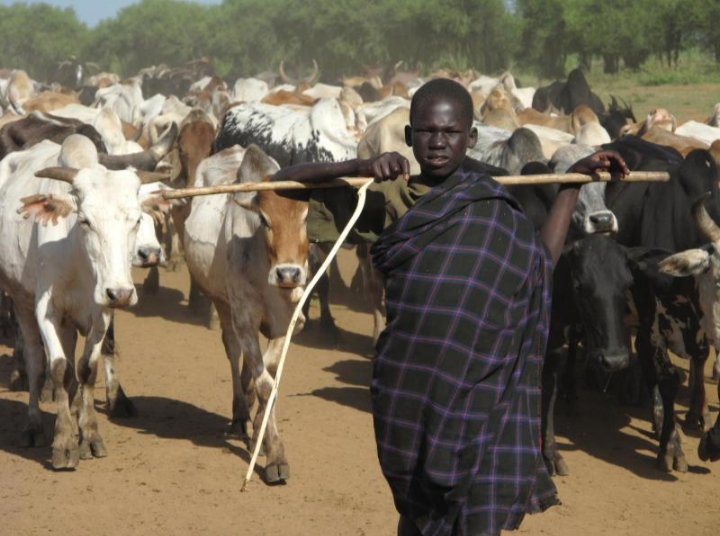
When many people hear the name Karamoja, they often think of drought, cattle raids, or hardship. Yet that image tells only a small part of the story. Beyond the headlines lies one of Uganda’s most fascinating cultural landscapes—a region where centuries-old traditions continue to shape daily life and where cattle are more than wealth; they are identity, heritage, and family.
The Karamojong are among Uganda’s most culturally distinctive communities. Living in the northeastern region of the country, they have preserved customs, songs, ceremonies, and social structures that have endured for generations despite modernization and changing economic realities.
Their story is one of resilience, pride, and an enduring connection to the land.
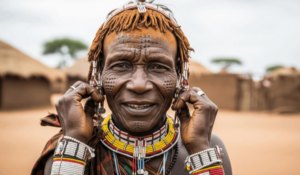
Who Are the Karamojong?
The are a Nilotic-speaking pastoral people who primarily inhabit the Karamoja sub-region in northeastern .
The broader Karamoja cluster includes related communities such as the The Jie , Dodoth,Bokora,Matheniko, and Pian . While each has its own identity, they share many cultural traditions and linguistic similarities.
Today, Karamoja consists of districts including Moroto, Kotido, Kaabong, Napak, Nabilatuk, Amudat, Nakapiripirit, and Karenga.
A History Rooted in Migration
Historians believe the ancestors of the Karamojong migrated southward centuries ago from regions around present-day South Sudan and Ethiopia before settling in northeastern Uganda.
Over time, they adapted to the region’s dry climate by developing a pastoral lifestyle centered on cattle, goats, and sheep.
Rather than building large kingdoms like some other Ugandan communities, the Karamojong organized themselves around clans and respected elders, whose authority guided community life and conflict resolution.
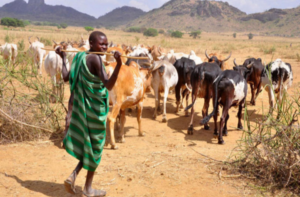
Why Cattle Mean Everything
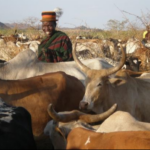
Among the Karamojong, cattle represent far more than economic wealth.
They symbolize:
- Family heritage
- Social status
- Marriage negotiations
- Community relationships
- Spiritual blessings
Many traditional songs praise beloved cattle by name, color, or horn shape. A person’s herd has historically reflected years of hard work and family legacy.
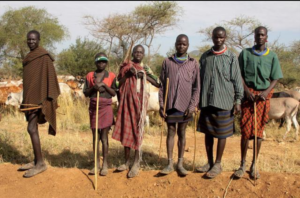
Language
The Karamojong speak Ngakarimojong, an Eastern Nilotic language closely related to those spoken by neighboring pastoral communities in Kenya and South Sudan.
Although English and Kiswahili are increasingly used in schools and public life, Ngakarimojong remains the heart of community identity.
Traditional Homes
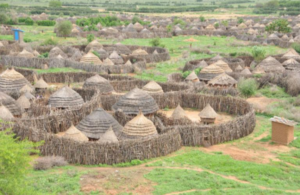
Families traditionally live in circular homesteads known as manyattas, enclosed by strong thorn fences to protect both people and livestock.
Within these compounds are huts built from poles, mud, grass, and thatch, designed to withstand the region’s hot climate.
The cattle kraal is usually the center of community life.
Food and Cuisine
The Karamojong diet reflects their pastoral heritage.
Staple foods include:
- Sorghum porridge
- Millet
- Milk
- Ghee
- Roasted meat
- Beans
- Honey
- Wild fruits during certain seasons
Milk remains one of the most valued foods and is served during important ceremonies and family gatherings.
Traditional Dress
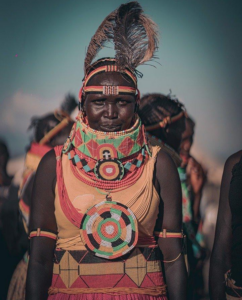
The Karamojong are known for their striking appearance.
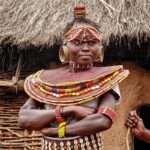
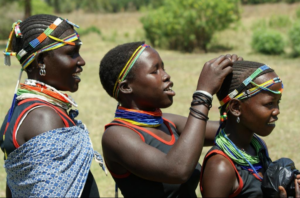
Men often wear brightly colored wraps or shawls, while women adorn themselves with elaborate bead necklaces, bracelets, earrings, and decorative belts.
These ornaments are more than decoration—they often reflect age, marital status, or social standing.
Music and Dance
Music is woven into daily life.
Songs celebrate:
- Courage
- Friendship
- Livestock
- Marriage
- Harvests
- Community history
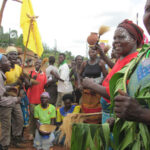
Traditional dances feature rhythmic jumping, chanting, and coordinated movement accompanied by drums and vocal harmonies.
Marriage Customs
Marriage is regarded as a union between families rather than just individuals.
Bridewealth, traditionally paid in cattle, remains an important custom in many communities.
Family elders play a central role in guiding negotiations and ensuring that marriages strengthen relationships between clans.
Spiritual Beliefs
Traditionally, the Karamojong believed in a supreme creator and honored ancestors through prayers and rituals connected to rain, livestock, and community well-being.
Today, Christianity has become widespread, but many families continue to preserve elements of their traditional cultural practices.
Economic Life Today
Although livestock remains central to Karamojong identity, today’s economy is becoming more diverse.
Many people now engage in:
- Crop farming
- Trade
- Small businesses
- Tourism
- Education
- Government service
- Conservation work
Improved roads, schools, healthcare, and communication have opened new opportunities while allowing many communities to maintain their cultural heritage.
Challenges and Change
Like many indigenous communities, the Karamojong have experienced significant change over recent decades.
Climate variability, population growth, changing livelihoods, and government development programs have reshaped aspects of life in Karamoja. At the same time, community leaders, cultural institutions, and younger generations continue working to preserve language, traditions, and cultural identity while adapting to new opportunities.
Did You Know?
- The Karamojong are among East Africa’s best-known pastoral communities.
- Cattle songs are an important form of oral history and cultural expression.
- Traditional beadwork often carries symbolic meaning related to identity and life stages.
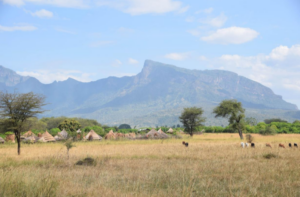
- Karamoja is home to dramatic mountains, wildlife, and unique cultural tourism experiences.
Quick Facts
| Feature | Information |
|---|---|
| Region | Northeastern Uganda |
| Main Language | Ngakarimojong |
| Traditional Occupation | Pastoralism |
| Main Livestock | Cattle, goats, sheep |
| Traditional Home | Manyatta |
| Famous For | Cattle culture, beadwork, warrior heritage, oral traditions |
Conclusion
The Karamojong are far more than the stereotypes often associated with Karamoja. Their rich traditions, pastoral knowledge, artistic craftsmanship, and strong sense of community form an important part of Uganda’s cultural heritage.
As Karamoja continues to develop, the Karamojong demonstrate that preserving cultural identity and embracing new opportunities can go hand in hand. Their story is not only one of survival but of resilience, adaptation, and pride—a legacy that continues to enrich Uganda’s diverse cultural landscape.
Email Us on editorial@nnafrica.com