

For decades, Africa exported raw materials while much of the world’s manufacturing wealth was created elsewhere.
Today, that reality is changing.
As the world races toward electric vehicles, artificial intelligence, renewable energy, and advanced technologies, Africa’s vast mineral reserves have become some of the most sought-after resources on Earth.
From copper and cobalt to lithium and graphite, governments and corporations are competing to secure access to the minerals that could power the global economy for decades to come. Africa holds nearly 30% of the world’s critical mineral reserves, placing the continent at the center of one of the biggest economic competitions of the 21st century.
Why Africa’s Minerals Matter
The global transition to clean energy is driving unprecedented demand for critical minerals.
Electric vehicles require large quantities of lithium, cobalt, nickel, and copper.
Data centers powering artificial intelligence require extensive electrical infrastructure, increasing demand for copper and other strategic minerals.
As countries seek to reduce dependence on fossil fuels, these minerals are becoming as strategically important as oil once was. Analysts increasingly describe critical minerals as the “oil of the 21st century.”
The Countries Leading the Race
Several African nations are emerging as major players in the global minerals market.
Democratic Republic of Congo
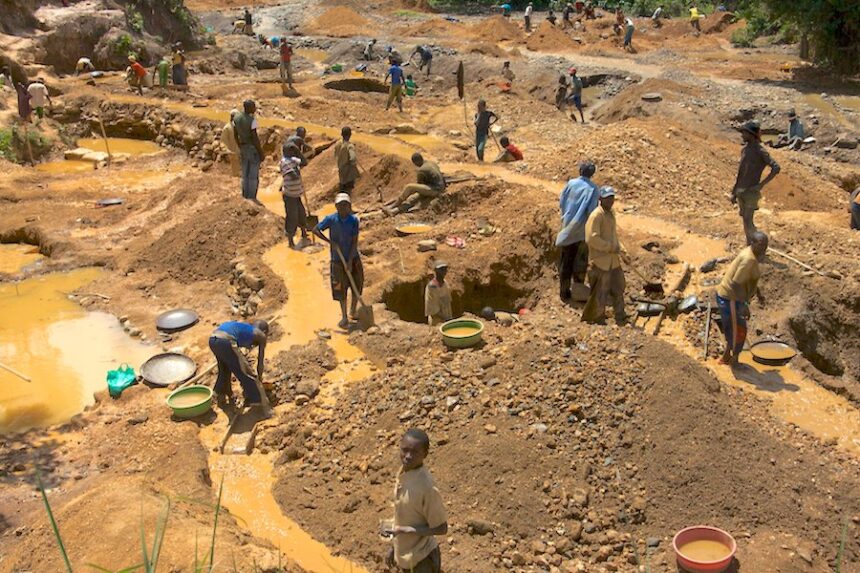
The DRC remains one of the world’s most important sources of cobalt and copper while also developing significant lithium production capacity. The country sits at the center of global supply chains for battery materials.
Zambia
Zambia is experiencing renewed investment in copper production as global demand rises. Copper is essential for electric vehicles, renewable energy systems, and modern power grids.
Mozambique
Mozambique is attracting attention for graphite and other strategic minerals. The country recently introduced new mining regulations aimed at increasing local benefits from mineral wealth.
Namibia and Botswana
Both countries are attracting investors looking for stable jurisdictions with promising mineral resources and growing mining sectors.
China, America and Europe Enter the Competition
The race for African minerals is no longer just about mining.
It has become a geopolitical contest.
China has spent years building strong positions in African mining and mineral processing. Meanwhile, the United States and European nations are increasing efforts to secure supplies of critical minerals needed for their own industries and energy transitions.
This competition is creating new opportunities for African governments to negotiate better deals, attract investment, and expand local industries.
Can Africa Capture More Value?
One of the biggest challenges facing Africa is that most minerals are still exported with limited local processing.
Experts argue that refining minerals and manufacturing battery materials within Africa could create millions of jobs and significantly increase government revenues. Current estimates suggest revenues from copper, cobalt, nickel, and lithium could reach trillions of dollars over the coming decades if managed effectively.
The Bigger Question
Africa’s mineral wealth could become one of the continent’s greatest economic opportunities.
But history offers an important lesson.
Natural resources alone do not guarantee prosperity.
The countries that invest in transparency, infrastructure, education, and local value addition may be the ones that benefit most from the global race for critical minerals.
The world wants Africa’s minerals.
The real question is whether Africa can turn that demand into lasting prosperity for its people.
Email Us on editorial@nnafrica.com