
Wednesday, 17 Jun 2026
  • My Feed
  • My Saves
  • History
  • Contact Us
Subscribe
The News Network Africa
  • Home
  • Opinion

    At least 6,000 inmates escape from Mozambique jail: What we know

    By
    nna

    Tragedy in Yemen: Dozens of African Migrants Killed in U.S. Airstrike, Houthi Officials Report.

    By
    Eric Mafundo

    The Impact of U.S. Aid Freeze on HIV Positive Orphans in Kenya.

    By
    Eric Mafundo

    Health Initiatives: Africa’s Fight Against Infectious Diseases in 2023

    By
    Hayley Sky

    RINALDI JAMUGISA: How Innovation Is Redefining the Creative Industry in 2026

    By
    Hayley Sky

    The African Continental Free Trade Area Gains Momentum

    By
    Hayley Sky
  • Politics

    Regional Alliances: Strengthening Political Ties Across Africa

    By
    Hayley Sky
    Beyond the Login: Re-engineering African EdTech for Real Impact

    Beyond the Login: Re-engineering African EdTech for Real Impact

    By
    Hayley Sky
    Kenyan Cardinal to Miss Papal Vote Due to Ill Health: A Rare Absence.

    Kenyan Cardinal to Miss Papal Vote Due to Ill Health: A Rare Absence.

    By
    Eric Mafundo
    Eritrea: Where Ancient Highlands, Red Sea Shores, and Timeless Traditions Tell Africa’s Untold Story

    Eritrea: Where Ancient Highlands, Red Sea Shores, and Timeless Traditions Tell Africa’s Untold Story

    By
    Hayley Sky
    From bakery boy to Man City-the swift rise of  Juma Bah.

    From bakery boy to Man City-the swift rise of Juma Bah.

    By
    Eric Mafundo
    Rights groups decry Tunisia’s ‘injustice’, crackdown on activists

    Rights groups decry Tunisia’s ‘injustice’, crackdown on activists

    By
    Hayley Sky
  • Business
    Ramaphosa Labels White South Africans Moving to the U.S. as Cowards: A Controversial Claim.

    Ramaphosa Labels White South Africans Moving to the U.S. as Cowards: A Controversial Claim.

    By
    Eric Mafundo
    Moroccans celebrate Amazigh New Year Yennayer 2976 with traditional food, music and rituals across Rabat, Marrakech and rural Atlas villages.

    Moroccans celebrate Amazigh New Year Yennayer 2976 with traditional food, music and rituals across Rabat, Marrakech and rural Atlas villages.

    By
    Hayley Sky
    10 African countries with the highest fuel prices in February 2026

    10 African countries with the highest fuel prices in February 2026

    By
    Hayley Sky
    Potential Charges Against Besigye in Supreme Court: A Closer Look.

    Potential Charges Against Besigye in Supreme Court: A Closer Look.

    By
    Eric Mafundo
    The Bahima: Guardians of cattle and Tradition in Western Uganda.

    The Bahima: Guardians of cattle and Tradition in Western Uganda.

    By
    Eric Mafundo
    The African Continental Free Trade Area Gains Momentum

    The African Continental Free Trade Area Gains Momentum

    By
    Hayley Sky
  • Pages
    • Advertise with US

Archives

  • June 2026
  • May 2026
  • April 2026
  • March 2026
  • February 2026
  • January 2026
  • December 2025
  • November 2025
  • October 2025
  • September 2025
  • August 2025
  • May 2025
  • April 2025
  • March 2025
  • February 2025
  • January 2025
  • December 2024

Categories

  • Agriculture
  • Business
  • Culture
  • Health
  • Lifestyle
  • Minerals
  • News
  • Opinion
  • Politics
  • Technology
  • Travel
  • Uganda
  • 🔥
  • News
  • Politics
  • Business
  • Lifestyle
  • Opinion
  • Culture
  • Travel
  • Minerals
  • Health
  • Technology
Font ResizerAa
The News Network AfricaThe News Network Africa
  • My Saves
  • My Feed
  • History
  • Travel
  • Opinion
  • Politics
  • Health
  • Technology
  • News
Search
  • Pages
    • Home
    • Advertise with Us
  • Personalized
    • My Feed
    • My Saves
    • History
  • Categories
    • News
    • Business
    • Minerals
    • Culture
    • Opinion
    • Politics
    • Agriculture
    • Health
    • Technology
    • Travel
Have an existing account? Sign In
Follow US
© 2025 The News Network Africa. All Rights Reserved.
The News Network Africa > Blog > Culture > Djibouti: Where Africa Meets Arabia at the Gateway to the Red Sea
CultureNewsTravel

Djibouti: Where Africa Meets Arabia at the Gateway to the Red Sea

Hayley Sky
Last updated: 15 June 2026 06:47
Hayley Sky
Share
Djibouti: Where Africa Meets Arabia at the Gateway to the Red Sea
SHARE

Perched at the northeastern tip of Africa, where the Red Sea meets the Gulf of Aden, Djibouti occupies one of the world’s most strategic locations. For thousands of years, traders, sailors, pilgrims, and explorers have crossed its shores, transforming this small nation into a remarkable meeting point of African, Arab, and Asian cultures.

Contents
Why Djibouti Is Africa’s Gateway Between ContinentsThe Afar and Somali Peoples: Guardians of Ancient TraditionsLake Assal: The Extraordinary Salt Lake Below Sea LevelNomadic Life in One of Africa’s Harshest LandscapesMusic, Poetry, and the Art of StorytellingWhat Djiboutian Cuisine Reveals About Its Cultural CrossroadsThe Gulf of Tadjoura: A Marine ParadiseFaith, Community, and Everyday LifeA Modern Nation Building on an Ancient LegacyWhy Djibouti Is One of Africa’s Most Underrated Destinations

Despite its modest size, Djibouti boasts extraordinary natural wonders, centuries-old traditions, and a rich cultural heritage shaped by its desert landscapes and coastal waters. From the salt caravans that still cross the plains to the bustling ports linking continents, the country’s story is one of resilience, commerce, and cultural exchange.

- Advertisement -

For travelers seeking one of Africa’s most distinctive destinations, Djibouti offers an unforgettable blend of dramatic scenery and authentic cultural experiences.

Why Djibouti Is Africa’s Gateway Between Continents

Few countries have influenced global trade as profoundly as Djibouti.

- Advertisement -

Situated along one of the world’s busiest maritime routes, the nation connects Africa with the Middle East, Europe, and Asia. For centuries, merchants transported spices, incense, coffee, salt, textiles, and precious goods through its ports and caravan routes.

This strategic location transformed Djibouti into a crossroads of civilizations, where diverse cultures exchanged ideas, languages, religions, and traditions.

Even today, ships from around the world pass through its waters, making Djibouti one of the most important maritime hubs on the African continent.

- Advertisement -

The Afar and Somali Peoples: Guardians of Ancient Traditions

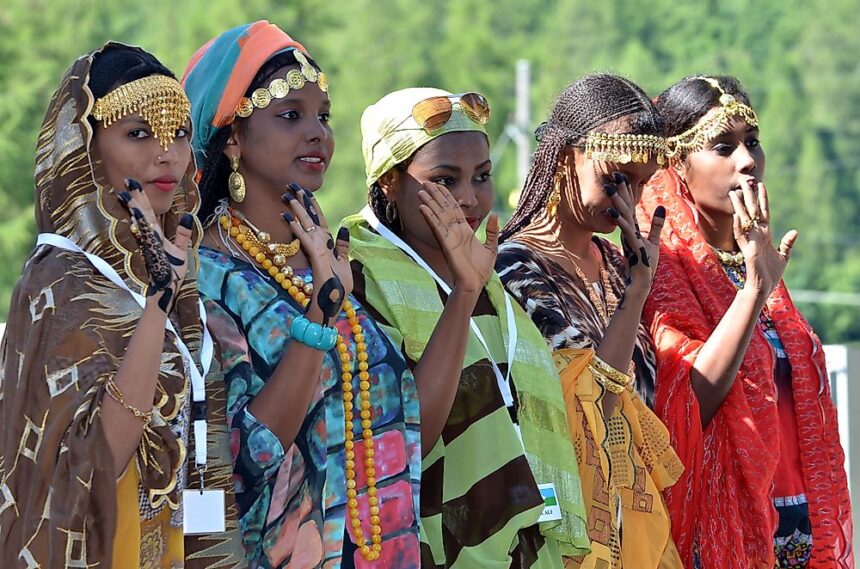
Djibouti’s cultural identity is built upon its two largest communities—the Afar and the Somali.

Both peoples have long histories rooted in pastoralism, trade, and adaptation to the harsh conditions of the Horn of Africa.

For generations, camel herding has played a central role in daily life, particularly among nomadic families who move across the desert in search of grazing land and water.

Oral poetry, storytelling, and traditional songs remain highly valued, preserving history, family lineage, and community wisdom through the spoken word.

These traditions continue to shape everyday life, even as urbanization transforms the country.

Lake Assal: The Extraordinary Salt Lake Below Sea Level

One of Djibouti’s most remarkable natural wonders is Lake Assal.

Located approximately 155 metres below sea level, it is the lowest point in Africa and one of the saltiest lakes on Earth.

For centuries, local communities have harvested salt from the lake, transporting it across the desert by camel caravans in a tradition that dates back hundreds of years.

The dazzling white salt flats, surrounded by volcanic mountains, create one of Africa’s most surreal landscapes.

Beyond its natural beauty, Lake Assal remains an enduring symbol of Djibouti’s cultural and economic history.

Nomadic Life in One of Africa’s Harshest Landscapes

Much of Djibouti’s cultural heritage has been shaped by its desert environment.

Nomadic communities developed remarkable survival skills, learning how to navigate vast plains, locate water sources, and thrive in extreme temperatures.

Traditional tents, handcrafted tools, and deep knowledge of the natural environment continue to reflect centuries of adaptation.

Hospitality is particularly important among desert communities, where welcoming strangers has long been essential for survival in challenging conditions.

Visitors often discover that generosity remains one of Djibouti’s defining cultural values.

Music, Poetry, and the Art of Storytelling

In Djibouti, storytelling is an art form.

Poetry occupies a special place in both Afar and Somali cultures, with poets using verse to celebrate heroes, resolve disputes, express love, and preserve history.

Traditional music combines rhythmic drumming, chanting, and dance during weddings, religious celebrations, and community gatherings.

These artistic traditions strengthen social bonds while ensuring that cultural knowledge continues to pass from one generation to the next.

For many Djiboutians, words and music remain powerful expressions of identity.

What Djiboutian Cuisine Reveals About Its Cultural Crossroads

Djibouti’s cuisine reflects centuries of cultural interaction.

Traditional meals combine African, Arab, and French influences, creating distinctive flavors that reflect the country’s trading heritage.

Rice, fresh fish, goat, camel meat, flatbreads, lentils, and fragrant spices feature prominently in local dishes.

Tea plays an important role in social life, with families and guests often gathering over cups of spiced tea while sharing stories and conversation.

The country’s cuisine perfectly mirrors its position at the crossroads of continents.

The Gulf of Tadjoura: A Marine Paradise

Djibouti’s coastline offers some of Africa’s most spectacular marine environments.

The warm waters of the Gulf of Tadjoura attract dolphins, sea turtles, coral reefs, and seasonal whale sharks—the largest fish on Earth.

Fishing communities have depended on these waters for generations, developing traditional techniques passed down through families.

Today, marine conservation and eco-tourism are becoming increasingly important as Djibouti works to protect its extraordinary coastal ecosystems.

Nature and culture remain deeply interconnected along the country’s shores.

Faith, Community, and Everyday Life

Islam has shaped Djiboutian society for more than a thousand years.

Mosques stand at the center of many communities, while religious festivals bring families together in celebration and reflection.

Values such as generosity, respect for elders, and strong family relationships continue to define everyday life.

These traditions have helped preserve social cohesion while allowing Djibouti to embrace the diversity that comes from its international connections.

A Modern Nation Building on an Ancient Legacy

Although deeply rooted in tradition, Djibouti is also looking toward the future.

Its capital city has become an important commercial and logistics hub serving much of East Africa.

Young Djiboutians are pursuing careers in business, education, technology, and tourism while remaining proud of their cultural heritage.

Government and community organizations are increasingly promoting local traditions, historical sites, and natural attractions to international visitors.

This balance between heritage and development is shaping a confident new chapter in Djibouti’s story.

Why Djibouti Is One of Africa’s Most Underrated Destinations

Djibouti may be one of Africa’s smallest countries, but its cultural and natural riches are immense.

Its salt lakes, volcanic landscapes, vibrant traditions, ancient caravan routes, and strategic coastline tell a story unlike any other on the continent.

For travelers seeking experiences beyond the familiar tourist trail, Djibouti offers authenticity, adventure, and a rare opportunity to witness the meeting point of Africa and Arabia.

It is a nation where deserts meet the sea, ancient traditions guide modern life, and every journey reveals another chapter in one of Africa’s most fascinating cultural stories.

Email Us on editorial@nnafrica.com
Share This Article
Facebook Whatsapp Whatsapp Telegram Email Copy Link
Previous Article The Pulse of Africa: How Music, Art, and the Mighty Congo River Define the Democratic Republic of the Congo The Pulse of Africa: How Music, Art, and the Mighty Congo River Define the Democratic Republic of the Congo
Next Article Opinion Piece: Skills will determine the success of East Africa’s LNG ambitions Opinion Piece: Skills will determine the success of East Africa’s LNG ambitions

Latest Posts

The Bagisu: The Courage, Culture, and Legacy of Mount Elgon’s People
Uganda
The Basoga: Guardians of the Nile and Keepers of Eastern Uganda’s Rich Cultural Heritage
Uganda
The Baganda: The Kingdom That Shaped Modern Uganda
Uganda
Eritrea: Where Ancient Highlands, Red Sea Shores, and Timeless Traditions Tell Africa’s Untold Story
Culture Travel

Opinions

Africa’s Forgotten War: Why Sudan’s Humanitarian Crisis Deserves the World’s Attention
Opinion Politics
Opinion Piece: Skills will determine the success of East Africa’s LNG ambitions
Opinion
The Silent Crisis Costing Africa Billions: Why Young Professionals Are Leaving Their Dream Jobs
Opinion
What if everything you have right now is everything you once dreamed of?
Opinion

You Might Also Like

The Dual Lives of Zimbabwe’s Government Workers: Street Vendors and Civil Servants.
News

The Dual Lives of Zimbabwe’s Government Workers: Street Vendors and Civil Servants.

By
Eric Mafundo
Privacy, Social Media, and the Cost of Online Fame: The Kirabo Kisitu Controversy
LifestyleNews

Privacy, Social Media, and the Cost of Online Fame: The Kirabo Kisitu Controversy

By
Reporter
Mozambique president-elect urges ‘unity’ amid unrest, citizens fleeing
NewsOpinionPolitics

Mozambique president-elect urges ‘unity’ amid unrest, citizens fleeing

By
Churchill Nkagumaho
‘We cannot look away’ -UK hosts Sudan talks as famine takes hold.
News

‘We cannot look away’ -UK hosts Sudan talks as famine takes hold.

By
Eric Mafundo
The News Network Africa
X-twitter Facebook Rss

About US


The News Network Africa: Your instant connection to breaking stories and live updates. Stay informed with our real-time coverage across minerals, culture, politics, business, tech, entertainment, and more. Your reliable source for 24/7 news.

Top Categories
  • News
  • Opinion
  • Politics
  • Tech
  • Health
  • Travel
Usefull Links
  • Advertise with Us
  • Complaint
  • Privacy Policy
  • Cookie Policy
  • Submit a Tip

© The News Network Africa. All Rights Reserved.

Welcome Back!

Sign in to your account

Username or Email Address
Password

Lost your password?