

The 2026 FIFA World Cup has become a defining moment for African football.
From the opening matches, the continent’s representatives have demonstrated skill, resilience and growing confidence against some of the world’s strongest football nations. Historic victories, dramatic upsets and determined performances have reinforced the belief that African football is entering a new era.
For millions of supporters from Casablanca to Cape Town, Dakar to Dar es Salaam, and Cairo to Kinshasa, every match carries more than ninety minutes of football. It represents decades of progress, investment and ambition, as Africa continues its pursuit of the one achievement that has remained elusive—a FIFA World Cup title.
This year’s tournament has already produced memorable moments for African teams. Several nations have advanced beyond the group stage, proving once again that the gap between Africa and the traditional football powers continues to narrow.
Whether the dream ends in the knockout rounds or culminates in an unprecedented triumph, one thing is already clear: Africa is no longer satisfied with merely participating. The continent has arrived to compete with the very best.
Key Takeaways
- The 2026 FIFA World Cup marks another historic chapter for African football.
- African teams have delivered some of the tournament’s most exciting performances.
- Morocco continues to inspire after its groundbreaking 2022 campaign.
- Established powers and emerging nations alike are demonstrating the growing depth of African football.
- The dream of producing Africa’s first FIFA World Cup champion remains alive.
Why the 2026 Tournament Matters
Every FIFA World Cup has marked an important milestone in Africa’s football journey.
Cameroon shocked the world in 1990.
Senegal inspired a continent in 2002.
Ghana came within a penalty kick of a semi-final in 2010.
Morocco rewrote history by reaching the semi-finals in 2022.
Now, the 2026 tournament offers another opportunity for African football to push beyond previous limits.
Improved youth academies, better coaching, stronger domestic structures and the growing influence of African players in Europe’s top leagues have transformed many national teams into genuine contenders.
The question now is no longer whether African teams belong among the world’s elite.
It is whether one of them can finally become world champion.
Africa’s Historic World Cup Campaign: A Continent Breaks New Ground
The expanded 48-team FIFA World Cup has already rewritten the history books for African football.
For the first time, nine African nations reached the Round of 32, an unprecedented achievement that underlines the continent’s growing strength on the global stage. Only Tunisia failed to progress from the group phase, while Morocco, South Africa, Côte d’Ivoire, Egypt, Senegal, Ghana, DR Congo, Algeria and Cape Verde all extended their campaigns.
This remarkable performance is about more than numbers. It signals a shift in world football, with African teams no longer viewed as outsiders capable of occasional surprises but as genuine contenders capable of competing deep into the tournament.
Morocco: Still Setting the Standard
Ever since their historic semi-final run at the 2022 World Cup, Morocco have carried the expectations of an entire continent.
Rather than being weighed down by that success, the Atlas Lions have continued to show maturity, tactical discipline and resilience. Their dramatic penalty-shootout victory over the Netherlands in the Round of 32 reinforced their reputation as one of the world’s toughest tournament teams.
Morocco’s success is built on more than individual stars. Years of investment in youth development, modern coaching and football infrastructure have created a sustainable model that many African nations are now trying to emulate.
South Africa’s Return to the World Stage
After years away from football’s biggest tournament, South Africa returned with renewed confidence.
Although Bafana Bafana were narrowly eliminated by hosts Canada in the Round of 32, their qualification alone marked an important milestone for South African football and demonstrated that the country is rebuilding its international competitiveness.
Their campaign has given supporters optimism that South Africa can once again become a regular presence at future World Cups.
Senegal Refuses to Back Down
Senegal entered the tournament with high expectations after years of consistent performances at continental and international level.
The Lions of Teranga fought bravely but were edged 3–2 by Belgium in a thrilling Round of 32 encounter, illustrating both their attacking quality and the fine margins that separate victory from defeat at this level.
Despite the result, Senegal once again demonstrated why they remain one of Africa’s strongest football nations.
Egypt: Chasing Another Historic Run
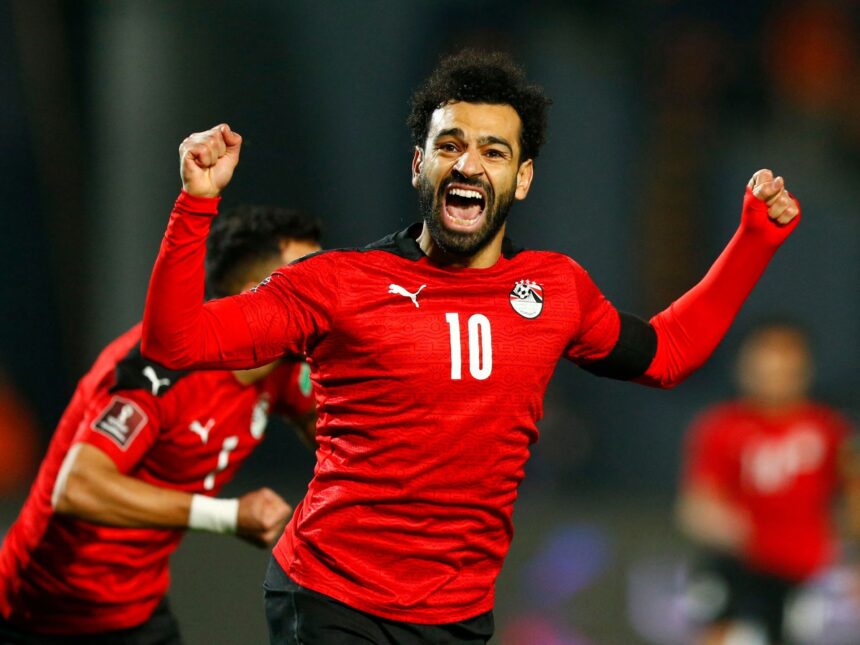
Egypt qualified for the knockout stage with an unbeaten group campaign and earned a challenging Round of 32 tie against Australia. However, uncertainty over the fitness of captain Mohamed Salah has added another layer of intrigue as the Pharaohs seek to reach the latter stages of the competition.
With one of Africa’s richest football histories, Egypt continues to believe that this generation can create its own place in World Cup history.
The Rise of New African Challengers
One of the biggest stories of this tournament has been the emergence of nations that were once considered outsiders.
Cape Verde has impressed on its World Cup debut, earning widespread admiration for its organization and fearless football, while Algeria, Ghana and DR Congo have all shown that African football’s strength now extends far beyond a handful of traditional giants.
For millions of supporters across the continent, these performances are proof that investment in youth academies, coaching and domestic football is beginning to bear fruit.
The Journey That Changed African Football Forever
Africa’s impressive performances at the 2026 FIFA World Cup did not happen overnight. They are the result of decades of determination, painful lessons and historic breakthroughs that gradually transformed how the world views African football.
Every generation has produced a team that challenged expectations and inspired the next. Those landmark achievements laid the foundation for the continent’s strongest World Cup campaign yet.
Cameroon 1990: The Team That Shocked the World
Before 1990, African teams were often dismissed as talented but inexperienced on football’s biggest stage.
That perception changed dramatically in Italy.
Led by the legendary Roger Milla, Cameroon stunned defending champions Argentina in the opening match before embarking on a remarkable run to the quarter-finals—the first African nation ever to reach that stage of the FIFA World Cup.
Milla’s unforgettable goals and celebrations captured the imagination of football fans around the world, while the Indomitable Lions proved that African teams could compete with and defeat the sport’s traditional giants.
Although Cameroon narrowly lost to England after extra time, their achievement changed global perceptions forever.
Senegal 2002: A New Generation Announces Itself
Twelve years later, another African nation captured the world’s attention.
Making their FIFA World Cup debut, Senegal produced one of the tournament’s greatest upsets by defeating defending champions France 1–0 in the opening match.
Powered by fearless football, exceptional teamwork and tactical discipline, the Lions of Teranga advanced all the way to the quarter-finals.
Their memorable campaign inspired a new generation of African footballers and demonstrated that Cameroon’s success had not been a one-off.
Ghana 2010: So Close to History
If one moment still haunts African football supporters, it is Ghana’s heartbreaking quarter-final against Uruguay at the 2010 World Cup in South Africa.
With the score level in the final moments of extra time, Ghana appeared destined to become the first African nation to reach a World Cup semi-final.
Then came one of the tournament’s most dramatic incidents.
Uruguay’s Luis Suárez deliberately handled the ball on the goal line, preventing a certain goal. Ghana were awarded a penalty, but the spot kick struck the crossbar.
Uruguay eventually progressed after a penalty shootout, ending Ghana’s dream in agonising fashion.
Despite the disappointment, the Black Stars earned enormous respect for their courage and quality throughout the tournament.
Morocco 2022: Breaking the Final Barrier
If Cameroon opened the door and Ghana came close to walking through it, Morocco finally smashed the barrier.
At the 2022 FIFA World Cup in Qatar, the Atlas Lions became the first African and first Arab nation to reach the semi-finals.
Along the way, they defeated some of the world’s biggest football powers through outstanding organisation, defensive resilience and clinical finishing.
Their remarkable journey united supporters across Africa and the Arab world, proving that an African team could compete for a place in the World Cup final.
Although Morocco eventually finished fourth, their achievement redefined what African football could accomplish.
The Rise of African Stars
Another reason for Africa’s growing success is the remarkable number of world-class players now competing in Europe’s biggest leagues.
Across the English Premier League, Spain’s La Liga, Italy’s Serie A, Germany’s Bundesliga and France’s Ligue 1, African footballers have become key players for some of the world’s most successful clubs.
This experience has benefited national teams enormously.
Players now arrive at international tournaments having competed in Champions League matches, title races and high-pressure knockout competitions.
The confidence gained at club level has translated into stronger performances for their countries.
Investment Is Changing the Game
Success on the international stage is also being driven by improvements away from the pitch.
Across Africa, football federations have increased investment in:
- Youth academies
- Coach education
- Sports science
- Modern training facilities
- Talent identification
- Women’s football
- Grassroots development
Countries such as Morocco have demonstrated how long-term planning can produce sustained success rather than isolated achievements.
Other African nations are now following similar models in the hope of building teams capable of challenging consistently at the highest level.
Why 2026 Feels Different
Many football analysts believe this generation of African teams is stronger than any before it.
There is greater tactical discipline.
Squads have more depth.
Players possess experience at the highest levels of club football.
Most importantly, there is a growing belief that African teams no longer need to fear the traditional football powers.
Respect has replaced surprise.
Confidence has replaced doubt.
For the first time, conversations about the FIFA World Cup are no longer centred on whether African teams can reach the knockout stages.
Instead, the debate has shifted to how far they can go—and whether one of them can finally lift football’s most coveted trophy.
The Stars, Tactics and the Dream of an African Champion
Every FIFA World Cup produces new heroes, unforgettable moments and tactical innovations. The 2026 tournament has been no different. African teams have not only earned results but have also showcased a modern style of football built on technical ability, tactical intelligence and unwavering belief.
For many observers, this World Cup represents the clearest evidence yet that Africa has moved beyond the role of underdog. The continent is now producing teams capable of matching the world’s elite over 90 minutes—and sometimes beyond.
The Players Lighting Up the Tournament
Behind every successful team are players capable of changing a match in an instant.
Across the tournament, African stars have demonstrated why they are among the most sought-after footballers in the world. Their pace, creativity, defensive discipline and leadership have been central to their teams’ performances.
Veteran leaders have provided composure in high-pressure moments, while younger players have announced themselves on the global stage with fearless displays.
Just as importantly, success has not depended on one superstar. Many African teams have thrived because of collective effort, tactical organisation and squad depth rather than individual brilliance alone.
That evolution reflects the growing maturity of African football.
A New Tactical Identity
For years, African football was often associated with flair, speed and physical strength.
While those qualities remain important, the 2026 World Cup has highlighted another side of the continent’s game.
African teams are now displaying:
- Tactical flexibility.
- Intelligent pressing.
- Disciplined defending.
- Quick transitions.
- Clinical finishing.
- Strong game management.
Many coaches have successfully blended African creativity with modern European tactical systems, producing teams that are difficult to break down while remaining dangerous in attack.
This balance has made African nations increasingly competitive against traditional football powers.
Youth Development Is Paying Off
Much of Africa’s recent progress can be traced back to investments made years before this tournament.
Across the continent, football federations have expanded:
- Youth academies.
- Coaching education.
- Sports science.
- Talent identification programmes.
- Professional league structures.
Countries such as Morocco, Senegal and Côte d’Ivoire have demonstrated how long-term planning can produce sustained international success.
Young players are now entering senior national teams with experience gained in elite academies and top professional leagues around the world.
This stronger development pathway is narrowing the gap between African nations and football’s traditional giants.
More Than a Sporting Event
The FIFA World Cup has once again united millions of Africans regardless of nationality, language or religion.
From crowded viewing centres in Lagos to cafés in Cairo and public fan zones in Johannesburg, football has become a shared celebration.
The tournament has also generated significant economic activity across the continent.
Businesses benefiting from the World Cup include:
- Hotels.
- Restaurants.
- Broadcasters.
- Transport operators.
- Sports merchandise retailers.
- Digital content creators.
- Advertising agencies.
- Tourism businesses.
Social media has amplified every goal, controversial decision and dramatic victory, connecting supporters across borders and creating a continent-wide conversation around African football.
Can Africa Finally Lift the Trophy?
For decades, this has been the question every World Cup has posed.
Cameroon opened the door in 1990.
Senegal proved the continent’s consistency in 2002.
Ghana came heartbreakingly close in 2010.
Morocco broke new ground in 2022.
Now, the teams competing in 2026 are attempting to go one step further.
Winning the FIFA World Cup remains one of the most difficult achievements in sport. Traditional powers such as Brazil, Argentina, Germany, France, Italy and Spain continue to set exceptionally high standards.
Yet African football has never entered a World Cup with greater confidence.
The technical quality has improved.
The tactical discipline is stronger.
The player pool is deeper.
Most importantly, belief has replaced doubt.
Whether history is made in this tournament or a future edition, many analysts agree that Africa’s first World Cup triumph is no longer an impossible dream—it is an increasingly realistic ambition.
A Turning Point for African Football
Regardless of how the tournament concludes, the 2026 FIFA World Cup will be remembered as another landmark in the evolution of African football.
It has showcased the continent’s remarkable progress, highlighted the strength of its emerging football nations and inspired millions of young players who dream of representing their countries on the world’s biggest stage.
Every successful campaign builds confidence for the next generation.
Every victory changes perceptions.
Every historic performance brings Africa one step closer to achieving football’s ultimate prize.
The story of African football is still being written—and the chapters unfolding at the 2026 FIFA World Cup may prove to be among its most significant.
Frequently Asked Questions (FAQ)
How many African teams are playing at the 2026 FIFA World Cup?
The expanded 48-team tournament has given Africa its largest-ever representation at a FIFA World Cup. The continent’s increased allocation reflects the growing strength and competitiveness of African football on the global stage.
Which African team has gone furthest at a FIFA World Cup?
Morocco holds the record after becoming the first African nation to reach the semi-finals at the 2022 FIFA World Cup in Qatar. Before that, Cameroon (1990), Senegal (2002) and Ghana (2010) all reached the quarter-finals.
Has an African country ever won the FIFA World Cup?
No. As of the 2026 FIFA World Cup, no African nation has won the tournament. However, the performances of African teams over the past three decades have strengthened the belief that the continent is getting closer to producing its first world champion.
Why is the 2026 FIFA World Cup historic for Africa?
The tournament features more African teams than any previous edition, giving the continent an unprecedented opportunity to showcase its talent and compete deep into the knockout stages.
Which African players have impressed at the 2026 FIFA World Cup?
Several players have produced outstanding performances during the tournament, highlighting the depth of talent across the continent. African football continues to benefit from players competing in Europe’s top leagues and bringing that experience to their national teams.
Africa’s Greatest FIFA World Cup Achievements
- 1990 – Cameroon became the first African nation to reach the quarter-finals.
- 2002 – Senegal reached the quarter-finals on its tournament debut.
- 2010 – Ghana came within one penalty kick of becoming Africa’s first semi-finalist.
- 2022 – Morocco became the first African nation to reach the semi-finals.
- 2026 – Africa recorded its largest-ever representation at a FIFA World Cup, with several nations advancing to the knockout rounds.
These milestones illustrate the remarkable progress African football has made over the last four decades.
Conclusion
The 2026 FIFA World Cup is more than another global football tournament—it is a reflection of how far African football has come.
From the pioneering achievements of Cameroon in 1990 to Morocco’s historic run in 2022 and the impressive performances unfolding in 2026, each generation has pushed the boundaries of what African teams can achieve on the world stage.
The continent now boasts world-class players, experienced coaches, stronger football institutions and millions of passionate supporters who believe the ultimate prize is within reach.
Whether an African nation lifts the trophy this year or in a future tournament, one thing is beyond doubt: African football has earned its place among the world’s elite.
The dream that once seemed distant has become increasingly realistic. And with every victory, every breakthrough and every young player inspired by this tournament, Africa moves one step closer to making football history.
Email Us on editorial@nnafrica.com