

Nigeria is often introduced through its size: Africa’s most populous country, one of the continent’s largest economies, and home to some of its most influential cities. But numbers alone cannot explain Nigeria.
To understand the country, one has to travel through its cultures.
From the Yoruba cities of the southwest to the Hausa-Fulani communities of the north and the Igbo heartlands of the southeast, Nigeria is a vast cultural mosaic. Hundreds of ethnic groups, languages, kingdoms, religions, artistic traditions, and regional identities have developed across its landscapes.
This diversity is not simply part of Nigeria’s past. It remains visible in contemporary music, fashion, food, festivals, architecture, literature, film, and everyday family life.
For students, researchers, teachers, tourists, and members of the African diaspora, Nigeria offers one of Africa’s richest opportunities to explore how ancient traditions can coexist with extraordinary modern creativity.
A Country Built on Ancient Civilizations
Long before modern Nigeria emerged, sophisticated societies were already flourishing across the region.
The Nok civilization, known for its remarkable terracotta sculptures, developed advanced artistic traditions more than two thousand years ago.
Later, powerful kingdoms and city-states such as Ife, Benin, Kano, and Oyo became important centres of political authority, trade, craftsmanship, and scholarship.
Their influence can still be seen in Nigeria’s traditional institutions and artistic heritage.
The famous bronze and brass works associated with the ancient Kingdom of Benin, for example, demonstrate the extraordinary skill of West African metalworkers centuries ago.
Yoruba Heritage and the Sacred City of Ile-Ife
Among Nigeria’s most historically significant cultural centres is Ile-Ife, regarded in Yoruba tradition as a place of profound spiritual and historical importance.
The Yoruba developed sophisticated systems of governance, religion, art, architecture, and commerce across southwestern Nigeria.
Traditional rulers known as Obas continue to hold important cultural positions, while festivals and ceremonies preserve connections with Yoruba history and spirituality.
Yoruba artistic traditions—including sculpture, beadwork, textile production, music, and storytelling—have influenced cultures far beyond Nigeria.
The Legacy of the Kingdom of Benin
The ancient Kingdom of Benin, centred in present-day southern Nigeria, became one of West Africa’s most sophisticated states.
Its royal court supported highly skilled artists who produced extraordinary bronze and brass sculptures, ivory carvings, and ceremonial objects.
The famous Benin Bronzes have become central to international discussions about African art, colonialism, cultural ownership, and the return of heritage objects.
The kingdom’s legacy remains deeply important to the Edo people and to Nigeria’s wider cultural identity.
Igbo Traditions and the Importance of Community
In southeastern Nigeria, Igbo culture is strongly associated with community, enterprise, family networks, and elaborate ceremonies.
Traditional institutions historically placed significant importance on village assemblies, age grades, titles, and community decision-making.
The New Yam Festival, known in various communities by different names, remains one of the most important cultural celebrations.
It marks the harvest and gives communities an opportunity to express gratitude, celebrate abundance, honour ancestors, and strengthen social bonds.
Hausa-Fulani Heritage of Northern Nigeria
Northern Nigeria has its own extraordinary cultural traditions.
Hausa and Fulani communities have shaped the region’s architecture, clothing, scholarship, trade, music, and political history for centuries.
Historic cities such as Kano became major centres of trans-Saharan commerce and Islamic scholarship.
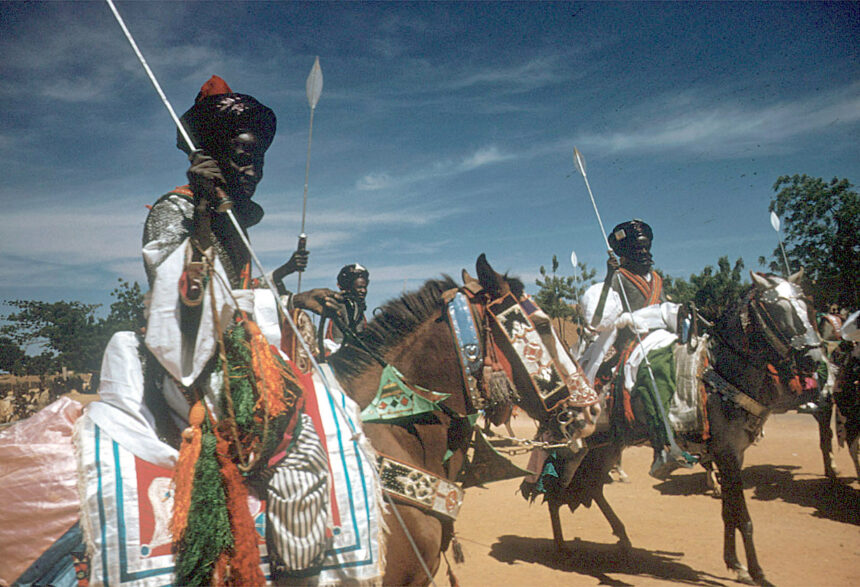
Traditional emirates continue to preserve important ceremonial institutions, while distinctive clothing, leatherwork, embroidery, architecture, and festivals remain central to northern Nigerian identity.
Festivals That Keep History Alive
Nigeria’s cultural calendar is filled with celebrations.
The Durbar festivals of northern Nigeria feature magnificent displays of horsemanship, traditional clothing, music, and royal ceremony.
The Osun-Osogbo Festival in southwestern Nigeria brings devotees and visitors together to honour the river goddess Osun and celebrate Yoruba cultural heritage.
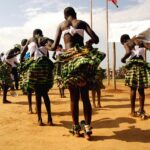
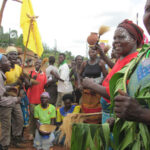
Across the country, masquerade festivals, harvest celebrations, religious gatherings, and traditional ceremonies provide opportunities for communities to pass history from one generation to another.
These events demonstrate that Nigerian culture is not something preserved only in museums—it remains alive.
Food That Reflects Nigeria’s Diversity
Nigerian cuisine varies dramatically from one region to another.
Jollof rice has become one of the country’s best-known dishes internationally, while regional favourites include pounded yam and egusi soup, suya, moi moi, akara, pepper soup, tuwo, and countless vegetable- and grain-based dishes.
Palm oil, cassava, yams, plantains, maize, beans, peppers, and an extraordinary variety of spices form the foundation of many traditional meals.
Food is also central to Nigerian hospitality. Weddings, naming ceremonies, festivals, and family gatherings frequently bring people together around generous communal meals.
Music That Became a Global Cultural Force
Nigeria’s influence on global music is difficult to overstate.
Traditional musical traditions provided foundations for modern genres such as Afrobeats, while legendary artists including Fela Kuti transformed Nigerian music into a vehicle for political commentary and social criticism.
Contemporary Nigerian artists have taken the country’s music to audiences around the world, making Lagos one of Africa’s most influential centres of popular culture.
Yet beneath modern Afrobeats remain older traditions of drums, chants, praise singing, storytelling, and community performance.
Nollywood and the Power of Nigerian Storytelling
Nigeria’s cultural influence extends beyond music.
Nollywood, the country’s film industry, has become one of the world’s largest filmmaking industries by volume and has helped bring Nigerian stories, languages, fashion, beliefs, and social experiences to audiences across Africa and the diaspora.
Its success demonstrates the enormous appetite for African stories told from African perspectives.
Nigerian writers, filmmakers, comedians, designers, and digital creators are similarly expanding the country’s cultural influence around the world.
Lagos: A Modern City Built on Cultural Energy
Nowhere is Nigeria’s contemporary creativity more visible than in Lagos.
The city is a centre for music, film, fashion, technology, publishing, entrepreneurship, and art.
Its fast-moving streets bring together people from virtually every part of the country, producing a distinctive urban culture that continually reinvents itself.
Lagos represents the modern Nigerian experience: ambitious, diverse, energetic, and constantly changing.
Why Nigeria Is One of Africa’s Greatest Cultural Powers
Nigeria’s greatest resource is not simply its population or economy. It is the extraordinary creativity of its people.
Ancient kingdoms continue to influence modern identity. Traditional rulers preserve centuries-old institutions. Festivals connect communities with their ancestors. Food carries regional histories. Music crosses borders, while film and literature give Nigerian experiences a global audience.
For students, researchers, teachers, tourists, and members of the African diaspora, Nigeria offers an extraordinary window into Africa’s cultural diversity and its rapidly changing future.
From the ancient art of Benin and Ife to the rhythms of Lagos and the traditions of northern emirates, Nigeria demonstrates that Africa’s past and future are not separate worlds.
They are part of the same story.
Email Us on editorial@nnafrica.com