


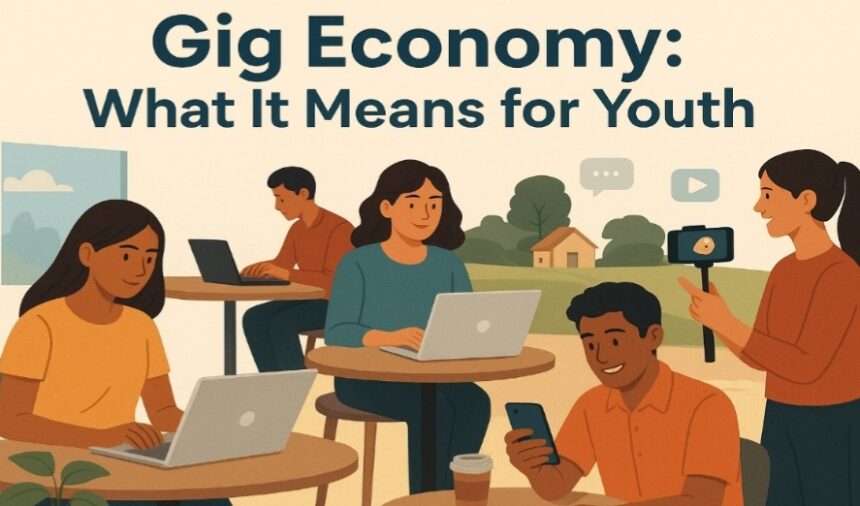
Young people are working differently, and fast. Not so long ago, most college students and young graduates wanted a steady job inside a company — from 9-to-5 to retirement — but things have changed on that front, too. That’s on the decline, slow though it may be. Instead, many young people are choosing flexible work, short-term contracts and independent livelihoods. It’s called the gig economy, and this new way of working could well be the future for many.
The gig economy is also more real than it’s a fad. It’s become a big part of the way we live now. From freelancing designers and online tutors to delivery partners and content creators, young people are leading the way with new ways of earning, learning and expanding potential. This shift is transforming livelihoods, lives and dreams.
In this article we are going to look at the gig economy – what it is, why it will expand faster than other parts of the job market and what this means for young people today. And we’ll consider the benefits and challenges and how the next generation might adapt to thrive in this changing work culture.
What Is the Gig Economy?
In the gig economy, they take short-term jobs or freelance instead of holding a permanent job. The term for these jobs: “gigs.” The work can last an hour or two hours, a day or even many months, depending on the job.
In this system, workers are almost never full-time employees. Instead, they freelance, contract or moonlight. They are paid for their work not the hours they spend in an office.
Some of the most common forms of gig work is:
- Freelance writing and graphic design
- App-based driving and delivery services
- Online teaching and coaching
- Social media management
- Video editing and content creation
- Website development and digital marketing
The gig economy gives people the power to choose when, where and how they work.
Why Is the Gig Economy Growing so Fast?
The gig economy didn’t come about overnight. Many forces were in play that drove its penetration, especially among the young.
- Easy Access to Technology
Now that people have smartphones, laptops and fast Wi-Fi, they can find work online as readily as in person. Many of the platforms connect clients and workers around the world. A single young person can sign up with a few clicks to work on a project, submit their work and get paid and technology made the “you need to be planted” thing obsolete. Work — now there is work to be done in a bedroom or a cafe, or even a village.
- Changing Career Goals of Youth
Today’s youth prioritize freedom, creativity and self-realization. Yet many, it appears, are less keen to be tethered to a job or company for life. They want to experiment with different fields, learn new skills and pursue their own interests.
In a gig economy, young people can experiment. They can take different projects and pick and choose what suits them best.
- Rise of Digital Platforms
The gig economy is dominated by the internet. These are open jobs posted in pretty much every industry. They also have payment systems, reviews and ratings that help build a sense of trust between workers and clients.
That’s a much more reliable and accessible way to get into gig work.
- Economic Changes
Even the most elementary skills are becoming more competitive in many jobs, both in India and elsewhere. Businesses want to be able to treat their workers flexibly and try to save money. In the meantime, young people desire income, but not the long-term covenant.
The gig economy works for both, and so it is popular.
The Allure of Gig Work for Many Young People
The gig economy is not without its quirky appeal for the young. Why could that be the case?
- Flexibility in Work
Perhaps one of the greatest pros is that you have a little freedom. The youth may work on a flexible schedule. The students can also work part-time during their education. Young graduates can get some experience working on these projects and prepare themselves for advanced studies or exams.
This freedom makes you be able to connect work with education and private life.
- Freedom to Choose Work
In traditional work, there are often fewer choices. In gig work, young people can select projects they find interesting and are good at. They don’t like a project, then they can go on to the next one.”
This is the kind of power that makes work enjoyable.
- Opportunity to Earn Early
Many children work while in college. Most young people work while they are still in school. Confidence in the early cash to some extent leaves families less dependent.
Because picking up a few small gigs here and there can make the difference between covering the rent, setting something aside for personal expenses or planning your next steps.
- Skill Development
Silicon Valley Unicorns and the Gig economy train youths in practical skills. You learn something from every project, whether it’s around effective communication, time management or even technical knowledge.
These skills will lead to better employment opportunities down the line.
How the Gig Economy Is Changing Work Paths
The gig economy is also shaping young people’s perceptions of the job market. They are not all on one track to some predetermined path.
- Multiple Income Sources
Young people aren’t looking at a job. Many work a couple of gig at once. For example, one could be a freelance writer who manages social media accounts and teaches online courses.
This reduces the risk of income loss and increases financial security.
- Focus on Skills, Not Degrees
In the gig economy, what you can do has become more important than bachelor’s and master’s degrees. Clients want results, not certificates. That helps steer kids out of the education world and toward practical training on online courses, and through real-world jobs.
If you have mediocre qualifications and good skills, you can work that.
- Faster Career Growth
In old-school jobs, promotions are a long time in coming. (Gig workers are independent contractors who perform short-term jobs, such as delivering takeout orders or driving for Uber; the work is often performed on a per-gig basis.) In gig work, growth is performance-based. Good work leads to better ratings, higher pay and more opportunities.
This growth spurt has the added side effect of encouraging the young ones to work and study harder.
- The Education of the Gig Worker
The importance of education stays in view, but with a twist. Hands on experience of a different kind as opposed to purely theoretical training.
- Learning Beyond Books
Young people are learning from online tutorials, workshops and real projects. They pick things up on the job, and that is often more valuable than theory.
- Importance of Self-Learning
The gig economy encourages self-learning. Youngsters must be always upgrading skills for survival. And it is this continuous learning that will prepare them for what lies ahead.
- New Career Options
Not all gigs in the gig economy existed before. Among them: content creators, app testers and advisers. We are beginning to observe the impacts that these shifts are having on educational systems.
The Strain on Young Workers of a Job That Doesn’t Pay
There are good and bad things about the gig economy. I hope we brainwash people regarding this.
- Income Uncertainty
Not all gig work offers predictable income. Some months may be good and others slow. That can be very frustrating, especially for beginners.
- Lack of Job Security
Gig workers do not receive job security, paid leave or retirement benefits like traditional employees. Youth need to balance their budgets well.
- No Fixed Work Routine
Freedom is sometimes the problem. Lack of discipline results in missed deadlines and lack of focus. Time management is essential.
- Competition
The gig economy is competitive. A lot of applications come in for the same projects. That sticking power is what young people need to thrive.
- Mental Health and Work-Life Balance
Impact of the Gig Economy There is an upside and a downside to mental health.
Positive Side
- No politics & stress of having to join an office.
- Flexible breathing as required
- Free time to spend with hobbies and loved ones
- Negative Side
- Pressure to find continuous work
- Fear of losing clients
- Overworking to earn more
Young people require limits, and we need to protect their mental health.
Gig Economy in Rural and Semi-Urban Area Types of Data and Sources Four different types of data have been employed, namely.
The gig is not only in the big city. It is creeping into smaller towns and villages.
Being online in rural areas allows young people to work from home. And some are merging digital gigs with their more traditional day jobs, such as working on a family farm where equipment like tractors is employed and for which the pay is online.
This combination boosts income and stems mass migration to cities.
Financial Planning for Gig Workers
Money management is a key aspect of gig work.
Tips for Youth:
- Save some of every Income
- Maintain an emergency fund
- Track income and expenses
- Invest in skill development
- Positive Finance Habits Dealing with the Ups and Downs of Income.
Legal and Social Awareness
Young people should have some basic literacy around tax law When they’re working in the gig economy.” To have income, to pay taxes and to understand work rights is crucial.
Governments have begun working up policy around gig workers, but there’s very little understanding about what’s at stake. Young people should stay informed.
How Young People Can Get Ready for the Gig Economy
The gig economy is about readiness.
- Identify Strengths
Young people need to know where they shine. It doesn’t have to be drawing; being a writer, a teacher, an artist or even doing technical work is also fine.
- Build a Strong Profile
Here’s how to develop a compelling professional profile and spread the word. Clear explanations and sample work build trust.
- Improve Communication Skills
Open conversation is the key to learning that the customer wants as well as high quality job.
- Be Patient and Consistent
Success does not come instantly. That’s how we grow, by trying and failing and trying again.
The Future of the Gig Economy for Kids
The gig economy is expected to grow in the next few years. New opportunities will emerge as the technology itself improves.
The children who can adapt and learn and be flexible are going to do the best. Old-style jobs will stick around, but so too will gig work.
The time ahead is for those prepared to change, to see things in new ways.
Conclusion
The gig economy is changing how young people work, earn and develop. It comes with the promise of freedom, flexibility and opportunity — as well as its challenges. For the young, it’s a system that can be empowering, if approached with the right attitude.
With skills, discipline and good planning, kids can be career-ready for the gig economy. This brave new world of work is less about replacing old jobs than introducing new ones.
Author Bio: –
Kalyani is a digital marketer and content writer also freelance working for companies like Khetigaadi (sell new or used tractors), SAR Agro (Agro chemicals), Infragaadi (Construction Equipement). With a strong understanding of digital trends and audience needs, she focuses on delivering clear, value-driven content that helps readers make better decisions and builds a strong online presence for the brand.
Email Us on editorial@nnafrica.com