

At the heart of the Sahel, where the mighty Sahara gradually gives way to fertile river valleys, lies Niger—a country whose history has been shaped by trade, resilience, and the remarkable ability of its people to thrive in one of Africa’s most challenging environments.
Although Niger is often associated with its vast desert landscapes, the country’s true story is far richer. For centuries, camel caravans crossed its northern deserts carrying salt, gold, textiles, and knowledge between North and West Africa. Along the banks of the Niger River, farming communities built prosperous settlements, while nomadic cultures developed traditions that continue to inspire admiration today.
Home to ancient kingdoms, UNESCO-recognized cultural treasures, and some of Africa’s most enduring pastoral societies, Niger offers students, researchers, teachers, tourists, and members of the African diaspora an opportunity to discover a nation where heritage remains deeply woven into everyday life.
Why the Niger River Is the Lifeline of the Nation
Despite its largely arid landscape, Niger owes much of its history and prosperity to the Niger River.
Flowing through the country’s southwest, the river has supported agriculture, fishing, transportation, and trade for centuries.
Communities settled along its fertile banks developed thriving markets and farming traditions that continue to sustain millions of people today.
The river also features prominently in local folklore, songs, and ceremonies, symbolizing life, renewal, and community.
The Sahara: A Landscape That Shaped Civilization
Northern Niger forms part of the vast Sahara Desert, one of the world’s most iconic landscapes.
For generations, the desert has been home to nomadic communities whose knowledge of water sources, stars, weather, and camel husbandry allowed them to travel across immense distances.
Ancient caravan routes crossing Niger connected the Mediterranean with West Africa, transforming desert settlements into centres of trade and cultural exchange.
These routes carried not only goods but also languages, ideas, religious traditions, and scientific knowledge across the continent.
The Tuareg: Guardians of the Desert
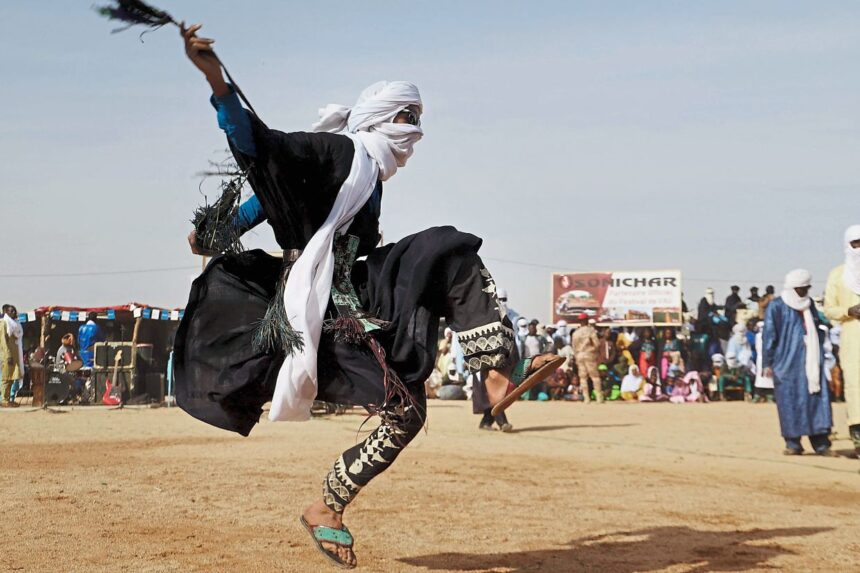
Among Niger’s most celebrated communities are the Tuareg, often called the “Blue People of the Sahara” because of the indigo-dyed garments traditionally worn by many men.
For centuries, Tuareg society has been closely connected to camel caravans, desert trade, poetry, music, and craftsmanship.
Silver jewellery, leatherwork, sword making, and intricate designs reflect artistic traditions that have been carefully preserved through generations.
The Tuareg also possess an ancient writing system known as Tifinagh, which remains an important symbol of Amazigh cultural identity across the Sahara.
A Nation of Many Cultures
Niger is home to numerous ethnic communities, including the Hausa, Zarma-Songhai, Fulani, Kanuri, Tuareg, Toubou, Gourmantché, and Arab communities.
Each contributes distinctive languages, ceremonies, architecture, music, and traditional knowledge to the country’s cultural landscape.
Despite their diversity, strong family relationships, hospitality, respect for elders, and community cooperation remain values shared across much of the nation.
This cultural richness has made Niger one of the Sahel’s most diverse societies.
Agadez: The Historic Gateway to the Sahara
For centuries, the city of Agadez served as one of Africa’s most important caravan centres.
Its famous mud-brick mosque, towering minaret, and winding streets welcomed merchants, scholars, and travellers from across the Sahara.
Agadez became a meeting place where goods, cultures, and ideas were exchanged between North and West Africa.
Today, the city’s architecture and historic traditions continue to preserve an important chapter of African history.
Music and Oral Traditions That Preserve History
Across Niger, music remains central to community life.
Traditional drums, stringed instruments, flutes, and songs accompany weddings, harvest celebrations, naming ceremonies, and seasonal festivals.
Storytellers and oral historians preserve legends, genealogies, historical events, and moral lessons, ensuring that younger generations remain connected to their ancestors.
These traditions continue to strengthen cultural identity in both rural villages and growing towns.
Cuisine Inspired by River, Farm, and Desert
Nigerien cuisine reflects the country’s diverse landscapes.
Millet, sorghum, rice, beans, vegetables, dates, milk, fish, and locally raised livestock provide the foundation for many traditional meals.
Communal dining remains an important cultural practice, reinforcing values of generosity, family unity, and hospitality.
Tea is widely shared during conversations and community gatherings, creating opportunities for friendship and storytelling.
Natural Wonders Beyond the Desert
Although much of Niger is arid, the country also contains remarkable natural treasures.
The Aïr Mountains rise dramatically from the desert, while the Termit Massif and surrounding landscapes support unique wildlife adapted to harsh conditions.
Protected areas preserve antelope, gazelles, ostriches, and other desert species while promoting conservation and environmental education.
These landscapes remind visitors that the Sahara is far more diverse than endless sand dunes.
Preserving Heritage for Future Generations
Communities throughout Niger continue to preserve traditional crafts, architecture, languages, and oral histories.
Artisans produce leather goods, woven textiles, pottery, silver jewellery, and baskets using techniques refined over centuries.
Educators, historians, and cultural organisations are documenting local traditions to ensure that future generations appreciate the country’s remarkable heritage.
These efforts strengthen national identity while supporting cultural tourism and education.
Why Niger Is One of Africa’s Hidden Cultural Treasures
Niger may not receive the same international attention as some of its neighbours, but its cultural and historical significance is extraordinary.
It is a country where ancient caravan routes shaped civilizations, where the Niger River continues to sustain communities, and where Tuareg traditions remain among the Sahara’s most enduring cultural legacies.
Its diverse peoples, remarkable landscapes, and centuries of resilience offer valuable lessons about adaptation, cooperation, and the importance of preserving heritage.
For students, researchers, teachers, tourists, and members of the African diaspora, Niger provides an inspiring journey into the heart of the Sahel.
From the ancient streets of Agadez to the vast silence of the Sahara and the fertile banks of the Niger River, the country reminds us that Africa’s greatest stories are often found where history, culture, and nature meet.
Email Us on editorial@nnafrica.com