


Introduction
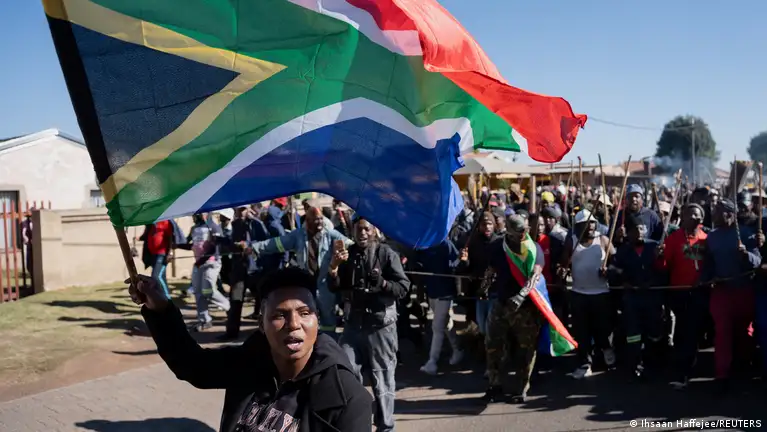
For more than two decades, South Africa has grappled with recurring outbreaks of xenophobic violence that have claimed lives, displaced thousands of people and strained relations with neighbouring African countries.
Each new wave of attacks revives painful questions about the country’s democratic promise. Why does violence repeatedly target foreign nationals? What social, economic and political pressures fuel these tensions? And most importantly, can South Africa break the cycle before another crisis unfolds?
While many South Africans reject xenophobia and continue to live peacefully alongside migrants from across the continent, periodic violence has damaged the country’s international reputation and created fear among communities that have long called South Africa home.
Understanding this issue requires looking beyond the headlines. Xenophobic violence is not driven by a single cause but by a complex mix of economic hardship, unemployment, inequality, crime, political rhetoric, misinformation and competition over limited resources.
As Africa’s most industrialised economy and one of the continent’s leading destinations for migrants, South Africa faces the difficult challenge of balancing border management, economic opportunity and social cohesion.
This article explores the history of xenophobic violence in South Africa, examines its underlying causes, assesses its impact on individuals and the wider region, and considers what can be done to build safer, more inclusive communities.
Key Takeaways
- Xenophobic violence has occurred in several parts of South Africa since the 1990s, with major outbreaks in 2008, 2015, 2019 and subsequent localized incidents.
- Economic inequality, unemployment, misinformation and competition over jobs and services are among the factors often linked to these tensions.
- Most South Africans do not participate in xenophobic violence, and many communities actively support peaceful coexistence.
- The issue affects not only South Africa but also neighbouring countries through diplomacy, trade and migration.
- Long-term solutions require effective law enforcement, economic opportunity, community dialogue and regional cooperation.
What Is Xenophobia?
Xenophobia refers to fear, prejudice or hostility toward people perceived to be foreigners or outsiders. It can take many forms, including discrimination, intimidation, hate speech, exclusion and, in the most serious cases, physical violence.
In South Africa, xenophobic attacks have often targeted migrants and refugees from other African countries, including Zimbabwe, Mozambique, Malawi, Somalia, Ethiopia, Nigeria and the Democratic Republic of the Congo.
Many of those affected own small businesses, work in informal sectors or have lived in South Africa for many years, making the violence particularly disruptive to families and local economies.
It is important to distinguish between legitimate debates about immigration policy and acts of violence or discrimination. Governments may debate border control and migration laws, but violence against individuals because of their nationality or perceived origin is a violation of human rights and the rule of law.
Why This Issue Matters Beyond South Africa
South Africa occupies a unique position on the African continent.
Its relatively advanced economy has attracted workers, entrepreneurs, students and refugees from across Africa for decades. These migrants contribute to sectors such as retail, construction, agriculture, healthcare and domestic services, while also enriching the country’s cultural and economic life.
When xenophobic violence occurs, however, the consequences extend far beyond South Africa’s borders.
Neighbouring governments often express concern for their citizens, diplomatic relations can become strained, businesses suffer losses and families are forced to flee their homes. The violence also raises broader questions about African unity, regional integration and the free movement of people under initiatives such as the African Continental Free Trade Area (AfCFTA).
For these reasons, preventing xenophobic violence is not only a national priority but also an issue of continental importance.
The History of Xenophobic Violence in South Africa
Understanding xenophobic violence in South Africa requires looking beyond individual incidents. The attacks that have periodically shocked the nation are part of a broader story shaped by historical inequalities, rapid urbanisation, economic pressures and the challenges of building a new democracy after apartheid.
Although South Africa is widely celebrated for its peaceful transition to democracy in 1994, the years that followed also brought new social and economic challenges. The country’s growing economy attracted migrants from across Africa, many seeking safety, employment or business opportunities. While most settled peacefully, tensions occasionally emerged in communities struggling with unemployment, poverty and limited public services.
These tensions have erupted into several major outbreaks of violence over the past three decades.
The 2008 Attacks: A National Tragedy
The most devastating wave of xenophobic violence occurred in May 2008.
The attacks began in Alexandra Township near Johannesburg before spreading rapidly to other provinces. Groups of attackers targeted foreign-owned homes and businesses, accusing migrants of taking jobs, lowering wages and contributing to crime.
The violence left more than 60 people dead, hundreds injured and tens of thousands displaced from their homes.
Many victims were forced into temporary shelters established by humanitarian organisations and local authorities. Businesses built over many years were destroyed within hours, leaving countless families without livelihoods.
The events shocked South Africans and drew widespread condemnation from governments, civil society organisations and the international community.
Renewed Violence in 2015
Seven years later, xenophobic tensions resurfaced.
In 2015, attacks broke out in parts of KwaZulu-Natal before spreading to Johannesburg and other urban centres.
Once again, foreign-owned shops were looted, businesses vandalised and families forced to flee for safety.
The violence prompted neighbouring countries to organise the voluntary return of some of their citizens, while several African governments formally protested the attacks.
The South African government deployed additional police and military personnel to restore order and reassure affected communities.
The renewed violence demonstrated that the underlying causes had not been fully addressed.
The 2019 Outbreak
Another significant wave of attacks occurred in 2019, particularly in Johannesburg and Pretoria.
Foreign-owned businesses were again among the main targets, resulting in deaths, injuries and widespread property damage.
The violence sparked diplomatic tensions across the continent.
Some African countries issued travel advisories, while demonstrations took place outside South African diplomatic missions in several capitals.
The attacks also generated intense debate within South Africa about immigration policy, policing, unemployment and social cohesion.
Many community leaders stressed that criminal acts committed by a small number of individuals should not be used to justify violence against entire communities.
More Recent Incidents
Since 2019, South Africa has continued to experience isolated incidents of violence, intimidation and protests involving foreign nationals, although these have generally been smaller in scale than the major nationwide outbreaks.
Community organisations, religious leaders, business groups and local authorities have increasingly worked together to prevent tensions from escalating.
At the same time, debates surrounding undocumented migration, border security, public services and employment have remained prominent in national politics.
These discussions demonstrate that while large-scale violence may subside, the underlying social and economic pressures continue to require careful management.
Why Do These Attacks Keep Happening?
Researchers generally agree that xenophobic violence cannot be explained by a single cause.
Instead, it often emerges where several challenges overlap, including:
- High unemployment.
- Persistent poverty.
- Economic inequality.
- Competition for housing and public services.
- Misinformation about migrants.
- Weak local conflict resolution.
- Criminal opportunism during periods of unrest.
In some cases, foreign-owned businesses have been targeted because they are perceived as successful competitors in local markets.
However, studies have shown that migrants also create employment, contribute to local economies and provide important goods and services within many communities.
The relationship between migration and economic opportunity is therefore far more complex than is often portrayed during periods of tension.
Lessons From the Past
Each outbreak has left painful memories for victims, families and communities across Southern Africa.
At the same time, every crisis has also highlighted the importance of stronger policing, early warning systems, community dialogue and responsible political leadership.
Many South Africans have repeatedly demonstrated solidarity with affected migrants by offering shelter, protecting businesses and speaking out against violence.
These acts of compassion remind the world that xenophobia does not define South Africa. Rather, it remains a serious challenge that many citizens, organisations and institutions continue working to overcome.
Understanding the Root Causes of Xenophobic Violence
Xenophobic violence in South Africa is one of the country’s most complex social challenges. It cannot be explained by a single factor or blamed on one community. Researchers, policymakers and civil society organisations generally agree that the violence results from a combination of economic, political and social pressures that can escalate during periods of uncertainty.
Understanding these underlying causes is essential if South Africa is to prevent future outbreaks.
Unemployment and Economic Inequality
South Africa has one of the highest unemployment rates in the world, particularly among young people.
Despite being Africa’s most industrialised economy, the country continues to face deep inequalities inherited from the apartheid era. Millions of South Africans struggle to find stable employment, affordable housing and reliable public services.
In communities where opportunities are scarce, competition for jobs and income can become intense. Some residents believe that migrants are taking employment or accepting lower wages, increasing tensions between local communities and foreign nationals.
However, economists note that the relationship is far more complex. Many migrants create businesses, employ local workers and contribute to economic growth rather than simply competing for existing jobs.
Migration and Border Management
South Africa has long been a destination for people seeking employment, education, business opportunities and refuge from conflict or political instability in neighbouring countries.
Migrants arrive from across Southern, Central and East Africa, bringing skills, entrepreneurship and cultural diversity.
At the same time, managing migration remains a significant challenge.
Concerns over undocumented migration, border security and the processing of asylum applications have become major political issues.
Many experts argue that efficient immigration systems and clear migration policies are essential for reducing public frustration while protecting the rights of both citizens and migrants.
Crime and Public Perception
Crime remains a serious concern in many parts of South Africa.
During periods of rising crime, foreign nationals are sometimes unfairly blamed for broader security problems.
While individual migrants, like citizens, may commit crimes, there is no evidence that nationality alone explains South Africa’s crime challenges.
Law enforcement agencies and researchers have repeatedly cautioned against generalising the actions of individuals to entire communities.
When misinformation spreads, innocent families and businesses can become targets of violence.
Political Rhetoric and Public Debate
Immigration has become an important topic in South African politics.
Political leaders, activists and community organisations often debate issues such as border control, employment, public services and undocumented migration.
While these discussions are legitimate in any democracy, experts warn that irresponsible or inflammatory language can increase tensions if it portrays entire groups of people as responsible for economic or social problems.
Constructive public debate focuses on policy solutions rather than assigning blame based on nationality.
Responsible leadership plays an important role in preventing misunderstandings from escalating into violence.
The Influence of Social Media
Social media has transformed how information spreads during times of crisis.
Accurate reporting can help communities stay informed, but false rumours and misleading claims can spread rapidly, increasing fear and anger.
Images or videos shared without context may fuel panic, while misinformation about migrants can deepen existing tensions.
Fact-checking, responsible journalism and digital literacy have therefore become important tools in reducing conflict and preventing violence.
The Economic Contribution of Migrants
One aspect often overlooked during public debates is the contribution migrants make to South Africa’s economy.
Across the country, foreign nationals operate restaurants, grocery stores, transport services, manufacturing businesses and other enterprises that serve local communities.
Many employ South African citizens, pay taxes where required and contribute to local economic activity.
Others work in sectors experiencing labour shortages, helping businesses remain productive.
Recognising these contributions does not remove the need for effective immigration management, but it provides a more balanced understanding of migration’s role in society.
Communities Choosing Peace
Despite periodic outbreaks of violence, countless examples show South Africans and migrants living and working together peacefully.
Community leaders, churches, schools, traditional authorities and civil society organisations have frequently intervened to calm tensions before they escalated.
Neighbourhood watch groups have protected vulnerable families.
Local businesses have supported one another regardless of nationality.
Religious organisations have opened their doors to people displaced by violence.
These examples demonstrate that cooperation—not conflict—is the daily reality for the overwhelming majority of people living in South Africa.
Why Lasting Solutions Require Multiple Approaches
There is no single policy that can eliminate xenophobic violence.
Reducing future outbreaks will require progress in several areas, including:
- Sustainable job creation.
- Improved education and skills development.
- Effective border and immigration management.
- Stronger policing and faster prosecution of violent offenders.
- Community dialogue and conflict resolution.
- Public education to counter misinformation.
- Regional cooperation between African governments.
Addressing only one of these challenges is unlikely to solve the problem. A comprehensive approach that combines economic development, good governance and respect for human rights offers the best chance of building lasting social cohesion.
Responses, Solutions and the Future of South Africa
While xenophobic violence has repeatedly challenged South Africa, it has also prompted important conversations about national identity, migration, security and social cohesion. Governments, civil society organisations, businesses and local communities have all sought ways to prevent violence and build more inclusive societies.
The question now is not only how South Africa responds to individual incidents, but how it addresses the underlying conditions that allow tensions to escalate.
The Human Cost of Xenophobic Violence
Behind every headline are people whose lives have been permanently changed.
Families have lost loved ones.
Small business owners have watched years of hard work disappear in a single night.
Children have been forced to leave schools after their families fled violence.
Communities that once lived peacefully together have sometimes been divided by fear and mistrust.
For many migrants, South Africa is not simply a place of work—it is home. Many have lived in the country for years, raised families and built businesses that serve local communities.
When violence erupts, the effects are felt far beyond those directly attacked. Fear spreads across neighbourhoods, disrupting livelihoods and weakening social trust.
Government Responses
Successive South African governments have condemned xenophobic violence and affirmed that attacks on foreign nationals are criminal acts that will not be tolerated.
During major outbreaks, authorities have responded by:
- Deploying police and security forces.
- Arresting suspected perpetrators.
- Providing temporary shelters for displaced families.
- Working with community leaders to restore calm.
- Investigating the causes of violence.
At the same time, the government has continued reviewing immigration policies, strengthening border management and improving systems for processing visas and asylum applications.
Officials have repeatedly stressed that concerns about immigration should be addressed through lawful democratic processes—not violence.
The Role of the African Union and SADC
Because many victims come from neighbouring countries, xenophobic violence has regional consequences.
The African Union (AU) has consistently called for peaceful coexistence, protection of migrants and respect for human rights.
The Southern African Development Community (SADC) has also encouraged dialogue and cooperation among member states, recognising that migration is a regional issue requiring regional solutions.
Neighbouring governments have worked closely with South African authorities during periods of tension to support affected citizens and reduce diplomatic strain.
These partnerships remain essential for maintaining stability across Southern Africa.
Communities Leading the Way
Some of the strongest responses to xenophobic violence have come not from governments alone but from ordinary citizens.
Across South Africa, churches, mosques, traditional leaders, youth organisations, trade unions and community groups have organised peace campaigns, public dialogues and reconciliation initiatives.
Many South Africans have protected foreign-owned businesses during periods of unrest.
Others have opened their homes to displaced families or helped rebuild businesses destroyed by violence.
These actions demonstrate that the values of compassion, solidarity and Ubuntu continue to guide many communities.
The Importance of Responsible Leadership
Political leaders, religious figures, journalists and community representatives all influence public opinion.
Responsible leadership can help calm tensions by:
- Promoting accurate information.
- Condemning violence without hesitation.
- Encouraging peaceful dialogue.
- Addressing legitimate public concerns through policy rather than inflammatory rhetoric.
- Supporting law enforcement and justice for victims.
Clear and consistent communication becomes especially important during periods of uncertainty, when rumours can spread rapidly.
Can South Africa Prevent Another Wave of Violence?
There is no simple answer.
Experts generally agree that preventing future outbreaks will require action on several fronts.
Economic growth must create more opportunities for young people.
Communities need stronger mechanisms for resolving local disputes before they become violent.
Police must respond quickly to threats and hold perpetrators accountable.
Schools and community organisations can promote understanding between citizens and migrants.
Governments across the region must also cooperate on migration, border management and economic development.
No single solution will eliminate xenophobic violence overnight. However, sustained investment in social cohesion, economic inclusion and the rule of law can significantly reduce the risk of future attacks.
Lessons for Africa
South Africa’s experience offers important lessons for the entire continent.
Migration is likely to increase as African economies become more interconnected through initiatives such as the African Continental Free Trade Area (AfCFTA).
Managing that movement successfully will require fair immigration systems, stronger regional cooperation and policies that balance national interests with respect for human rights.
The challenge is not unique to South Africa. Many countries around the world are debating migration, employment and social integration.
Africa’s response will help shape the future of regional unity and economic cooperation.
Hope Beyond the Headlines
Despite the tragic episodes of violence that have captured international attention, they do not tell the whole story of South Africa.
Every day, millions of South Africans and migrants live, work and build communities together peacefully.
Businesses thrive through cooperation.
Schools educate children from diverse backgrounds.
Hospitals, markets and workplaces bring together people from across the continent.
These everyday acts of coexistence are a reminder that violence is the exception—not the norm.
They also offer hope that, through continued dialogue, responsible leadership and inclusive development, South Africa can move beyond recurring cycles of xenophobic violence and strengthen its vision of a democratic society that welcomes diversity while addressing the concerns of all its people.
Frequently Asked Questions (FAQ)
What is xenophobia?
Xenophobia is the fear, prejudice or hostility towards people perceived to be foreigners or outsiders. It can manifest through discrimination, intimidation, exclusion or violence.
Why has South Africa experienced xenophobic violence?
There is no single cause. Researchers point to a combination of high unemployment, poverty, inequality, competition for resources, misinformation, crime concerns and social tensions. These factors can create conditions where violence is more likely to occur.
Who has been affected by xenophobic attacks?
Victims have included migrants, refugees and asylum seekers from several African countries, including Zimbabwe, Mozambique, Malawi, Nigeria, Somalia, Ethiopia and the Democratic Republic of the Congo. Many South African citizens have also suffered economically when businesses close, investment declines and communities are disrupted.
Has the South African government condemned xenophobic violence?
Yes. Successive governments have condemned attacks against foreign nationals, deployed security forces during major outbreaks and called for disputes to be resolved through the rule of law rather than violence.
What can be done to prevent future attacks?
Experts recommend a combination of stronger law enforcement, job creation, improved border management, community dialogue, education to combat misinformation and greater regional cooperation between African countries.
Key Facts
- South Africa is one of Africa’s largest destinations for migrants seeking employment, education and business opportunities.
- The 2008 attacks remain the deadliest wave of xenophobic violence in the country’s democratic history.
- Most South Africans reject xenophobia and continue to live peacefully alongside migrants from across the continent.
- Xenophobic violence affects regional trade, diplomacy, tourism and investment, making it an issue of continental concern.
- Building social cohesion remains one of South Africa’s most important long-term challenges.
Conclusion
South Africa’s struggle with xenophobic violence reflects broader challenges facing many societies around the world—how to manage migration, create economic opportunities and strengthen social cohesion in times of change.
The country’s history demonstrates that violence does not emerge from a single cause. It is often the result of overlapping economic pressures, social frustrations, misinformation and criminal opportunism. Understanding these complexities is essential if lasting solutions are to be found.
At the same time, South Africa’s story is also one of resilience. Across the country, millions of citizens and migrants continue to live, work and build communities together peacefully. Community leaders, religious organisations, businesses and civil society groups have repeatedly shown that cooperation and dialogue can overcome division.
Preventing future outbreaks will require sustained commitment from government, law enforcement, community organisations and ordinary citizens. Policies that promote economic inclusion, effective governance, fair immigration management and respect for human rights will be critical.
As Africa becomes more interconnected through trade, investment and the movement of people, South Africa’s experience offers valuable lessons for the continent. The choices made today will help determine whether future generations inherit societies defined by fear and division—or by opportunity, unity and shared prosperity.
Email Us on editorial@nnafrica.com