
Thursday, 18 Jun 2026
  • My Feed
  • My Saves
  • History
  • Contact Us
Subscribe
The News Network Africa
  • Home
  • Opinion

    South Africa’s giant playwright Athol Fugard, whose searing works challenged apartheid, dies aged 92.

    By
    Eric Mafundo

    Why Africa’s Middle Class Is Quietly Getting Poorer Despite Economic Growth

    By
    Hayley Sky

    A Mother’s Fury: Kenyan Migrant Smugglers Face the Wrath of Grief.

    By
    Eric Mafundo

    Diplomatic Fallout: Algeria Expels French Officials, Igniting Tensions.

    By
    Eric Mafundo

    Cutting through the myths and misconceptions around harm reduction services for addicts

    By
    nna

    Namibia’s Hengari Arrested: Rape Accusation Leads to Ministerial Dismissal and Subsequent Detention.

    By
    Eric Mafundo
  • Politics
    Silent Bullets: The Deadly Clash Between Kenya’s Security Forces and Anti-Tax Protesters.

    Silent Bullets: The Deadly Clash Between Kenya’s Security Forces and Anti-Tax Protesters.

    By
    Eric Mafundo
    Audio: The Take: Why al-Qaeda’s Sahel branch is blocking fuel to Mali

    Audio: The Take: Why al-Qaeda’s Sahel branch is blocking fuel to Mali

    By
    Hayley Sky
    Angola Steps Up: Mediating Peace Between Congo and M23 Rebels.

    Angola Steps Up: Mediating Peace Between Congo and M23 Rebels.

    By
    Eric Mafundo
    Is There a Genocide of White South Africans? Examining the Facts Behind the Claims.

    Is There a Genocide of White South Africans? Examining the Facts Behind the Claims.

    By
    Eric Mafundo
    Nigeria’s Anti-Graft Agency Scores Big: Nearly 0 Million Recovered in One Year.

    Nigeria’s Anti-Graft Agency Scores Big: Nearly $500 Million Recovered in One Year.

    By
    Eric Mafundo
    Rwandan-backed rebels enter Congo’s Goma in major escalation

    Rwandan-backed rebels enter Congo’s Goma in major escalation

    By
    nna
  • Business
    Trump’s Rise: A Tale of Two Realities and what it means for Africa

    Trump’s Rise: A Tale of Two Realities and what it means for Africa

    By
    Hayley Sky
    Drones Reshape the Battlefield: A New Era in Sudan’s Civil War.

    Drones Reshape the Battlefield: A New Era in Sudan’s Civil War.

    By
    Eric Mafundo
    Angola’s Rhythms of Resilience: Inside the Culture That Turned Struggle into Celebration

    Angola’s Rhythms of Resilience: Inside the Culture That Turned Struggle into Celebration

    By
    K Allen
    Namibia’s ‘founding father’ Sam Nujoma dies aged 95

    Namibia’s ‘founding father’ Sam Nujoma dies aged 95

    By
    Correspondent
    South Africa to Challenge Nigerian Pastor’s Acquittal in Rape Case: A Quest for Justice and Accountability.

    South Africa to Challenge Nigerian Pastor’s Acquittal in Rape Case: A Quest for Justice and Accountability.

    By
    Eric Mafundo
    Black rain is falling in Iran after strikes on oil facilities. Scientists warn of long-term consequences

    Black rain is falling in Iran after strikes on oil facilities. Scientists warn of long-term consequences

    By
    Hayley Sky
  • Pages
    • Advertise with US

Archives

  • June 2026
  • May 2026
  • April 2026
  • March 2026
  • February 2026
  • January 2026
  • December 2025
  • November 2025
  • October 2025
  • September 2025
  • August 2025
  • May 2025
  • April 2025
  • March 2025
  • February 2025
  • January 2025
  • December 2024

Categories

  • Agriculture
  • Business
  • Culture
  • Health
  • Lifestyle
  • Minerals
  • News
  • Opinion
  • Politics
  • Sports
  • Technology
  • Travel
  • Uganda
  • 🔥
  • News
  • Politics
  • Business
  • Lifestyle
  • Opinion
  • Culture
  • Travel
  • Minerals
  • Health
  • Uganda
Font ResizerAa
The News Network AfricaThe News Network Africa
  • My Saves
  • My Feed
  • History
  • Travel
  • Opinion
  • Politics
  • Health
  • Technology
  • News
Search
  • Pages
    • Home
    • Advertise with Us
  • Personalized
    • My Feed
    • My Saves
    • History
  • Categories
    • News
    • Business
    • Minerals
    • Culture
    • Opinion
    • Politics
    • Agriculture
    • Health
    • Technology
    • Travel
Have an existing account? Sign In
Follow US
© 2025 The News Network Africa. All Rights Reserved.
The News Network Africa > Blog > Culture > Uganda > The Banyankole: The Cattle Keepers Whose Heritage Shaped Western Uganda
Uganda

The Banyankole: The Cattle Keepers Whose Heritage Shaped Western Uganda

Churchill Nkagumaho
Last updated: 18 June 2026 16:56
Churchill Nkagumaho
Share
The Banyankole: The Cattle Keepers Whose Heritage Shaped Western Uganda
SHARE

Across the rolling hills and sweeping grasslands of western Uganda lives one of the country’s most influential communities—the Banyankole. Famous for their magnificent Ankole long-horned cattle, rich traditions, and strong work ethic, the Banyankole have built a culture that celebrates family, hospitality, and respect for both people and nature.

Contents
Who Are the Banyankole?The Origins of AnkoleThe Bahima and the BairuLanguageThe Famous Ankole Long-Horned CattleTraditional HomesFood and CuisineTraditional DressMusic and DanceMarriage CustomsSpiritual BeliefsEconomic ActivitiesPreserving Banyankole HeritageDid You Know?Quick FactsConclusion

For centuries, their homeland has been a center of livestock keeping and agriculture, producing generations of leaders, entrepreneurs, scholars, and professionals who have contributed significantly to Uganda’s development.

- Advertisement -

The story of the Banyankole is one of resilience, prosperity, and a deep connection to the land.


Who Are the Banyankole?

The Banyankole are a Bantu-speaking people indigenous to the Ankole sub-region of southwestern Uganda.

- Advertisement -

Their homeland includes Mbarara, Bushenyi, Sheema, Ibanda, Kiruhura, Isingiro, Ntungamo, Rubirizi, Buhweju, Rwampara, Mitooma, and parts of Kazo District.

The Banyankole are one of Uganda’s largest ethnic communities and are well known for their contributions to agriculture, commerce, education, and public service.


The Origins of Ankole

The history of the Banyankole is closely linked to the former Ankole Kingdom, one of Uganda’s traditional kingdoms.

- Advertisement -

Historically, Ankole developed into a respected kingdom ruled by the Omugabe (king). The kingdom united different clans and communities under a shared cultural identity while maintaining local traditions.

Although the kingdom no longer exercises political authority, Ankole’s cultural heritage continues to influence the identity of the Banyankole people.


The Bahima and the Bairu

Historically, Banyankole society included two major social groups.

The Bahima were traditionally pastoralists who specialized in cattle keeping, while the Bairu were primarily agriculturalists who cultivated crops.

Today, these historical distinctions carry far less significance in everyday life. Modern Banyankole communities are united by a shared cultural identity, and people from all backgrounds participate in a wide range of professions and economic activities.


Language

The Banyankole speak Runyankole, one of Uganda’s major Bantu languages.

Runyankole is rich in proverbs, poetry, folktales, and songs that preserve the history and wisdom of the community.

The language is widely spoken throughout southwestern Uganda and is taught in schools and used in local media.


The Famous Ankole Long-Horned Cattle
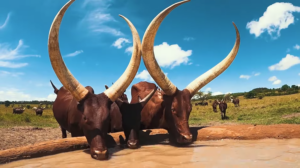
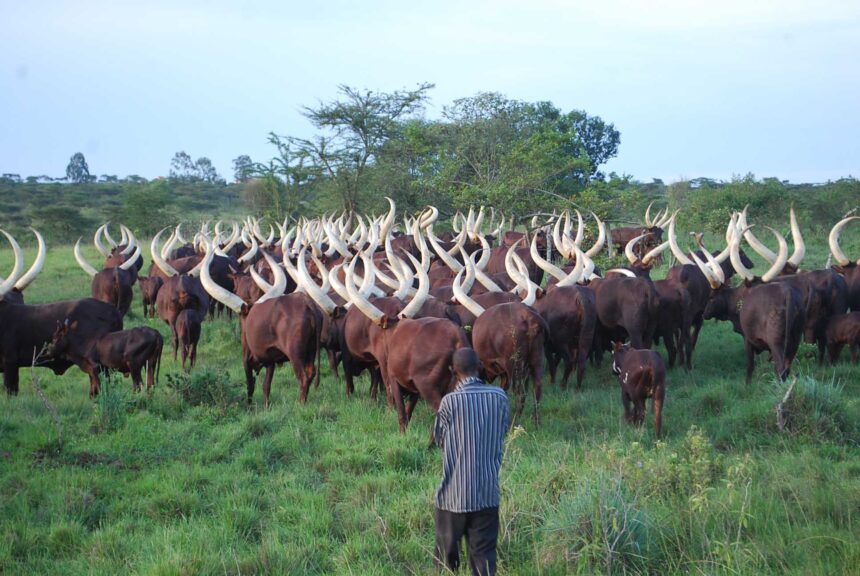
One of the most recognizable symbols of Banyankole culture is the Ankole long-horned cattle.

These magnificent animals, known for their impressive horns and graceful appearance, have been treasured for centuries.

Traditionally, cattle represented:

  • Wealth
  • Social status
  • Bridewealth
  • Family pride
  • Cultural identity

Even today, the Ankole cattle remain an important symbol of western Uganda and are admired around the world.


Traditional Homes

Historically, Banyankole homes were built using poles, reeds, mud, and grass thatch.

The family homestead often included separate areas for people and livestock, reflecting the importance of cattle in daily life.

Today, modern housing has become widespread, though traditional homesteads can still be found in many rural communities.


Food and Cuisine

The Banyankole are known for a rich cuisine based on dairy products, meat, and locally grown crops.

Popular traditional foods include:

  • Millet bread
  • Matooke
  • Sweet potatoes
  • Cassava
  • Beans
  • Groundnut sauce
  • Beef
  • Ghee
  • Fresh milk
  • Sour milk (amakamo)

Milk has always occupied a special place in Banyankole culture and is regarded as a symbol of health, prosperity, and hospitality.


Traditional Dress

Traditional Banyankole attire remains an important part of weddings and cultural celebrations.

Women often wear beautifully designed dresses with colorful accessories, while men traditionally wear the kanzu or other ceremonial garments during formal occasions.

Beadwork and handmade ornaments continue to be worn during important cultural events.


Music and Dance

Music and dance are central to Banyankole cultural life.

Traditional performances celebrate:

  • Weddings
  • Harvests
  • Community achievements
  • Royal ceremonies
  • Family gatherings

The Ekitaguriro dance is among the best-known Banyankole dances. Characterized by graceful movements that imitate the elegance of Ankole cattle, it is performed during weddings, festivals, and cultural celebrations.

Traditional instruments include drums, flutes, fiddles, and stringed instruments that accompany songs praising love, cattle, and community.


Marriage Customs

Marriage is regarded as the union of two families.

Traditional marriage ceremonies involve:

  • Family introductions
  • Bridewealth negotiations
  • Blessings from elders
  • Community feasting
  • Music and dance

Respect, mutual support, and cooperation are highly valued within Banyankole families.


Spiritual Beliefs

Historically, the Banyankole believed in Ruhanga, the supreme creator, and respected ancestral traditions.

Today, Christianity is the dominant religion, with Islam also practiced by some members of the community.

Traditional values continue to influence ceremonies, family life, and cultural celebrations.


Economic Activities

The Banyankole have long been known for their entrepreneurial spirit.

Major economic activities include:

  • Dairy farming
  • Cattle ranching
  • Crop farming
  • Coffee production
  • Banana cultivation
  • Trade
  • Tourism
  • Education
  • Manufacturing
  • Public service

Southwestern Uganda remains one of the country’s leading dairy-producing regions.


Preserving Banyankole Heritage

Cultural organizations, community leaders, and educators continue to promote the Runyankole language, traditional dances, oral literature, and historical knowledge.

Annual cultural events, music festivals, and educational programs encourage young people to appreciate their heritage while embracing modern opportunities.


Did You Know?

  • The Ankole long-horned cattle are among the most recognizable cattle breeds in Africa.
  • The Ekitaguriro dance imitates the graceful movements of cattle.
  • Dairy farming is one of the region’s most important economic activities.
  • Runyankole is one of Uganda’s most widely spoken indigenous languages.
  • The rolling hills of Ankole are often described as some of the most beautiful landscapes in East Africa.

Quick Facts

FeatureInformation
RegionSouthwestern Uganda
Historical KingdomAnkole
LanguageRunyankole
Traditional LeaderOmugabe
Famous SymbolAnkole long-horned cattle
Main Economic ActivitiesDairy farming, cattle keeping, agriculture, trade

Conclusion

The Banyankole are a community whose identity has been shaped by centuries of pastoral traditions, agricultural excellence, and strong family values. Their famous long-horned cattle, vibrant dances, rich language, and spirit of hospitality have made Ankole one of Uganda’s most celebrated cultural regions.

As western Uganda continues to grow and modernize, the Banyankole remain proud custodians of a heritage that blends tradition with progress. Their enduring legacy continues to enrich Uganda’s cultural landscape and serves as a reminder that preserving culture is essential to understanding the nation’s past and shaping its future.

Email Us on editorial@nnafrica.com

Share This Article
Facebook Whatsapp Whatsapp Telegram Email Copy Link
Previous Article Kenya’s Cold-Storage Revolution: The Innovation Helping Farmers Fight Food Waste Kenya’s Cold-Storage Revolution: The Innovation Helping Farmers Fight Food Waste
Next Article The Bakiga: The Mountain People Whose Hard Work Built a Lasting Legacy The Bakiga: The Mountain People Whose Hard Work Built a Lasting Legacy

Latest Posts

Ethiopia: The Ancient Empire Where Coffee, Faith, and Timeless Traditions Shaped Africa’s Soul
Culture Travel
The Bakiga: The Mountain People Whose Hard Work Built a Lasting Legacy
Uganda
Kenya’s Cold-Storage Revolution: The Innovation Helping Farmers Fight Food Waste
News
Somaliland’s Israel Visit Sparks Debate: Could a New Diplomatic Alliance Reshape the Horn of Africa?
News

Opinions

Africa’s Forgotten War: Why Sudan’s Humanitarian Crisis Deserves the World’s Attention
Opinion Politics
Opinion Piece: Skills will determine the success of East Africa’s LNG ambitions
Opinion
The Silent Crisis Costing Africa Billions: Why Young Professionals Are Leaving Their Dream Jobs
Opinion
What if everything you have right now is everything you once dreamed of?
Opinion

You Might Also Like

The Matheniko: Guardians of Mount Moroto and Keepers of Karamoja’s Living Heritage
Uganda

The Matheniko: Guardians of Mount Moroto and Keepers of Karamoja’s Living Heritage

By
Churchill Nkagumaho
The Pulse of Africa: How Music, Art, and the Mighty Congo River Define the Democratic Republic of the Congo
Uganda

The Pulse of Africa: How Music, Art, and the Mighty Congo River Define the Democratic Republic of the Congo

By
K Allen
The Pian: A Legacy of Resilience and Tradition in Eastern Karamoja
Uganda

The Pian: A Legacy of Resilience and Tradition in Eastern Karamoja

By
Churchill Nkagumaho
The Bokora: The Resilient Heart of Karamoja’s Cultural Heritage
Uganda

The Bokora: The Resilient Heart of Karamoja’s Cultural Heritage

By
Churchill Nkagumaho
The News Network Africa
X-twitter Facebook Rss

About US


The News Network Africa: Your instant connection to breaking stories and live updates. Stay informed with our real-time coverage across minerals, culture, politics, business, tech, entertainment, and more. Your reliable source for 24/7 news.

Top Categories
  • News
  • Opinion
  • Politics
  • Tech
  • Health
  • Travel
Usefull Links
  • Advertise with Us
  • Complaint
  • Privacy Policy
  • Cookie Policy
  • Submit a Tip

© The News Network Africa. All Rights Reserved.

Welcome Back!

Sign in to your account

Username or Email Address
Password

Lost your password?