

In the vast savannahs of central Karamoja, where acacia trees dot the landscape and cattle graze beneath endless blue skies, the Bokora have built a way of life that has endured for centuries. Their culture is one of resilience, unity, and deep respect for tradition, making them one of the most significant communities within the Karamoja cultural cluster.
Although the Bokora share common ancestry with neighboring communities, they have developed their own customs, social structures, and traditions that continue to define their identity today.
Their story is one of adaptation, courage, and an unwavering commitment to preserving their heritage.
Who Are the Bokora?
The Bokora are one of the principal communities of the Karamoja sub-region in northeastern Uganda. They primarily live in Napak District, although Bokora families can also be found in neighboring districts due to migration, trade, and marriage.
As members of the larger Karamoja cultural family, they share historical and linguistic ties with the Karamojong, Jie, Dodoth, Matheniko, and Pian. However, each community has its own clan systems, leadership traditions, and local customs that distinguish it from the others.
The Bokora have long been known for their strong communal values, where cooperation and mutual support are essential to everyday life.
Origins and History
Like other Karamoja communities, the Bokora trace their ancestry to Eastern Nilotic-speaking peoples who migrated into the region many centuries ago.
Over generations, they adapted to Karamoja’s dry climate by becoming skilled pastoralists, moving livestock seasonally in search of pasture and water. This lifestyle fostered a deep understanding of the natural environment and strengthened the community’s dependence on cooperation and shared responsibility.
Oral traditions remain central to Bokora history, with elders passing down stories of migration, family lineages, and cultural values through storytelling and song.
The Importance of Cattle
For the Bokora, cattle are more than livestock—they are a symbol of life itself.
Cattle represent:
- Family wealth
- Cultural identity
- Marriage and bridewealth
- Social status
- Spiritual blessings
Young people learn from an early age how to care for livestock, recognizing that healthy herds are essential to the well-being of both families and the wider community.
Many traditional songs celebrate prized cattle, praising their beauty, strength, and importance to family life.
Language
The Bokora speak a dialect closely related to Ngakarimojong, belonging to the Eastern Nilotic language family.
The language remains a vital part of community life, preserving traditional knowledge, songs, proverbs, and oral history. Although English and Kiswahili are increasingly spoken in schools and public institutions, the local language continues to connect generations.
Traditional Homes
Bokora families traditionally live in manyattas—circular homesteads enclosed by thorn fences that protect both people and livestock.
The huts are built using locally available materials such as wood, mud, and grass. The arrangement of the homestead reflects the importance of family unity, with several households often living together within one enclosure.
The central cattle kraal remains the focal point of the homestead.
Food and Cuisine
The Bokora diet reflects both pastoral traditions and local agriculture.
Common foods include:
- Millet porridge
- Sorghum
- Fresh milk
- Fermented milk
- Roasted goat and beef
- Beans
- Cowpeas
- Honey
- Wild fruits
Meals are often shared as a family, reinforcing bonds of kinship and hospitality.
Traditional Dress
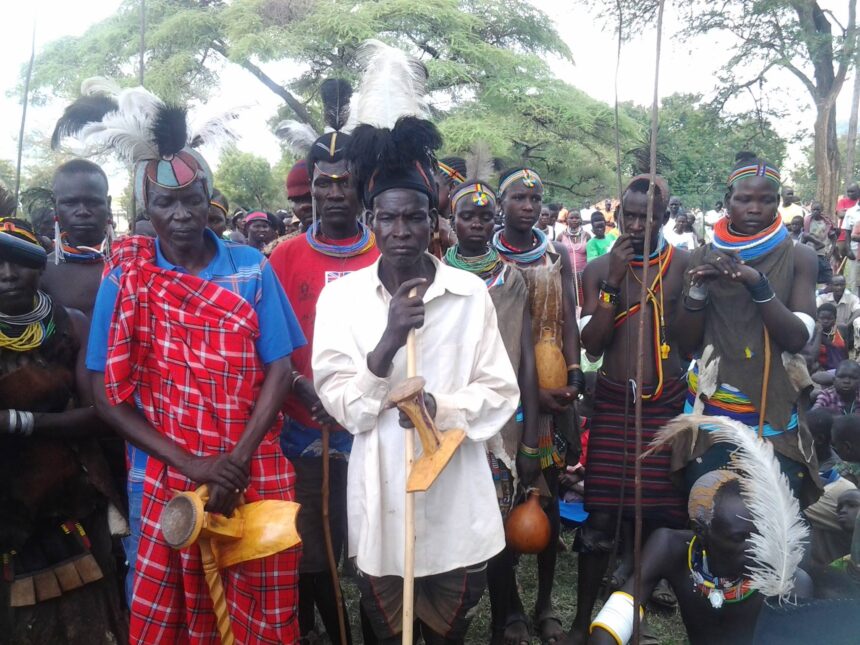
The Bokora are known for their colorful clothing and elaborate beadwork.
Men traditionally wear brightly colored wraps, while women adorn themselves with handcrafted necklaces, bracelets, earrings, waist ornaments, and decorative belts made from beads and other locally sourced materials.
These ornaments are not merely decorative—they often communicate age, marital status, and social identity.
Music and Dance
Music is an essential expression of Bokora culture.
Traditional songs celebrate:
- Family life
- Courage
- Livestock
- Community achievements
- Courtship
- Harvests
Group dances feature rhythmic chanting, clapping, jumping, and synchronized movement, creating vibrant celebrations that bring communities together.
Marriage Customs
Marriage is considered a union of families and clans rather than simply two individuals.
Bridewealth, traditionally paid in cattle, remains a respected custom that symbolizes appreciation and commitment between families.
Elders guide negotiations, offer advice, and ensure that marriages strengthen community relationships.
Spiritual Beliefs
Traditionally, the Bokora believed in a supreme creator and practiced rituals seeking blessings for rain, healthy livestock, and peaceful community life.
Today, Christianity is widely practiced alongside cultural traditions that continue to honor ancestors, elders, and important community ceremonies.
Economic Activities
While livestock keeping remains central to Bokora identity, modern livelihoods have expanded considerably.
Today, many Bokora families participate in:
- Crop farming
- Livestock trading
- Small businesses
- Beekeeping
- Education
- Public service
- Community development projects
Improved infrastructure has created greater access to markets, schools, and healthcare, supporting economic growth while preserving cultural values.
Preserving Bokora Heritage
Like many indigenous communities, the Bokora face the challenge of balancing tradition with modernization.
Community elders, educators, and cultural organizations continue working to preserve their language, music, traditional knowledge, and customs. Younger generations are increasingly embracing education while remaining proud of their cultural roots.
This balance between heritage and progress is shaping the future of the Bokora people.
Did You Know?
- The Bokora are one of the largest communities within the Karamoja cultural cluster.
- Their traditional songs often celebrate cattle and family history.
- Manyatta settlements are designed to protect both families and livestock.
- Beadwork remains an important symbol of identity and craftsmanship.
Quick Facts
| Feature | Information |
|---|---|
| Region | Napak District, Karamoja |
| Language | A Ngakarimojong dialect |
| Cultural Group | Karamoja Cluster |
| Traditional Occupation | Pastoralism and farming |
| Main Livestock | Cattle, goats, and sheep |
| Traditional Home | Manyatta |
Conclusion
The Bokora embody the resilience, unity, and cultural richness that define the Karamoja region. Their traditions, shaped by generations of pastoral life, continue to thrive in a changing world through the dedication of families, elders, and young people alike.
As Uganda celebrates its cultural diversity, the Bokora remind us that heritage is not only preserved in museums or books—it is carried in language, songs, ceremonies, and the everyday lives of the people. Their story is one of endurance, adaptation, and pride, making them an indispensable part of Uganda’s cultural mosaic.
Email Us on editorial@nnafrica.com