


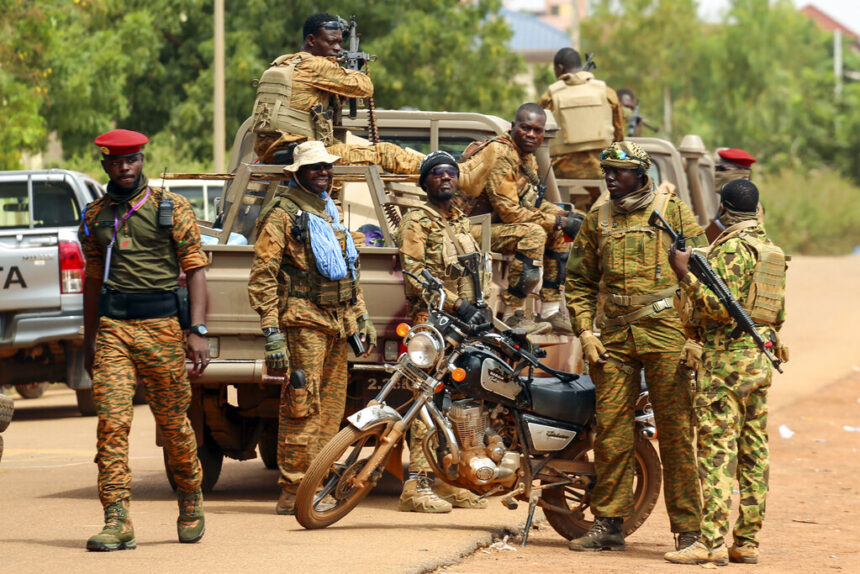
Burkina Faso’s armed forces said they killed 24 Jama’at Nusrat al-Islam wal-Muslimin militants during an attack on a military position in the Centre-Nord region on 1 June 2026.
The army said the assault began at dawn near the town of Barsalogho. Troops repelled the attack with air support from Burkina Faso’s fleet of drones and fighter jets. Six soldiers were wounded, two seriously.
JNIM, an al-Qaeda affiliate, has intensified attacks in Centre-Nord and Sahel regions as the rainy season begins. Security analysts say militants try to seize territory before roads become impassable from July to September.
“Security operations are ongoing to neutralize the attackers who fled toward the border with Mali,” the army said in a statement. It urged residents to report suspicious movements.
Burkina Faso’s military government has shifted toward Russia-backed Wagner Group successors and locally produced drones for surveillance and strikes. The strategy has reduced JNIM’s control of major towns but attacks on villages and supply convoys continue.
The UN reports over 2 million internally displaced people in Burkina Faso, most in Centre-Nord and Est regions. Humanitarian access remains limited due to road ambushes.
The government declared a “general mobilization” in 2023 and has recruited thousands of Volunteers for the Defense of the Homeland, or VDPs, to support the army. Rights groups have raised concerns over VDP training and accountability.
Centre-Nord borders Mali, where JNIM operates across the porous border. Regional security cooperation through the Alliance of Sahel States has increased, but cross-border raids persist.
The army said it recovered weapons, motorcycles, and communications equipment after the Barsalogho clash. Military sources said drone surveillance prevented JNIM from regrouping.
As rains start, both the army and militants face logistical challenges. The next three months will test Burkina Faso’s ability to hold cleared areas.
Email Us on editorial@nnafrica.com