

The Democratic Republic of Congo (DRC) is facing one of the most dangerous public health emergencies in its modern history.
Just weeks after health authorities declared a new Ebola outbreak, the virus has spread at a pace never before seen during the first month of an African Ebola epidemic. More than 1,000 confirmed infections and over 260 deaths have already been recorded, making this the fastest-growing first month of any Ebola outbreak on the continent.
For a continent that has fought Ebola for decades, the speed of the current outbreak is raising urgent concerns.
Health experts warn that unless transmission is rapidly contained, the humanitarian consequences could become far more severe.
Why This Outbreak Is Different
Unlike some previous Ebola outbreaks that were largely confined to remote villages, this one spread through densely populated communities before it was officially detected.
The virus has affected urban centres and overcrowded camps for people displaced by conflict, making contact tracing and isolation significantly more difficult.
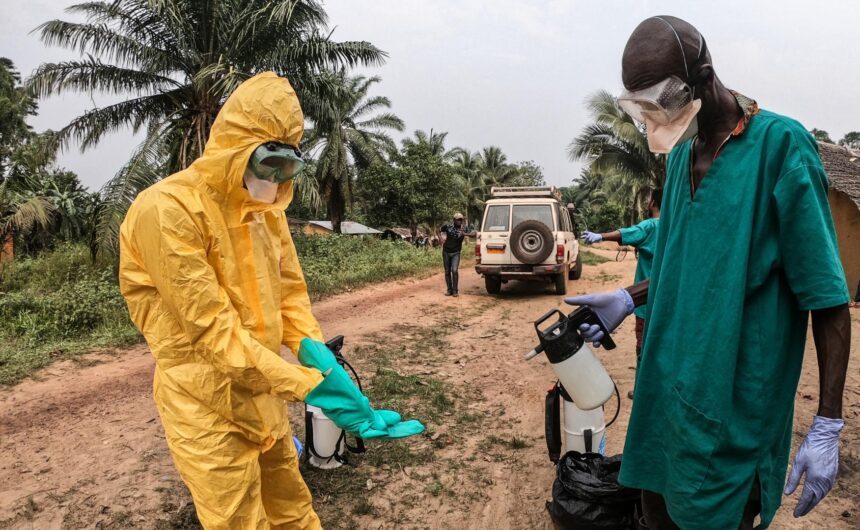
The outbreak is also being driven by the Bundibugyo strain of Ebola—a rare variant for which there is currently no approved vaccine or specific treatment. Health authorities are relying on rapid diagnosis, supportive medical care, community engagement, and strict infection-control measures while researchers continue evaluating experimental options.
Conflict Is Fueling the Crisis
Eastern DR Congo has endured years of armed conflict, forcing millions from their homes.
Many displaced families now live in crowded camps where access to clean water, sanitation, and healthcare is limited.
These conditions create an environment where infectious diseases can spread quickly.
Aid workers also face security challenges that can delay treatment, surveillance, and the delivery of medical supplies to affected communities.
A Regional Concern
The outbreak is no longer viewed as a challenge for the DRC alone.
Uganda has reported imported cases linked to cross-border movement, prompting heightened surveillance and preparedness measures. Health authorities across East and Central Africa are strengthening border screening, laboratory capacity, and emergency response systems to prevent wider regional transmission.
The World Health Organization and Africa CDC are coordinating with governments to expand contact tracing, community education, and treatment capacity.
The Human Cost
Behind the statistics are families whose lives have been transformed overnight.
Children have lost parents.
Healthcare workers continue risking their own lives while treating patients.
Communities already struggling with poverty and insecurity are now confronting another devastating crisis.
For many families, Ebola is more than a disease—it is a threat to livelihoods, education, and hope for the future.
Lessons From the Past
Africa has overcome major Ebola outbreaks before.
The devastating West African epidemic of 2014–2016 demonstrated the importance of early detection, transparent communication, international cooperation, and community trust.
Those lessons are now being applied once again.
Governments have strengthened surveillance systems, improved laboratory networks, and trained thousands of frontline health workers.
These investments provide hope that the outbreak can still be brought under control.
What Every African Should Know
Health experts emphasize that Ebola does not spread through casual contact.
The virus is transmitted through direct contact with the bodily fluids of an infected person or contaminated materials.
Prompt medical attention, early isolation of suspected cases, and cooperation with health authorities remain the most effective ways to limit transmission.
Public awareness is therefore just as important as medical treatment.
Looking Ahead
The coming weeks will be critical.
If response teams succeed in identifying infections quickly, tracing contacts, and expanding treatment capacity, the outbreak can still be contained.
If transmission continues unchecked, the consequences could extend beyond the DRC, placing additional pressure on neighbouring countries and regional health systems.
Africa has defeated Ebola before.
The challenge now is ensuring that history repeats itself—not in the number of lives lost, but in the determination, cooperation, and resilience that ultimately brought previous outbreaks to an end.
Email Us on editorial@nnafrica.com