

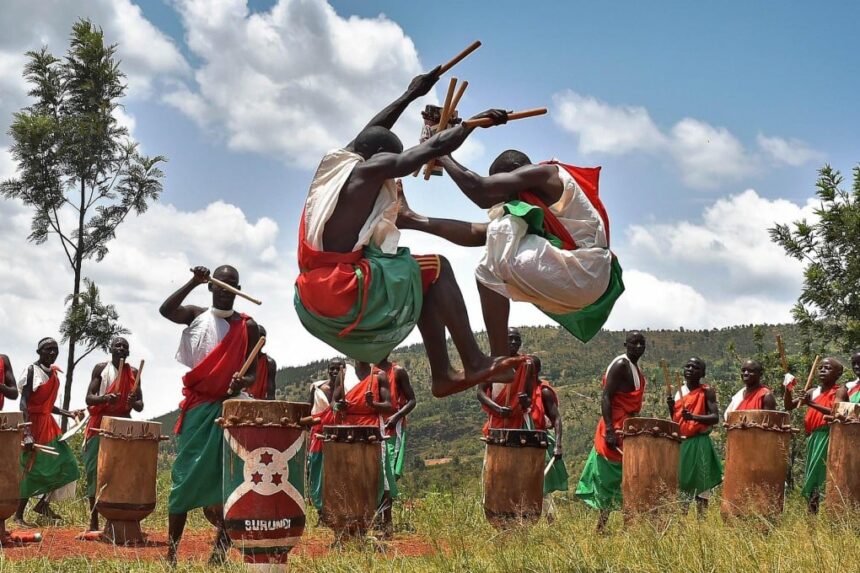
In the hills of Burundi, a drumbeat is more than music. It is a language, a symbol of unity, and a sacred connection between generations. For centuries, the powerful rhythms of Burundi’s royal drums have announced celebrations, marked historic moments, and carried the spirit of a nation across valleys and villages.
Though Burundi is one of Africa’s smallest countries, its cultural influence extends far beyond its borders. Nestled in the Great Lakes region of East Africa, the country is home to a rich heritage of music, dance, oral traditions, and community values that continue to shape everyday life.
For visitors willing to look beyond headlines and stereotypes, Burundi reveals itself as a nation of remarkable resilience, cultural pride, and enduring traditions.
Why Burundi’s Drums Are More Than Musical Instruments
Few cultural symbols are as closely associated with a nation as the drums of Burundi.
For hundreds of years, the Karyenda drums played a central role in the kingdom of Burundi. Traditionally, they were considered sacred and were used during royal ceremonies, national celebrations, and important community events.
The drummers themselves occupied a respected place in society. Their performances required exceptional skill, discipline, and coordination. During ceremonies, groups of drummers would move in synchronized patterns while producing powerful rhythms that could be heard from great distances.
Today, Burundi’s drumming tradition remains one of Africa’s most celebrated cultural practices and continues to inspire musicians around the world.
A Nation of Hills, Lakes, and Community
Burundi is often called the “Land of a Thousand Hills,” a description that reflects its stunning landscape of rolling green highlands and fertile valleys.
The country’s geography has shaped its culture for generations. Communities developed around agriculture, family networks, and shared resources, creating strong traditions of cooperation and mutual support.
Villages scattered across the hills remain important centers of social and cultural life. Here, traditions are passed from elders to younger generations through storytelling, music, and everyday interactions.
This deep sense of community remains one of Burundi’s defining characteristics.
The Royal Heritage That Still Influences Modern Burundi
Before becoming a modern republic, Burundi was a kingdom with a long and sophisticated history.
The monarchy played a significant role in uniting diverse communities and establishing cultural traditions that continue to influence national identity today.
Royal rituals, ceremonial dances, and symbolic customs helped create a shared sense of belonging among the population. While political systems have changed over time, many aspects of this heritage remain visible in cultural celebrations and public ceremonies.
Understanding Burundi’s royal past provides valuable insight into the traditions that continue to shape contemporary society.
The Traditional Dances That Tell Stories Without Words
Dance occupies a central place in Burundian culture.
Performances often combine energetic movements, colorful attire, and rhythmic drumming to tell stories about community life, historical events, and cultural values.
Many dances are performed during weddings, harvest celebrations, and national festivals. Others serve as expressions of gratitude, unity, or remembrance.
The combination of music and dance creates a powerful form of cultural storytelling that connects people to their heritage while strengthening social bonds.
For visitors, witnessing a traditional Burundian performance is often one of the most memorable aspects of the country.
What Everyday Life Reveals About Burundian Values
At its heart, Burundi is a country where family and community remain deeply important.
Extended families frequently live close to one another, and social relationships play a vital role in daily life. Neighbors support one another during celebrations, challenges, and important milestones.
Respect for elders is widely valued, and traditional knowledge continues to be passed down through generations.
These social traditions help explain the resilience that has enabled communities to preserve their cultural identity despite periods of hardship and change.
The Flavors That Define Burundian Cuisine
Food in Burundi reflects the country’s agricultural heritage and communal way of life.
Staple foods include beans, sweet potatoes, cassava, maize, bananas, and rice. Fresh produce from local farms forms the foundation of many meals, while fish from nearby lakes provides an important source of protein.
Meals are often simple yet nourishing, emphasizing locally grown ingredients and shared dining experiences.
Gathering around food remains an important way for families and communities to strengthen relationships and celebrate together.
Lake Tanganyika: Burundi’s Natural Treasure
One of Burundi’s greatest natural assets is Lake Tanganyika, one of the deepest and oldest lakes in the world.
Stretching across several African countries, the lake provides livelihoods, transportation, and recreation for countless communities.
Its shores offer beautiful scenery, diverse wildlife, and opportunities for fishing and tourism. For many Burundians, the lake is both an economic resource and a source of national pride.
The combination of lush hills and sparkling waters gives Burundi a natural beauty that surprises many first-time visitors.
How Young Burundians Are Shaping the Future
While traditions remain strong, Burundi’s younger generation is increasingly contributing to new forms of cultural expression.
Artists, musicians, entrepreneurs, and students are embracing modern opportunities while maintaining connections to their heritage.
Technology and education are opening new possibilities for innovation and economic growth. At the same time, cultural institutions and community leaders continue working to preserve traditional practices for future generations.
This balance between continuity and change is helping Burundi navigate the challenges of a rapidly evolving world.
Why Burundi’s Cultural Heritage Deserves Global Recognition
Burundi may be small in size, but its cultural legacy is immense.
Its sacred drumming traditions have become symbols of African artistic excellence. Its dances, stories, and community values continue to inspire pride among its people. Its landscapes provide a backdrop for a way of life rooted in cooperation, resilience, and respect.
For travelers seeking authentic cultural experiences, Burundi offers something unique: a chance to encounter traditions that remain deeply woven into everyday life.
The drumbeats that once echoed across royal courts still resonate today—not only as sounds of celebration but as reminders of a nation’s enduring spirit.
In Burundi, culture is not preserved behind museum walls. It lives in the rhythm of drums, the strength of communities, and the stories passed from one generation to the next.
Email Us on editorial@nnafrica.com