


High on the cool northern slopes of Mount Elgon, where fertile hills overlook sweeping valleys, live the Sabiny—one of Uganda’s most resilient and culturally distinctive communities. For centuries, the Sabiny have adapted to life in the highlands, building a society known for hard work, strong family values, and a deep respect for their ancestral traditions.
From their terraced farms to their vibrant music and oral traditions, the Sabiny have carefully preserved a heritage that continues to shape life in northeastern Uganda. While embracing education and modern development, they remain proud of the customs that define their identity.
Their story is one of endurance, community, and an enduring bond with the mountains they call home.
Who Are the Sabiny?
The Sabiny, also known as the Sebei, are a Southern Nilotic-speaking people indigenous to the Sebei sub-region of eastern Uganda.
Their homeland includes:
- Kapchorwa District
- Kween District
- Bukwo District
The Sabiny also have closely related communities across the border in Kenya, particularly among the Kalenjin-speaking peoples.
Living on the slopes of Mount Elgon has influenced nearly every aspect of Sabiny life, from farming methods to settlement patterns and cultural traditions.
Origins and History
The Sabiny trace their ancestry to the wider Southern Nilotic migrations that spread across parts of East Africa centuries ago.
After settling around Mount Elgon, they developed communities centered on livestock keeping and highland farming. Their mountainous environment encouraged cooperation, resilience, and efficient use of land.
Traditionally, Sabiny society was organized around clans led by respected elders rather than centralized kingdoms. Community decisions were often made through consultation and consensus.
Throughout history, the Sabiny maintained trade and cultural exchanges with neighboring communities, including the Bagisu, Pokot, and Karamojong.
Clans and Social Organization
Clan membership remains an important aspect of Sabiny identity.
Clans help regulate:
- Marriage
- Family relationships
- Inheritance
- Cultural ceremonies
- Conflict resolution
Respect for elders remains one of the strongest values within Sabiny society, with older generations serving as guardians of tradition and oral history.
Language
The Sabiny speak Kupsabiny, a Southern Nilotic language closely related to other Kalenjin languages spoken in Kenya.
Kupsabiny is used in homes, schools, churches, local media, and cultural events.
The language is rich in proverbs, folktales, riddles, and songs that preserve the history, values, and traditions of the Sabiny people.
Traditional Homes
Historically, Sabiny families built circular houses using wooden poles, mud, and grass thatching.
Homesteads typically included:
- Family houses
- Livestock enclosures
- Grain storage facilities
- Small kitchen gardens
Modern housing has become increasingly common, although traditional compounds continue to exist in many rural areas.
Food and Cuisine
The fertile volcanic soils around Mount Elgon support productive agriculture.
Traditional foods include:
- Millet
- Sorghum
- Maize
- Irish potatoes
- Sweet potatoes
- Beans
- Vegetables
- Milk
- Beef
- Goat meat
Both farming and livestock keeping remain important sources of food and income for Sabiny families.
Traditional Dress
Today, the Sabiny wear modern clothing in daily life.
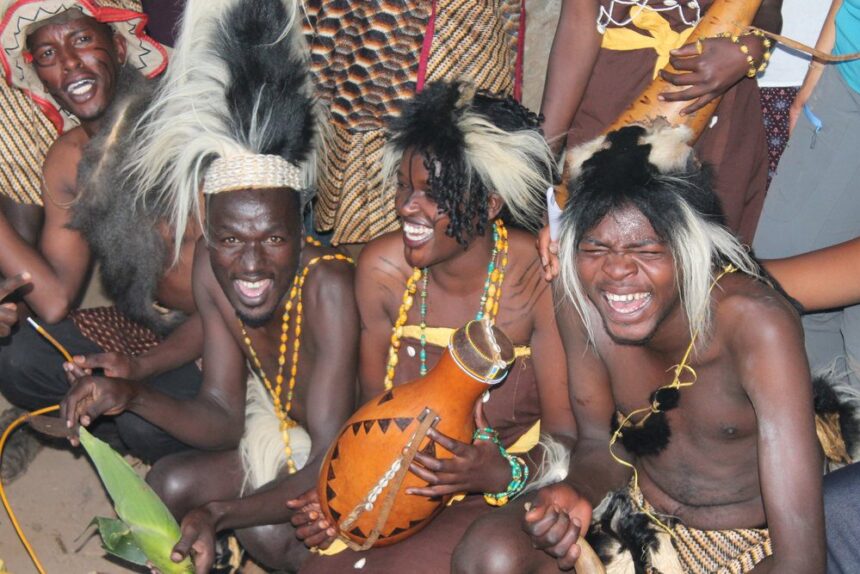
Traditional attire, beadwork, and ornaments are still worn during:
- Weddings
- Cultural festivals
- Community celebrations
- Traditional ceremonies
These garments reflect the community’s rich artistic heritage and cultural identity.
Music and Dance
Music plays a central role in Sabiny culture.
Traditional performances feature:
- Singing
- Drumming
- Rhythmic dancing
- Call-and-response performances
Music accompanies:
- Weddings
- Harvest celebrations
- Birth ceremonies
- Community gatherings
- Cultural festivals
Songs often celebrate bravery, farming, family, and the beauty of Mount Elgon.
Marriage and Family Life
Marriage is regarded as an important union between families.
Traditional ceremonies include:
- Family introductions
- Bridewealth negotiations
- Blessings from elders
- Music and dancing
- Community feasting
Bridewealth, traditionally involving livestock, symbolizes appreciation and strengthens relationships between families.
Today, many families combine customary practices with religious wedding ceremonies.
Cultural Change and Community Well-being
Like many communities, the Sabiny have experienced changes in cultural practices over time. Some customs once associated with the community, particularly female genital cutting, have been widely challenged because of their health and human rights impacts.
Today, community leaders, cultural institutions, women’s groups, religious organizations, and government agencies increasingly promote alternative rites of passage that celebrate cultural identity without causing harm. Many families now mark the transition to adulthood through education, mentorship, music, dance, and community ceremonies.
This evolution reflects the Sabiny community’s efforts to preserve valued traditions while supporting the well-being and rights of girls and women.
Spiritual Beliefs
Historically, the Sabiny believed in a supreme creator and respected ancestral spirits and sacred natural sites.
Today, Christianity is the dominant religion, although aspects of traditional culture continue to influence community ceremonies and family life.
Economic Activities
The Sabiny economy is largely based on agriculture.
Major economic activities include:
- Arabica coffee farming
- Maize cultivation
- Wheat production
- Irish potato farming
- Dairy farming
- Livestock keeping
- Beekeeping
- Trade
- Tourism
The cool climate of Mount Elgon has made the region one of Uganda’s leading producers of high-quality Arabica coffee.
Famous Sons and Daughters
The Sabiny have produced distinguished Ugandans in athletics, education, public service, and politics.
Notable figures include:
- Joshua Cheptegei – Olympic champion and multiple world-record holder in long-distance running.
- Jacob Kiplimo – Olympic medalist and world-class long-distance runner.
- Numerous educators, health professionals, entrepreneurs, and public servants have also contributed to Uganda’s development.
The high-altitude environment of Sebei has helped produce many internationally successful distance runners.
Preserving Sabiny Heritage
Community organizations and cultural leaders continue to promote the Kupsabiny language, traditional music, dances, folklore, and historical knowledge.
Schools, annual cultural festivals, and heritage programs encourage younger generations to appreciate their culture while embracing modern opportunities.
Did You Know?
- The Sabiny are part of the wider Kalenjin cultural and linguistic family.
- Mount Elgon provides ideal conditions for growing premium Arabica coffee.
- Sebei has produced some of Uganda’s greatest long-distance runners.
- Terraced farming is widely practiced on the mountain slopes.
- Kupsabiny is one of Uganda’s recognized indigenous languages.
Quick Facts
| Feature | Information |
|---|---|
| Region | Sebei, Eastern Uganda |
| Language | Kupsabiny |
| Ethnic Group | Southern Nilotic |
| Traditional Leadership | Clan elders |
| Main Economic Activities | Coffee farming, livestock keeping, agriculture |
| Famous Landmark | Mount Elgon |
Conclusion
The Sabiny are a proud highland community whose history is deeply intertwined with the slopes of Mount Elgon. Their language, traditions, music, and agricultural expertise reflect centuries of resilience and adaptation to life in one of Uganda’s most beautiful landscapes.
Today, the Sabiny continue to preserve their cultural heritage while embracing education, innovation, and social progress. Their contributions to agriculture, athletics, and national development have earned them a respected place in Uganda’s diverse cultural mosaic.
Email Us on editorial@nnafrica.com