
Monday, 6 Jul 2026
  • My Feed
  • My Saves
  • History
  • Contact Us
Subscribe
The News Network Africa
  • Home
  • Opinion

    At least seven people killed by army at Ghana’s AngloGold Ashanti mine

    By
    Correspondent

    Anti-Migrant Tensions in South Africa: A Growing Challenge for Unity and Stability

    By
    Hayley Sky

    How Uganda’s economy can withstand global turmoil

    By
    Hayley Sky
    Churchill Nkagumaho

    Feel free to modify any of these to better fit your article’s focus!

    By
    Hayley Sky

    SBG Securities Adds USD Fixed Investment Option For Unit Trust Clients

    By
    Hayley Sky

    Djibouti: Where Africa Meets Arabia at the Gateway to the Red Sea

    By
    Hayley Sky
  • Politics
    South African telescope discovers a giant galaxy that’s 32 times bigger than Earth’s

    South African telescope discovers a giant galaxy that’s 32 times bigger than Earth’s

    By
    nna
    Love, Faith, and Legacy: How African Popes Shaped Christianity and Gave Birth to Valentine’s Day.

    Love, Faith, and Legacy: How African Popes Shaped Christianity and Gave Birth to Valentine’s Day.

    By
    Eric Mafundo
    Kagame threatens SA as SANDF forces remain beleaguered in DRC and peace efforts falter

    Kagame threatens SA as SANDF forces remain beleaguered in DRC and peace efforts falter

    By
    nna
    Senegal’s Pastef Government Faces First Major Strike Over Public Sector Wages

    Senegal’s Pastef Government Faces First Major Strike Over Public Sector Wages

    By
    Hayley Sky
    Kenya’s Cold-Storage Revolution: The Innovation Helping Farmers Fight Food Waste

    Kenya’s Cold-Storage Revolution: The Innovation Helping Farmers Fight Food Waste

    By
    Hayley Sky
    Hidden Strength: How the informal economy is shaping South Sudan’s future.

    Hidden Strength: How the informal economy is shaping South Sudan’s future.

    By
    Reporter
  • Business
    UN rights chief warns worst may be ahead in east Congo conflict

    UN rights chief warns worst may be ahead in east Congo conflict

    By
    Hayley Sky

    Tech Innovations: How African Startups Are Disrupting the Global Market

    By
    Hayley Sky
    Rising Populism Should Not Silence the Call for Reparations, Says African Union Official.

    Rising Populism Should Not Silence the Call for Reparations, Says African Union Official.

    By
    Eric Mafundo
    Volkswagen’s African unit makes record Polo exports to Europe, Asia

    Volkswagen’s African unit makes record Polo exports to Europe, Asia

    By
    nna

    Connecting the Dots: How Reuters Africa Bridges International and Local Perspectives

    By
    Hayley Sky
    Why Burkina Faso’s Junta Leader Is Winning Hearts and Minds Worldwide.

    Why Burkina Faso’s Junta Leader Is Winning Hearts and Minds Worldwide.

    By
    Eric Mafundo
  • Pages
    • Advertise with US

Archives

  • July 2026
  • June 2026
  • May 2026
  • April 2026
  • March 2026
  • February 2026
  • January 2026
  • December 2025
  • November 2025
  • October 2025
  • September 2025
  • August 2025
  • May 2025
  • April 2025
  • March 2025
  • February 2025
  • January 2025
  • December 2024

Categories

  • Agriculture
  • Business
  • Culture
  • Health
  • Lifestyle
  • Minerals
  • News
  • Opinion
  • Politics
  • Sports
  • Technology
  • Travel
  • Uganda
  • 🔥
  • News
  • Politics
  • Business
  • Lifestyle
  • Culture
  • Opinion
  • Travel
  • Minerals
  • Health
  • Uganda
Font ResizerAa
The News Network AfricaThe News Network Africa
  • My Saves
  • My Feed
  • History
  • Travel
  • Opinion
  • Politics
  • Health
  • Technology
  • News
Search
  • Pages
    • Home
    • Advertise with Us
  • Personalized
    • My Feed
    • My Saves
    • History
  • Categories
    • News
    • Business
    • Minerals
    • Culture
    • Opinion
    • Politics
    • Agriculture
    • Health
    • Technology
    • Travel
Have an existing account? Sign In
Follow US
© 2025 The News Network Africa. All Rights Reserved.
The News Network Africa > Blog > Culture > Libya: Where the Sahara Meets the Mediterranean and Ancient Civilizations Still Shape North Africa
Culture

Libya: Where the Sahara Meets the Mediterranean and Ancient Civilizations Still Shape North Africa

Hayley Sky
Last updated: 6 July 2026 16:55
Hayley Sky
Share
Libya: Where the Sahara Meets the Mediterranean and Ancient Civilizations Still Shape North Africa
SHARE

For thousands of years, Libya has stood at the crossroads of Africa, the Mediterranean, and the Middle East. Its vast Sahara Desert, fertile coastal plains, ancient cities, and caravan routes have witnessed the rise and fall of powerful civilizations that helped shape the history of North Africa.

Contents
Why Libya Has Been a Crossroads of Civilizations for Over 3,000 YearsThe Sahara Desert: More Than Endless SandLeptis Magna: A Window into the Roman WorldThe Amazigh: Guardians of an Ancient HeritageDesert Oases That Became Centres of LifeCuisine Inspired by Desert and SeaMusic, Poetry, and Storytelling Across GenerationsThe Mediterranean Coast: Africa’s Northern GatewayA New Generation Preserving HeritageWhy Libya Is One of Africa’s Great Historical Treasures

While modern headlines often focus on Libya’s political challenges, they reveal only a fraction of the country’s story. Beyond the news lies a land of breathtaking Roman ruins, timeless desert oases, vibrant markets, Amazigh traditions, and coastal communities whose heritage stretches back millennia.

- Advertisement -

From the sparkling Mediterranean coastline to the golden dunes of the Sahara, Libya offers one of Africa’s richest combinations of history, culture, and natural wonder. For students, researchers, teachers, tourists, and the African diaspora, it remains a fascinating destination for understanding the continent’s northern gateway.

Why Libya Has Been a Crossroads of Civilizations for Over 3,000 Years

Libya’s strategic location has made it one of Africa’s most important meeting places for civilizations.

- Advertisement -

Ancient Berber (Amazigh) communities were among the earliest inhabitants, followed by Phoenicians, Greeks, Romans, Byzantines, Arabs, and Ottomans, each leaving lasting influences on the country’s architecture, language, cuisine, and traditions.

Coastal cities became thriving centers of trade connecting Africa with Europe and Asia, while caravan routes carried gold, salt, textiles, and knowledge across the Sahara.

This remarkable blend of influences continues to shape Libya’s cultural identity today.

- Advertisement -

The Sahara Desert: More Than Endless Sand

Covering most of Libya, the Sahara is one of the country’s defining landscapes.

Far from being empty, the desert has supported generations of nomadic communities who developed extraordinary knowledge of survival, navigation, and trade.

Ancient caravan routes linked Libya with West and Central Africa, transforming desert oases into bustling trading centers where merchants exchanged goods and ideas.

Today, the Sahara remains a symbol of endurance, freedom, and the deep relationship between people and nature.

Leptis Magna: A Window into the Roman World

Among Libya’s greatest historical treasures is the ancient city of Leptis Magna.

Once one of the Roman Empire’s most prosperous cities, it is renowned for its remarkably preserved amphitheaters, temples, markets, baths, and grand avenues overlooking the Mediterranean.

The city’s ruins offer valuable insight into urban planning, engineering, and commerce in the ancient world.

For historians and archaeologists, Leptis Magna ranks among the most significant archaeological sites anywhere in Africa.

The Amazigh: Guardians of an Ancient Heritage

Long before the arrival of later civilizations, the Amazigh people shaped Libya’s cultural foundations.

Their languages, crafts, architecture, music, and agricultural traditions continue to enrich the country’s heritage, particularly in the western mountains and desert regions.

Traditional Amazigh homes, colorful textiles, silver jewelry, and seasonal festivals reflect centuries of creativity and resilience.

Today, efforts to preserve Amazigh language and culture are helping ensure this ancient heritage remains an important part of Libya’s future.

Desert Oases That Became Centres of Life

Across Libya’s vast desert, oases have served as lifelines for centuries.

Places such as Ghadames developed into flourishing communities where traders, farmers, and travelers found water, shelter, and opportunity.

Often called the “Pearl of the Desert,” Ghadames is famous for its distinctive mud-brick architecture, shaded alleyways, and ingenious design that protects residents from the intense Saharan heat.

These oasis settlements remain remarkable examples of how human ingenuity adapted to one of the world’s harshest environments.

Cuisine Inspired by Desert and Sea

Libyan cuisine reflects the country’s unique geography.

Along the Mediterranean coast, fresh seafood, olive oil, vegetables, and herbs feature prominently, while inland communities rely on grains, dates, lamb, and locally grown produce.

Couscous, bazin, richly spiced stews, and freshly baked bread are staples enjoyed across the country.

Tea is an important part of social life, often served during family gatherings and conversations that reinforce hospitality and friendship.

Meals remain central to celebrations, religious holidays, and community life.

Music, Poetry, and Storytelling Across Generations

Music has long preserved Libya’s cultural identity.

Traditional instruments accompany songs performed during weddings, festivals, and family celebrations, while poetry remains a respected art form throughout the country.

Oral storytelling continues to preserve legends, tribal histories, and moral lessons that connect younger generations with their ancestors.

Across Libya, artistic expression remains an essential way of celebrating both cultural diversity and shared national heritage.

The Mediterranean Coast: Africa’s Northern Gateway

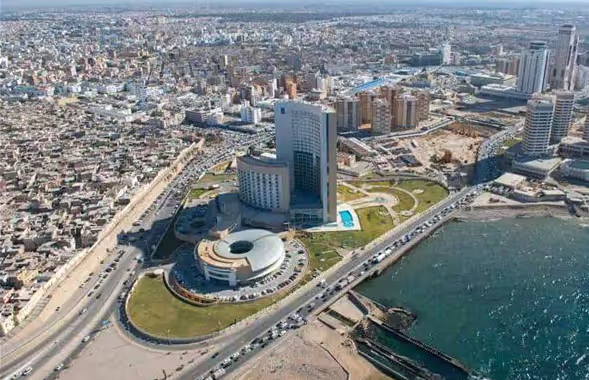
Stretching for nearly 2,000 kilometres, Libya’s Mediterranean coastline has connected Africa with Europe and the Middle East for centuries.

Historic ports welcomed merchants, scholars, and travelers who exchanged goods, languages, and ideas.

Today, coastal cities continue to reflect this rich history through their architecture, cuisine, and cultural traditions.

The sea remains an important source of livelihood while symbolizing Libya’s longstanding role as a bridge between continents.

A New Generation Preserving Heritage

Despite the challenges of recent decades, many Libyans continue working to protect their country’s extraordinary cultural heritage.

Archaeologists, historians, artists, educators, and local communities are documenting traditions, restoring historical sites, and promoting awareness of Libya’s rich past.

Young entrepreneurs and cultural organizations are increasingly using digital platforms to share Libyan history, music, cuisine, and craftsmanship with global audiences.

Their efforts reflect a deep commitment to ensuring that Libya’s heritage endures for future generations.

Why Libya Is One of Africa’s Great Historical Treasures

Libya’s story is far older and richer than the headlines that often dominate international attention.

It is a land where Roman cities still stand beside Mediterranean shores, where ancient caravan routes cross the Sahara, and where Amazigh traditions continue to thrive.

Its extraordinary landscapes, remarkable archaeological sites, and enduring cultural heritage make Libya one of North Africa’s most fascinating destinations for anyone seeking to understand the continent’s history.

For students, researchers, teachers, tourists, and members of the African diaspora, Libya offers a journey through civilizations that shaped not only Africa but the wider world.

From the silence of the Sahara to the waves of the Mediterranean, Libya reminds us that Africa’s northern frontier has long been a meeting place of cultures, ideas, and human achievement.

Email Us on editorial@nnafrica.com
TAGGED:African heritageAmazigh cultureGhadamesLeptis MagnalibyaLibya archaeology.Libya cultureLibya historyLibya traditionsLibya travel guideLibyan cuisineMediterranean AfricaNorth Africa tourismRoman ruins in LibyaSahara Desert
Share This Article
Facebook Whatsapp Whatsapp Telegram Email Copy Link
Previous Article The Sabiny: The Highland People of Mount Elgon and Their Enduring Traditions The Sabiny: The Highland People of Mount Elgon and Their Enduring Traditions

Latest Posts

The Sabiny: The Highland People of Mount Elgon and Their Enduring Traditions
Uganda
The Japadhola: The Bridge Between Uganda and Kenya Through Culture, Language, and History
Uganda
Liberia: How Africa’s Oldest Republic Preserves a Legacy of Freedom, Forests, and Living Traditions
Culture
PowerTel and Paratus Zimbabwe switch on new Digital Highway
News Technology

Opinions

ANUSHKA KARANDE: How Technology Is Creating a Better Future for Africa
Opinion Technology
Africa’s Forgotten War: Why Sudan’s Humanitarian Crisis Deserves the World’s Attention
Opinion Politics
Opinion Piece: Skills will determine the success of East Africa’s LNG ambitions
Opinion
The Silent Crisis Costing Africa Billions: Why Young Professionals Are Leaving Their Dream Jobs
Opinion

You Might Also Like

Why women are getting less sleep than men — and what we can do about it
Lifestyle

Why women are getting less sleep than men — and what we can do about it

By
Hayley Sky
Boxer Anthony Joshua returns to UK after fatal Nigeria car crash
Lifestyle

Boxer Anthony Joshua returns to UK after fatal Nigeria car crash

By
Hayley Sky
Zero tolerance for female genital mutilation, Stilfontein solidarity picket, justice for Eswatini and other key events in civil society
CultureLifestyle

Zero tolerance for female genital mutilation, Stilfontein solidarity picket, justice for Eswatini and other key events in civil society

By
Reporter
The Bahima: Guardians of cattle and Tradition in Western Uganda.
Culture

The Bahima: Guardians of cattle and Tradition in Western Uganda.

By
Eric Mafundo
The News Network Africa
X-twitter Facebook Rss

About US


The News Network Africa: Your instant connection to breaking stories and live updates. Stay informed with our real-time coverage across minerals, culture, politics, business, tech, entertainment, and more. Your reliable source for 24/7 news.

Top Categories
  • News
  • Opinion
  • Politics
  • Tech
  • Health
  • Travel
Usefull Links
  • Advertise with Us
  • Complaint
  • Privacy Policy
  • Cookie Policy
  • Submit a Tip

© The News Network Africa. All Rights Reserved.

Welcome Back!

Sign in to your account

Username or Email Address
Password

Lost your password?