

Guinea has taken a bold step that could reshape not only its mining sector but also influence how African countries benefit from their natural resources.
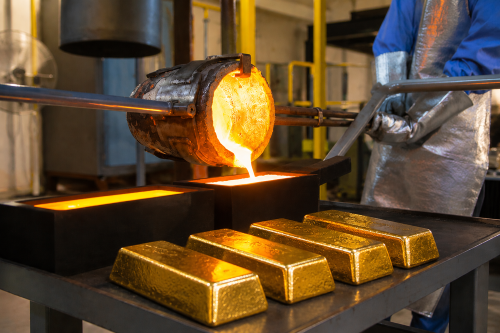
The West African nation has announced a ban on the export of raw gold, requiring more of the country’s precious mineral to be refined and processed locally before it reaches international markets.
Supporters describe the decision as a landmark move toward economic independence.
Critics caution that the transition must be carefully managed to avoid disrupting production and exports.
Whatever the outcome, the policy has already sparked debate across Africa’s mining industry.
Why Gold Matters
Gold is one of Africa’s most valuable natural resources.
Every year, billions of dollars’ worth of gold leaves the continent for international markets.
However, much of that gold is exported in raw or semi-processed form, meaning the highest-value stages of refining, manufacturing, and jewellery production often take place overseas.
As a result, African countries capture only a fraction of the potential economic value of their own resources.
Guinea hopes to change that.
The Goal: More Value at Home
By encouraging domestic refining and processing, the government aims to create skilled jobs, increase tax revenue, and stimulate investment in local industries.
Instead of exporting raw materials, Guinea wants to export higher-value products that generate greater returns for the national economy.
Officials believe the strategy could strengthen industrial development while reducing dependence on commodity exports alone.
A Growing Trend Across Africa
Guinea is not the first African country to pursue value addition.
Countries such as Botswana have expanded local diamond processing, while others are encouraging domestic refining of minerals including lithium, cobalt, and copper.
Across the continent, governments are increasingly asking the same question:
Why should Africa export raw materials while importing expensive finished products?
The debate is becoming central to Africa’s long-term industrialisation agenda.
Opportunities for Employment
Local mineral processing requires engineers, technicians, metallurgists, machine operators, logistics specialists, and other skilled workers.
That means more employment opportunities for young people entering the labour market.
Supporting industries—including transport, manufacturing, finance, equipment maintenance, and education—could also benefit from increased industrial activity.
Challenges Ahead
Turning ambition into reality will require significant investment.
Modern refining facilities are expensive to build and operate.
Reliable electricity, transport infrastructure, technical expertise, and clear regulations will all be essential for success.
Private investors will also need confidence that policies remain stable over the long term.
Without these foundations, implementation could prove difficult.
What It Means for Africa
Guinea’s decision reflects a broader shift taking place across the continent.
Rather than relying solely on exporting raw commodities, many African governments are pursuing industrialisation strategies designed to capture more value from their natural resources.
If successful, this approach could help diversify economies, reduce unemployment, and strengthen manufacturing.
It may also encourage other resource-rich nations to adopt similar policies.
The Global Picture
International demand for gold remains strong, driven by jewellery, technology, and investment markets.
Countries capable of refining and processing their own minerals may be better positioned to compete in global value chains while retaining a greater share of export earnings.
That makes Guinea’s policy important not only for its domestic economy but also for Africa’s place in the global mining industry.
Final Thoughts
Guinea’s ban on raw gold exports is more than a mining policy.
It is a statement about the country’s determination to capture greater value from its natural wealth.
Success will depend on careful implementation, investment, and cooperation between government and industry.
If the strategy works, Guinea could become a model for other African nations seeking to transform mineral wealth into lasting economic development.
For a continent rich in natural resources, the future may no longer lie in exporting what comes out of the ground.
It may lie in building industries that turn those resources into prosperity at home.
Email Us on editorial@nnafrica.com