

The 2026 FIFA World Cup is more than football for Africa.
It is a stage where nations carry the hopes of millions, where every goal becomes a continental celebration, and where every victory challenges old perceptions about African football.
This year’s tournament has already produced unforgettable moments, with African teams competing against some of the world’s biggest football powers. Fans from Cairo to Cape Town, Dakar to Kinshasa, and Accra to Casablanca are following every match with pride.
For many supporters, this is not simply about winning a trophy.
It is about proving that African football has reached a new level.
Africa’s Biggest World Cup Representation
For the first time, Africa has one of its strongest representations at the FIFA World Cup, reflecting the continent’s growing influence in global football.
Countries including Morocco, Senegal, Egypt, Ghana, South Africa, Tunisia, Ivory Coast, DR Congo, Algeria, and Cape Verde have brought excitement, talent, and passionate support to the tournament.
Every match is attracting millions of viewers across Africa, making the World Cup one of the continent’s biggest sporting events of the year.
Morocco Continues to Inspire
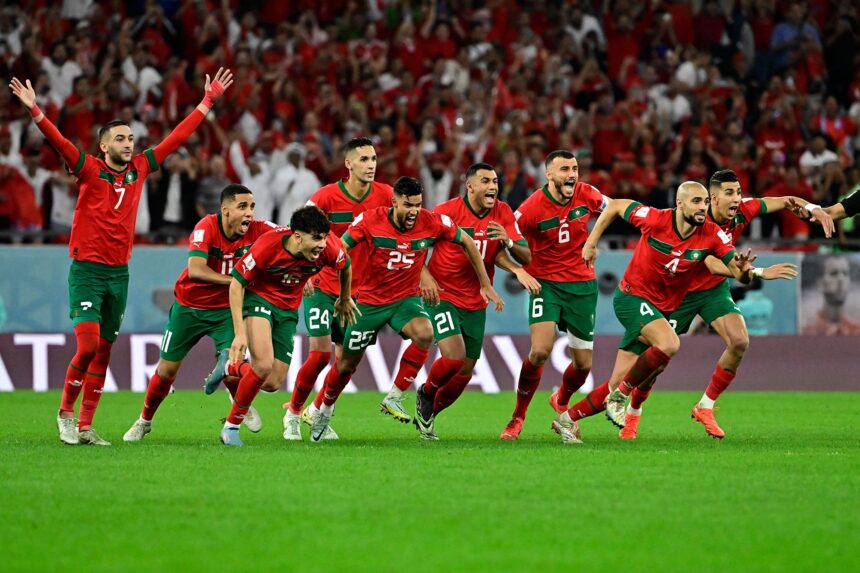
After its historic run to the semi-finals in the 2022 FIFA World Cup, Morocco entered this tournament carrying enormous expectations.
The Atlas Lions are no longer viewed as underdogs.
They are now considered genuine contenders capable of competing with the world’s elite.
Their disciplined defence and technical quality continue to inspire young footballers across Africa.
Senegal’s Never-Give-Up Spirit
Although Senegal suffered a difficult opening defeat against France, the Lions of Teranga showed determination and resilience.
Supporters remain optimistic that the team can recover and fight for qualification as the group stage continues.
New Hope for Emerging Nations
The tournament has also given countries like DR Congo and Cape Verde an opportunity to showcase their talent on football’s biggest stage.
Their participation demonstrates how African football continues to grow beyond its traditional powerhouses.
Across the continent, football academies are producing technically gifted players capable of competing anywhere in the world.
More Than a Game
The World Cup also delivers significant economic benefits.
Restaurants, hotels, sports bars, betting companies, broadcasters, and merchandise sellers across Africa are experiencing increased business as millions of fans gather to watch matches.
Social media has exploded with debates, predictions, celebrations, and unforgettable moments.
Football once again reminds Africa that it shares a common passion that crosses borders and languages.
Challenges Remain
Despite remarkable progress, African football still faces important challenges.
Investment in youth academies, coaching, stadium infrastructure, women’s football, and domestic leagues remains uneven across the continent.
Many of Africa’s brightest talents continue to develop their careers overseas rather than in local leagues.
Strengthening domestic football systems will be essential if Africa hopes to produce future World Cup champions.
The Road Ahead
The tournament is far from over.
Several African teams still have crucial matches ahead that could determine their place in the knockout stages.
Every result matters.
Every point could shape history.
Whether Africa lifts the World Cup this year or not, one thing is already clear: the continent’s footballing reputation continues to grow.
The world is no longer asking whether African teams can compete.
It is asking how soon an African nation will finally become world champion.
For millions of fans across the continent, that dream has never felt closer.
Email Us on editorial@nnafrica.com