

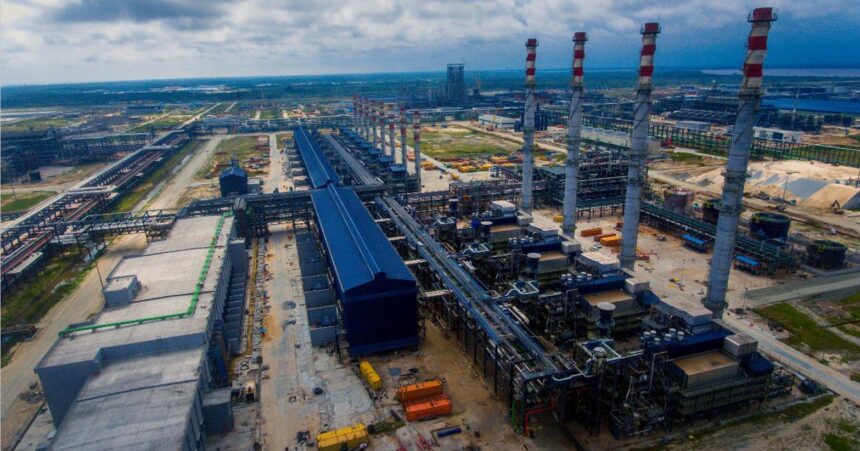
Nigeria’s Dangote Refinery has increased petrol production to 650,000 barrels per day in June 2026, with the first export cargoes leaving Lagos for Ghana, Togo, and Ivory Coast.
The $19 billion refinery, the largest single-train refinery in the world, completed debottlenecking work in May that allowed full capacity utilization. It now processes 650,000 bpd of crude, producing 330,000 bpd of petrol, 244,000 bpd of diesel, and other products.
“This marks the end of Nigeria importing petrol for West Africa,” said Dangote Group VP Devakumar Edwin. “We are now a net exporter.”
Nigeria spent $10 billion annually importing fuel before Dangote began operations in 2024. The refinery’s ramp-up has cut imports by 70% and reduced forex pressure on the naira. Pump prices in Lagos have stabilized at ₦950 per liter, down from ₦1,200 last year.
Exports to neighboring countries started 30 May 2026. Ghana’s Bulk Oil Storage and Transportation Company confirmed receiving 90,000 metric tonnes of Dangote petrol. Ivory Coast and Togo have signed supply deals.
Analysts say the refinery will reshape West Africa’s fuel trade, which was dominated by European imports. Dangote’s location gives it a cost advantage on shipping and reduces lead times from 6 weeks to 5 days.
Challenges remain. The refinery relies on imported crude despite Nigeria being an oil producer, due to pipeline vandalism and underinvestment in upstream fields. Dangote is negotiating direct supply deals with Nigerian producers.
The Nigerian government says increased local refining will create 135,000 jobs directly and indirectly. It has also reduced fuel subsidy spending to near zero, freeing budget space for infrastructure.
If output holds at 650,000 bpd, Dangote could meet all of Nigeria’s fuel demand and export 40% of production. That would make it a key player in Africa’s energy security.
Email Us on editorial@nnafrica.com