

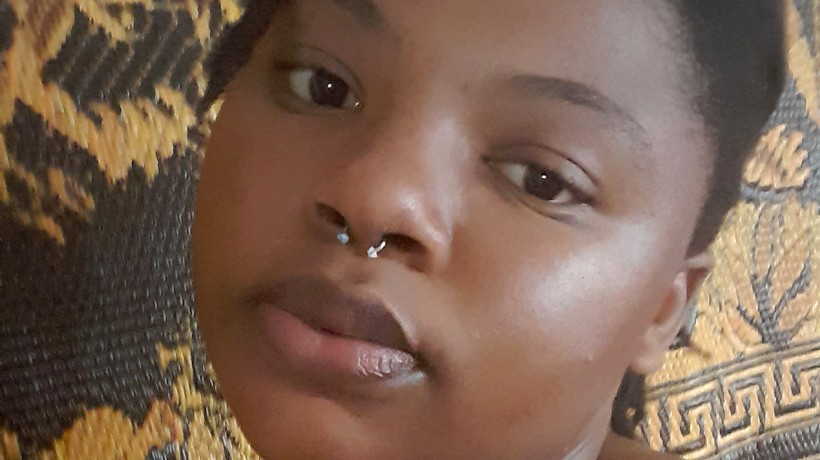
Rethabile Ratsomo said it’s the little things that remind her of her perceived “place” in South African society.
There are the verbal slights and side-eye in workspaces, where she’s been viewed as a B-BBEE hire (The Broad-Based Black Economic Empowerment programme in South African that seeks to advance and transform the participation of black people in the country’s economy) and therefore not capable of doing the work. There are the passive-aggressive comments from colleagues, constantly complimenting her on how well she speaks English. She has lived through the daily microaggressions that form part of her life.
“I am a born-free and despite being born after the advent of democracy in South Africa, my race continues to play a huge role in my being, as a South African,” Ratsomo said, 29, who currently works at the Anti-Racism Network and the Ahmed Kathrada Foundation. “Many people continue to normalise racial discrimination and perpetuate harmful behaviours. Racism remains rife.”
Thirty years since the end of Apartheid, South Africa still grapples with its legacy. Unequal access to education, unequal pay, segregated communities and massive economic disparities persists, much of it is reinforced by existing institutions and attitudes. How is it that racism and its accompanying discrimination continues to hold such sway in this, majority Black populated and Black governed nation?
Racism has deep roots in the economic, spatial and social fabric of this country. It reflects the legacy of oppression and subjugation from apartheid and colonialism. While progress has been made to eliminate the scourge of racism it requires everyone to do their part for it be eliminated, said Abigail Noko, Representative for UN Human Rights Regional Office of Southern Africa (OHCHR ROSA)
“Dismantling such entrenched racist and discriminatory systems requires commitment, leadership, dialogue and advocacy to put in place anti-racist policies that implement human rights norms and provide a framework to help address and rectify these injustices and promote equality,” she added.
Free your mind and the rest will follow
The project of dismantling racist systems in a place like South Africa, must go hand in hand with the process of decolonization – both at an institutional and an individual level, said Professor Tshepo Madlingozi, a Commissioner at the South African Human Rights Commission (SAHRC).
Speaking on Dismantling Racism
South African Human Rights Commissioner Tshepo Madlingozi says decolonizing the mind is one way to dismantle systemic racism in South Africa. Credit: Tshepo Madlingozi
Young people must cast off their parent’s prejudices to combat discrimination and racism, said Samkelo Mkhomi, a born-free, i.e., someone who was born after the advent of democracy in South Africa. Credit: Samkelo Mkhomi
“The government gave real life material meaning to those” divisions, said Tessa Dooms, director of programmes for Rivonia Circle. The spatial differences were given material heft under the Apartheid system that is still affecting populations today. Credit: Tessa DoomsNext
“History has shown that unless you have decolonized your mind, you are going to step into the shoes of the oppressor and oppress other people over and over again,” he said.
Madlingozi’s comments were part of a panel discussion on dismantling racist systems in South Africa, which took place during the Human Rights Festival in Johannesburg in March, which aligns with national Human Rights Day and the International Day for the Elimination of Racial Discrimination. The discussion, sponsored by OHCHR ROSA, had three panellists providing their answers to the overarching question, how can racism present in the “rainbow nation” be dismantled to bring about freedom, equality, and justice for all?
Samkelo Mkhomi, a social justice and equality activist in her 20s, agreed that an internal mindset change was needed, especially among young people. She said she noticed that many of her born-free peers, i.e., someone who was born after the advent of democracy in South Africa, harbour suspicious and distrustful attitudes toward other races. She mentioned a friend who has a distrust of all white people. When Mkhomi asked why, he told her “because of what they did in the past.” She called this deliberate lack of understanding among her peers as hereditary and a big stumbling block in moving forward.
“We have set perceptions and stereotypes that we’ve inherited from family, from social experiences, experiences that are not our own,” Mkhomi said. “And we’ve used that as a blueprint to view other people. Once you can get rid of that as young people, I feel like we can start moving on and dismantling racism.”
Madlingozi suggested one way to do this could be to not only focus on individual racist incidences, but also to bring more awareness, and push for policies in institutions that deconstruct current ways of working.
“What matters is, have we dismantled the institutions, the cultures that perpetuate racism,” he said. “Because unless you do that, you’ll have Black people, you will have a Black government that will continue to perpetuate racism because that is the nature of institutionalised racism. So yes, let’s focus on individual human rights. Let’s focus on social justice, but where it matters the most is structural institutionalized oppression.”
Casting a long shadow
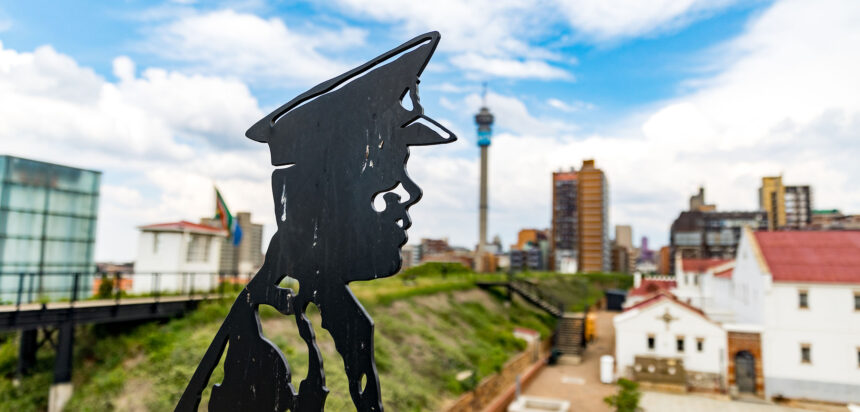
Open cells in Constitution Hill. Under Apartheid, Constitution Hill was a prison, that at one point housed many political prisoners, including Nelson Mandela, Oliver Tambo, Winnie Madikezela-Mandela and Albertina Sisulu. Credit: OHCHR ROSA
The scars of Apartheid run deep, leaving a legacy of segregation, discrimination and inequality. This is evidenced by the stark economic disparities in the country. A 2022 World Bank report on inequality in southern Africa gave South Africa the unfortunate distinction of being the most unequal country in the world.
The report stated that 80 percent of the country’s wealth was in the hands of 10 percent of the population. And it is the Black population who factor the most into the poorest category. The report places the blame for the income disparities directly on race.
“The legacy of colonialism and Apartheid rooted in racial and spatial segregation continues to reinforce inequality,” the report states.
The spatial divide mirrors the economic one.
The evil genius of Apartheid was the segregation project, as it allowed the Government to not only separate people based on arbitrary categorisations, but through this create material differences between the communities to reinforce the idea of actual racial differences, said Tessa Dooms. These racial classifications also encouraged the idea that the different groups needed to compete for basic human rights, dignity and economic opportunities, she added.
“The Apartheid government didn’t just give people categories, they gave real live material meaning to those categories,” said Dooms, Director of Programmes for Rivonia Circle during the panel discussion. “As long as those categories mean something in the world, we still have work to do, to undo Apartheid, to undo colonialism, to decolonize.”
To do this, Dooms recommended practical vision as to what a decolonized South Africa would look like, being very specific about the results wanted. She also called on the privileged groups to do the heavy lifting of helping to create more equality. Until those with privileges work to broaden access to them, the cycle will continue, Dooms added.
“We cannot leave creating a more just world to the people who are most affected by injustice,” she said. “It’s not fair, it’s not right and it won’t work.”
Taking concrete action
Globally, South Africa’s post-Apartheid long walk to freedom has garnered an international reputation as a leader in global efforts to combat racism. In 2001, South Africa hosted the World Conference Against Racism, Racial Discrimination, Xenophobia and Related Intolerance (WCAR), which resulted in the Durban Declaration and Programme of Action (DDPA). The DDPA is a roadmap, providing concrete measures for States to combat racism, discrimination and xenophobia and related intolerance.
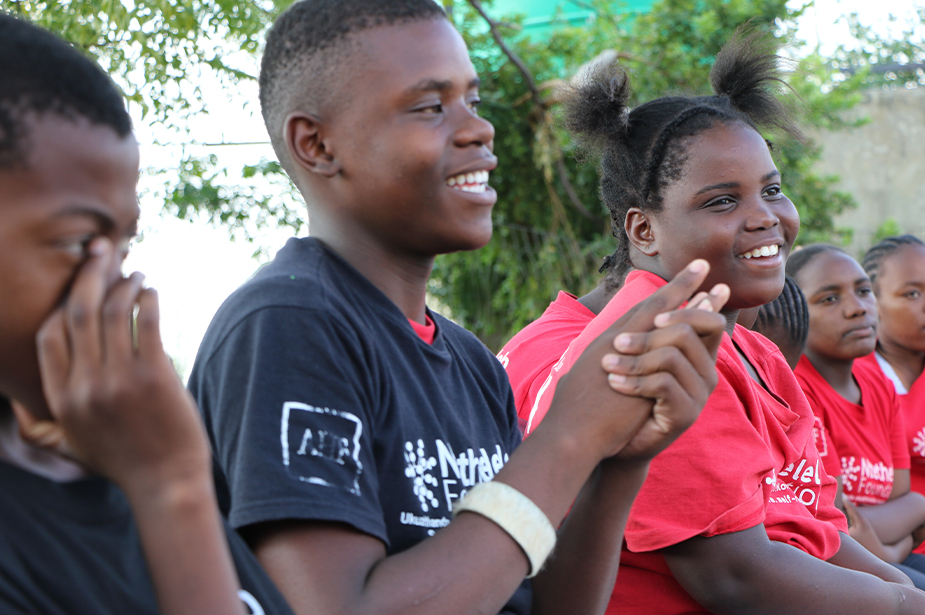
A group of students learn more about human rights during a discussion. Credit OHCHR ROSA
One of the big recommendations was to have each country create its own National Action Plan (NAP). The plan is a means through which governments locally codify their commitment to taking action, with concrete steps on how they will combat racism. South Africa launched its plan in 2019, with OHCHR ROSA providing technical assistance. This assistance took many forms including participation in the consultations that led up to the final NAP and helping to set up support structures for its implementation, and support for research and other work to help develop systems for data collection on issues related to the NAP.
“Human rights play crucial role in dismantling racism by providing a framework for addressing and rectifying historical injustices, promoting equality, and ensuring that all individuals are treated fairly and with dignity,” Noko said
Various other sectors have pioneered innovative approaches to chip away at Apartheid’s remnants. Corporate and governmental diversity programmes, such as B-BBEE, and the Employment Equity Amendment Bill of 2020, aim to promote diversity and equity in the workplace.
Ratsomo of the Ahmed Kathrada Foundation said these and other efforts to address the underlying issue of what to do about that still exists in the country are key to taking it down. Everyone must learn, speak up, and act on racism, racial discrimination and related intolerances, she said.
“The beginning point to tackle and dismantle systemic racism is to understand that being anti-racist does not only mean being against racism,” she said. “It also means being active and speaking out against racism whenever you see it happen. The more we understand racism, the easier it becomes to identify when it happens, which allows us to speak out and act against it when we see it happening.”
Email Us on editorial@nnafrica.com