

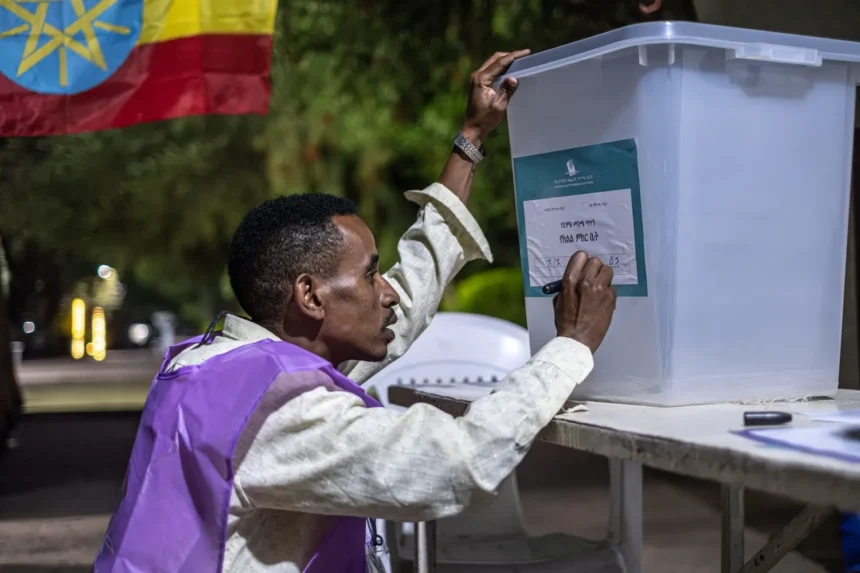
As millions of Ethiopians prepare to head to the polls, the country’s 2026 election is attracting attention far beyond its borders.
With a population exceeding 130 million people, Ethiopia is Africa’s second-most populous nation and one of the continent’s most influential political and economic powers. What happens during this election will not only affect Ethiopia’s future but could also influence broader conversations about democracy, governance, stability, and political reform across Africa.
For observers around the world, the stakes could hardly be higher.
A Country at a Critical Moment
Ethiopia enters the election at a pivotal time in its history.
Over the past decade, the country has experienced significant political change, economic transformation, and periods of intense conflict. These developments have generated both optimism and uncertainty among citizens seeking stability and progress.
The election comes as Ethiopians continue debating some of the most important questions facing the nation:
- How can political stability be maintained while preserving democratic freedoms?
- How can economic growth create more opportunities for young people?
- How can national unity be strengthened in a country with diverse ethnic, cultural, and regional identities?
- What role should institutions play in ensuring transparency and accountability?
The answers to these questions will shape Ethiopia’s future long after election day.
Why the World Is Watching
Ethiopia’s importance extends far beyond its borders.
The country hosts the headquarters of the and plays a central role in regional diplomacy, peace initiatives, and economic cooperation.
As one of Africa’s largest economies and a major political actor in the Horn of Africa, developments in Ethiopia often have regional consequences.
Investors, diplomats, development organizations, and neighboring governments are all closely monitoring the election process.
A peaceful and credible election could strengthen confidence in Ethiopia’s institutions and reinforce its position as a key regional leader.
Conversely, political instability could have implications for trade, investment, security cooperation, and regional development efforts.
The Power of Africa’s Youth Vote
One of the most significant factors in this election is the country’s youthful population.
Like many African nations, Ethiopia has a rapidly growing generation of young citizens entering adulthood.
Many young voters are focused on issues such as:
- Employment opportunities
- Education quality
- Digital innovation
- Economic growth
- Infrastructure development
- Government accountability
This generation is increasingly connected through technology and social media, giving young people greater access to information and a stronger voice in public debates.
Political parties seeking success at the ballot box must engage with the concerns of younger voters who will help determine the country’s future direction.
Democracy Under the Spotlight
Across Africa, elections are often viewed as important tests of democratic institutions.
Citizens, civil society groups, election observers, and international organizations will be watching closely to assess voter participation, transparency, and the overall conduct of the electoral process.
Successful elections are not measured solely by who wins.
They are also judged by whether citizens have confidence in the process, whether institutions function effectively, and whether political competition remains peaceful.
For Ethiopia, these factors may be just as important as the final results themselves.
Economic Questions Dominate the Campaign
Beyond politics, economic concerns are expected to play a major role in voter decision-making.
Like many countries around the world, Ethiopia faces challenges related to inflation, employment, investment, and economic modernization.
At the same time, the country possesses enormous economic potential.
Its large population, expanding urban centers, growing technology sector, and strategic location have attracted increasing international interest.
Many voters want leaders who can deliver practical improvements in living standards while maintaining economic stability.
For businesses and investors, election outcomes may provide important signals about future economic policy and development priorities.
What This Means for Africa
The significance of Ethiopia’s election extends beyond one country.
Across the continent, many nations are navigating similar challenges involving governance, economic transformation, youth engagement, and institutional reform.
The election will be closely studied by policymakers, academics, and political observers seeking insights into how African democracies continue to evolve.
A peaceful process could strengthen confidence in democratic institutions and demonstrate the ability of large, diverse societies to manage political competition through elections.
It could also encourage greater civic participation among young Africans who increasingly view voting and public engagement as tools for shaping national development.
More Than an Election
Ultimately, Ethiopia’s 2026 election is about more than politics.
It is about the future direction of one of Africa’s most important nations.
It is about how citizens choose to address complex challenges through democratic processes.
And it is about the example Ethiopia sets for a continent whose population, economy, and global influence continue to grow.
Regardless of the outcome, the election represents a defining moment.
For Ethiopia, it is an opportunity to strengthen institutions, build public trust, and chart a path forward.
For Africa, it is another chapter in the ongoing story of democratic development across a rapidly changing continent.
The world will be watching. But most importantly, millions of Ethiopians will be deciding the future they want to build.
Email Us on editorial@nnafrica.com