

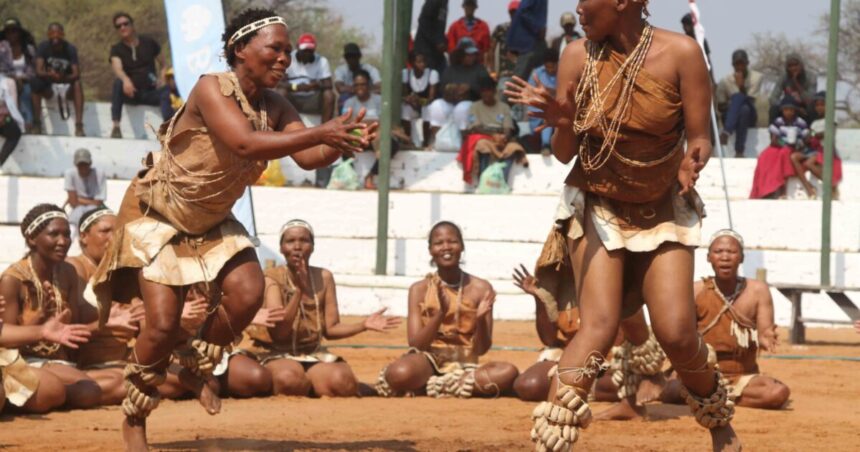
Under the acacia trees of Ghanzi District in western Botswana, the annual Ghanzi Festival returned this month, celebrating the culture of the San people, also known as Basarwa, in the heart of the Kalahari Desert.
For three days, San elders, youth, and visitors from Botswana, Namibia, and South Africa gathered for traditional dances, storytelling around fires, bow-and-arrow demonstrations, and craft markets. The festival’s theme this year was “Footprints of the First People.”
“The world thinks we are disappearing,” said Kelebogile Nconco, a San elder and performer. “Ghanzi shows we are here, we remember, and our children are learning.”
Highlights included the trance dance, used historically for healing, and oral storytelling sessions where elders recounted creation myths and survival strategies for desert life. Younger participants performed fusion pieces blending traditional rhythms with modern beats — a nod to cultural evolution.
Botswana’s government has supported the festival as part of broader efforts to preserve indigenous heritage and promote community tourism. Crafts sold at the event — beaded jewelry, leatherwork, ostrich eggshell art — provide direct income to San artisans.
Tourism operators in Ghanzi now offer cultural village visits alongside Kalahari game drives. Visitors can spend a night in a traditional settlement, learn tracking skills, and eat meals prepared over open fires.
The festival also addressed challenges: land rights, education access, and language preservation. Panels brought together San leaders, NGOs, and government officials.
International attendance is growing. Tour companies from Germany and the US now include Ghanzi in “cultural safari” packages. The goal, organizers say, is not spectacle but exchange.
As night fell and fires were lit, the sound of hand-clapping and rhythmic singing carried across the desert. For many first-time visitors, it was their first real encounter with one of Africa’s oldest living cultures.
Email Us on editorial@nnafrica.com