


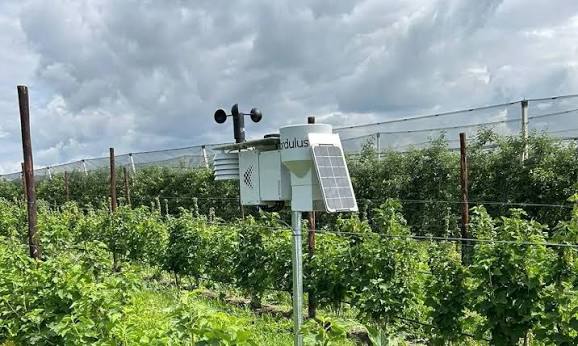
Affiliation: ZARI AGRI, TogoAcross Africa, agriculture has increasingly adopted digital tools, from weather applications and online platforms to artificial intelligence and digital marketplaces. This trend reflects growing recognition of technology’s potential to improve productivity and help farmers respond to climate and economic pressures.Yet the central question is no longer how many applications and platforms are available. It is whether they help farmers make better decisions at the right time.
Ultimately, the value of digital agriculture should not be measured only by the volume of data collected or displayed, but by how effectively that information can be translated into practical action on the farm.
FROM WEATHER FORECASTS TO AGRICULTURAL DECISIONS
Weather information is among the most widely used digital services in agriculture because it affects almost every stage of farm operations. Its value, however, lies not simply in displaying temperature or the probability of rain, but in explaining what those conditions may mean for decisions farmers need to make.
Consider an illustrative situation: a farmer is preparing to apply a pesticide to control a crop pest, while the forecast indicates a possibility of rain within the next few hours. Knowing when rain may arrive is not enough. The farmer also needs to understand whether the available rain-free interval is sufficient for the particular product to perform as intended, taking account of its formulation, active ingredient and label instructions.
If rain occurs before the product has become sufficiently rainfast, treatment effectiveness may be reduced and money, time and inputs may be wasted. The precise interval varies by product; there is no universal rule that applies to every pesticide.
Similar considerations apply to fertilisation, irrigation, foliar spraying and harvesting. Appropriate timing depends on the crop, its growth stage, soil conditions, the type of input and local weather. The challenge is therefore to turn climate information into practical guidance relevant to the farmer’s actual situation.
In this context, answering “What should I do now?” can be more valuable than presenting raw weather data alone.
DIAGNOSIS MUST COME BEFORE THE SOLUTION
African agriculture faces a broad range of challenges, including pests, plant diseases, nutrient deficiencies, water-management problems and rising production costs.
Often, the difficulty is not simply the absence of products or possible solutions, but identifying the real cause of a problem.
Yellowing leaves, for example, may result from a nutrient deficiency, root damage, water stress or disease. Treating the wrong cause can increase losses rather than solve the problem.
Accurate diagnosis is therefore fundamental to any agricultural advisory system, whether traditional or digital. A useful recommendation should not begin by promoting a particular product. It should begin by understanding the crop, symptoms, growing conditions and available evidence, then identifying an appropriate course of action. Where the evidence is insufficient, the farmer should be advised to seek field inspection or qualified local expertise.
ARTIFICIAL INTELLIGENCE AND THE ROLE OF HUMAN EXPERTISE
Artificial intelligence tools can analyse agricultural images, respond to farmers’ questions and provide preliminary information quickly. These capabilities create opportunities to extend access to agricultural knowledge and support more producers.
However, the reliability of such systems depends on the quality of their data and the accuracy and completeness of the information supplied by users.
AI can support decision-making and accelerate access to knowledge, but it does not remove the need for human expertise. Nor does it replace field verification when a case is complex or requires direct inspection. Models that combine digital tools with local agricultural knowledge are more likely to provide useful and responsible support over time.
DIGITAL PLATFORMS: CONNECTING INFORMATION AND SERVICES
Digitalisation has encouraged the development of platforms that bring together services that were previously fragmented or difficult for farmers to access. These may include weather information, agricultural guidance and training, digital marketplaces, advisory support, and tools for managing farm operations.
ZARI AGRI, a platform based in Togo, is working to bring agricultural information, weather information, a digital agricultural marketplace and guidance content together in one environment.
The services currently available on the platform include weather information, the agricultural marketplace and an agricultural guidance blog. The blog provides guidance on crop pests and agricultural practices. Its coverage is still being expanded; in particular, content on poultry and cattle production is not yet comprehensive. More extensive voice-based guidance and support in local languages are areas for future development, rather than services that should be regarded as fully available today.
The broader lesson is that a platform’s value depends not on the number of features it lists, but on whether those features are reliable, accessible and useful in farmers’ everyday work.
THE COSTS AND CHALLENGES OF DIGITAL AGRICULTURE
Expanding digital agriculture requires more than building an application. It involves continuing costs and operational responsibilities, including software development and maintenance, hosting and data infrastructure, content updates, technical support, and access to qualified agricultural expertise.
For farmers, the cost of mobile data, the availability and reliability of connectivity, access to suitable devices and confidence in using digital tools can all affect adoption. These barriers vary considerably between countries and between rural and urban areas, making locally adapted delivery important.
Platforms must also maintain trustworthy information and clear limits on what digital tools can determine. Weather forecasts are probabilities, not guarantees, and conditions may differ from one field to another, even within the same locality. A digital recommendation should take account of uncertainty and should not replace product-label instructions, field observation or qualified advice.
These requirements make sustainability a central issue. A platform may be launched quickly, but keeping it useful requires continuous investment in infrastructure, people, content quality and user support.
TOWARDS DIGITAL AGRICULTURE THAT REFLECTS FARM REALITIES
African strategies for digital agriculture recognise the potential of technology to improve productivity, strengthen food security and help farming communities respond to climate change.
But this transformation will not be achieved simply by making more data available. It depends on connecting information to the decisions farmers make every day.
A farmer does not only need to know that rain is expected tomorrow. The farmer needs to understand whether a planned spraying operation should be postponed, whether a fertiliser application should be adjusted, or whether harvesting should take place earlier. Similarly, knowing that an agricultural product is available in a marketplace is only a first step; farmers also need reliable information to assess whether it is suitable for their needs and how it should be used safely.
The greatest challenge for digital agriculture in Africa is therefore not producing more information, but turning information into knowledge that can be applied responsibly in fields and markets.
When technology succeeds in doing this, it becomes more than another digital interface. It becomes a practical tool that can support farmers and contribute to the future resilience of African agriculture.
EDITORIAL NOTE
The examples concerning pesticide application, fertilisation and farm operations are illustrative scenarios intended to explain the importance of connecting information with decisions. They are not presented as documented ZARI AGRI field results.
REFERENCES
1. African Union Commission. African Union Digital Agriculture Strategy and Implementation Plan 2024–2030 (2024).
https://www.google.com/url?q=
2. McCampbell, M. Food and Agriculture Organization of the United Nations (FAO). Agricultural digitalization and automation in low- and middle-income countries: Evidence from ten case studies (2022).
https://www.google.com/url?q=
3. Global Center on Adaptation. Adaptation Insights: A Practical Roadmap for Scaling Digital Climate Advisory Services in Africa (23 February 2026).
https://www.google.com/url?q=
4. Overholt, W. A. and Castleton, K. L. Pesticide User’s Guide: A Handbook for African Extension Workers. USAID (1989).
https://www.google.com/url?q=
Email Us on editorial@nnafrica.com