

For more than three years, Sudan has been trapped in a brutal conflict that has devastated cities, displaced millions, and pushed one of Africa’s largest nations to the brink of collapse.
While wars in other parts of the world dominate international headlines, Sudan’s crisis has quietly become one of the deadliest humanitarian disasters of the 21st century.
Across the country, families have lost their homes, children have been forced out of school, hospitals have shut their doors, and entire communities have been uprooted by relentless fighting.
Yet despite the scale of the suffering, many Africans believe the crisis has not received the global attention it deserves.
A Nation Torn Apart
Sudan’s conflict has transformed once-busy cities into battlefields.
Fighting between rival armed forces has destroyed critical infrastructure, disrupted food supplies, and forced millions of people to flee in search of safety.
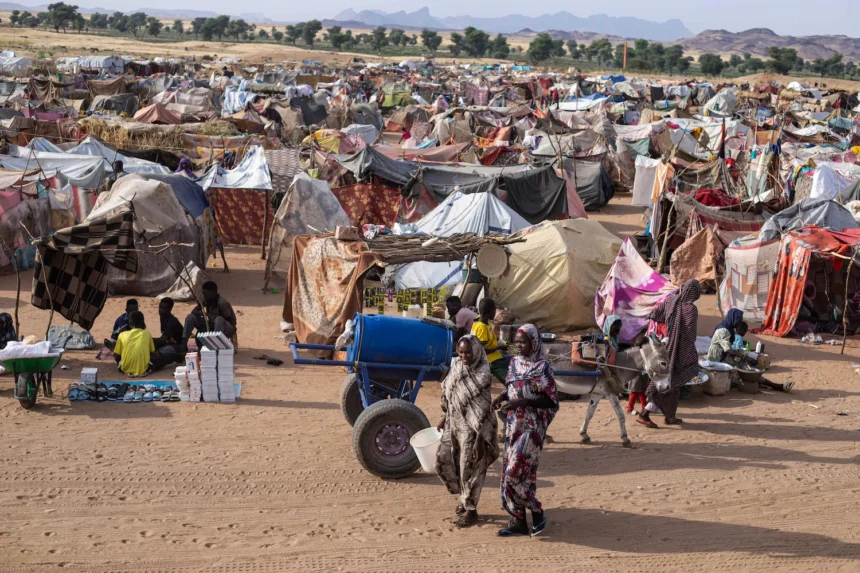
Some families have crossed into neighbouring countries such as Chad, South Sudan, Egypt, Ethiopia, and the Central African Republic, while many others remain displaced inside Sudan.
The result is one of the largest displacement crises in modern African history.
Hunger Is Becoming a Second Enemy
Beyond the violence, another tragedy is unfolding.
Food shortages have worsened as farms have been abandoned, markets disrupted, and humanitarian aid blocked in some areas.
For many families, finding enough food has become a daily struggle.
Aid organisations warn that millions of people are facing severe food insecurity, with children among the most vulnerable.
Malnutrition is rising, healthcare services have been disrupted, and access to clean water remains a challenge in many communities.
The Human Stories Behind the Numbers
Statistics alone cannot capture Sudan’s suffering.
Behind every number is a mother searching for food.
A father trying to protect his family.
A child whose education has been interrupted by war.
Doctors continue treating patients despite shortages of medicine.
Volunteers risk their lives to deliver food and emergency assistance.
Ordinary Sudanese citizens have shown extraordinary resilience despite unimaginable hardship.
Why Sudan Matters to Africa
Sudan is strategically located at the crossroads of North and East Africa.
Instability there affects regional security, trade routes, migration, and diplomatic relations across the continent.
Neighbouring countries have absorbed large numbers of refugees, placing additional pressure on already limited resources.
The conflict also threatens long-term development efforts in one of Africa’s most important regions.
Can Peace Still Be Achieved?
Regional organisations, African leaders, and international partners have repeatedly called for ceasefires and renewed dialogue.
However, lasting peace will require more than temporary agreements.
It will depend on political compromise, accountability, humanitarian access, and sustained international support for rebuilding communities.
Sudan’s future will ultimately be shaped by the willingness of its leaders to place the interests of civilians above military ambitions.
Why the World Cannot Look Away
Humanitarian crises often fade from public attention as new global events emerge.
But ignoring Sudan will not make the conflict disappear.
Without greater support, millions more people could face hunger, displacement, disease, and prolonged instability.
The longer the war continues, the more difficult and expensive recovery will become.
Africa’s Responsibility
The Sudan crisis is not only an international concern—it is an African concern.
The continent has repeatedly demonstrated its ability to respond to major challenges through diplomacy, peacekeeping, and humanitarian cooperation.
African governments, regional institutions, businesses, and civil society all have a role to play in supporting peace and recovery.
Final Thoughts
Sudan’s people have endured years of conflict, loss, and uncertainty.
Yet amid the destruction, many continue to hope for a future defined not by war, but by peace, stability, and opportunity.
Their resilience is remarkable.
Their suffering is undeniable.
And their story deserves far more attention than it receives.
As Africa looks toward a future of greater unity and development, helping Sudan rebuild may become one of the continent’s most important tests of solidarity.
Email Us on editorial@nnafrica.com