

South Africa is once again facing a rise in anti-migrant tensions, sparking concern across Africa and drawing attention from governments, human rights organizations, and international observers. The recent wave of protests and hostility toward foreign nationals has highlighted deep social and economic frustrations while raising important questions about human rights, national identity, and regional cooperation.
Many South Africans argue that undocumented migration contributes to unemployment, crime, and pressure on public services such as healthcare, housing, and education. With unemployment remaining among the highest in the world, particularly among young people, frustration has grown in many communities struggling with poverty and limited economic opportunities. In this environment, migrants are often blamed for problems that have more complex economic and political causes.
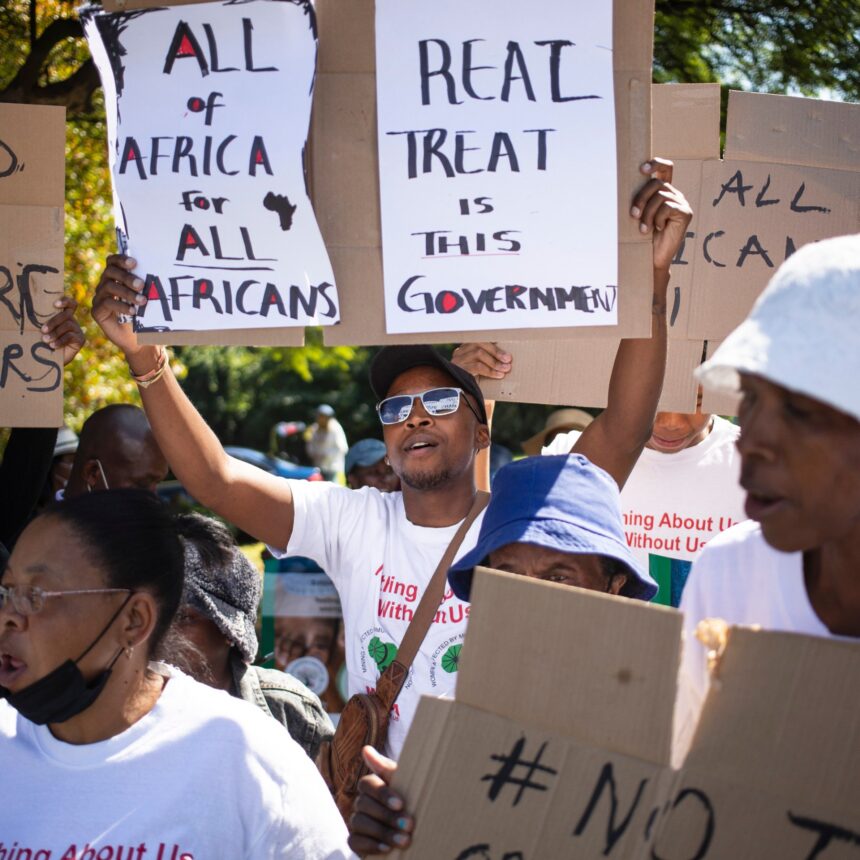
Recent demonstrations in major cities including Johannesburg, Pretoria, Durban, and Cape Town have called for stricter immigration controls and the removal of undocumented migrants. Some protests have remained peaceful, but others have been accompanied by intimidation, violence, and attacks against foreign nationals and their businesses. Human rights organizations have warned that such actions risk encouraging xenophobia and undermining South Africa’s constitutional commitment to equality and human dignity.
The impact of these tensions has extended beyond South Africa’s borders. Countries such as Ghana and Nigeria have expressed concern for the safety of their citizens living in South Africa. Ghana recently organized voluntary repatriation flights for hundreds of its nationals who wished to return home due to growing fears and uncertainty. These developments have created diplomatic challenges and renewed discussions about African solidarity and freedom of movement across the continent.
South African President Cyril Ramaphosa has publicly condemned violence directed at migrants, emphasizing that such actions do not represent the values of most South Africans. At the same time, government officials have acknowledged public concerns regarding illegal immigration and border management. Authorities have held urgent meetings with community groups, political organizations, and civil society representatives in an effort to reduce tensions and prevent further violence.
The current situation is not entirely new. South Africa has experienced recurring outbreaks of anti-foreigner violence since the end of apartheid. Major attacks in 2008 resulted in dozens of deaths and the displacement of thousands of people. Similar incidents have occurred periodically over the past two decades, suggesting that the issue is rooted in longstanding social and economic challenges rather than isolated events.
Critics argue that blaming migrants distracts attention from deeper structural problems such as inequality, corruption, inadequate service delivery, and slow economic growth. Many migrants operate small businesses, contribute to local economies, and fill labor gaps in various sectors. Supporters of migrant rights therefore stress the importance of addressing economic hardship without resorting to discrimination or violence.
As South Africa works to balance immigration management with the protection of human rights, the country faces a difficult challenge. Finding solutions will require stronger economic policies, effective border administration, community dialogue, and a commitment to combating xenophobia. The way South Africa responds to these tensions will not only affect its own social stability but also influence its relationships with neighboring countries and its role as a leader on the African continent.
Email Us on editorial@nnafrica.com