


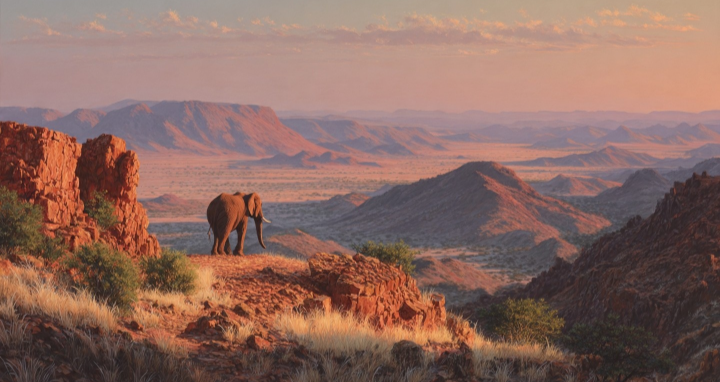
Namibia has opened the Desert Elephants Conservation Route in Damaraland, a new tourism circuit designed to protect Africa’s only desert-adapted elephants while giving visitors ethical wildlife encounters without off-road driving.
The 280km route connects five community conservancies — Torra, Sorris Sorris, ≠Khoadi-//Hôas, Doro !Nawas, and Anabeb — across northwestern Namibia. Launched 1 June 2026 by the Ministry of Environment and Namibia Tourism Board, it limits vehicles to designated tracks and mandates local guides from conservancy communities.
Desert elephants are genetically distinct from savanna elephants. They walk farther for water, have wider feet for sand, and strip bark from mopane trees. Fewer than 150 remain in Namibia’s Kunene region, making them highly vulnerable to poaching and habitat loss.
“We built this route around the elephants, not around tourist demand,” said conservancy chairperson Uazenga Uazuku. “No off-road driving. No night drives. Visitors learn tracking from San guides who’ve followed these herds for generations.”
Tourism here is low-volume, high-value. Camps like Camp Kipwe and Damaraland Camp now require advance booking and cap guests at 16. Revenue goes directly to conservancy funds used for anti-poaching patrols, water point maintenance, and school fees for local children.
The route includes three main viewing zones: Ugab Riverbed, Huab River valley, and Palmwag area. Guides use VHF radios to share elephant locations without GPS tracking, reducing stress on herds. Visitors are briefed on behavior: no sudden movements, engines off, and minimum 50m distance.
Early data shows impact. In 2025, zero elephant poaching cases were recorded in participating conservancies, down from 3 in 2024. Human-wildlife conflict dropped 22% as farmers received compensation for crop damage through tourism revenue.
Ethical safari operators praised the model. “This is what conservation tourism should look like in 2026,” said a Wilderness Safaris guide. “Fewer vehicles, more meaning. Guests leave understanding why these elephants matter to the people who live with them.”
For travelers, the experience is raw. Dusty roads, ancient rock engravings at Twyfelfontein nearby, and the chance to see elephants dig for water with their trunks. No luxury lodges on the route itself — accommodations are community-owned tented camps with solar power.
Namibia Tourism Board markets the route to visitors prioritizing conservation over checklist tourism. “If you want 50 animals per drive, go elsewhere,” a board spokesperson said. “If you want to understand how desert elephants survive, come here.”
Bookings opened May 2026 and July-August slots are already 70% full. The government plans to expand the model to lions and rhinos in other conservancies if elephant numbers stabilize.
For Namibia, this route proves tourism can fund survival — for elephants and the communities that protect them.
Email Us on editorial@nnafrica.com