

Uganda’s Ministry of Health has confirmed 9 cases of Ebola Bundibugyo virus disease and 1 death as of 29 May 2026, with all confirmed cases recorded in Kampala and Wakiso districts. No confirmed cases have been reported in Kassanda or Mubende districts in the current outbreak.
The update comes after the World Health Organization declared the DRC-Uganda outbreak a Public Health Emergency of International Concern on 17 May 2026. The strain involved is Bundibugyo virus, one of the less common Ebola variants for which no approved vaccine or specific treatment currently exists. Fatality rates for Bundibugyo are estimated at 30% to 50%.
Dr. Diana Atwine, Permanent Secretary at the Ministry of Health, said Uganda’s first case was an imported infection involving a 59-year-old Congolese man who died at Kibuli Muslim Hospital in Kampala on 14 May 2026 after presenting with respiratory distress, fever, and bleeding symptoms. The case was confirmed by testing at the Central Public Health Laboratory in Wandegeya. The body was returned to DRC the same day.
Subsequent surveillance identified 8 additional confirmed cases in Kampala and 1 in Wakiso. WHO reported on 29 May 2026 that Uganda had 9 confirmed cases and 1 confirmed death, with 906 suspected cases under investigation across the DRC-Uganda region.
Health officials clarified that reports linking new cases to Kassanda and Mubende districts are not supported by current data. Kassanda and Mubende were epicenters of Uganda’s 2022 Sudan Ebola outbreak, which recorded 143 cases and 55 deaths. The Mubende District COVID-19 and Ebola Task Force recently denied claims of lockdowns and said suspected cases from the district tested negative for Ebola.
*Response and containment*
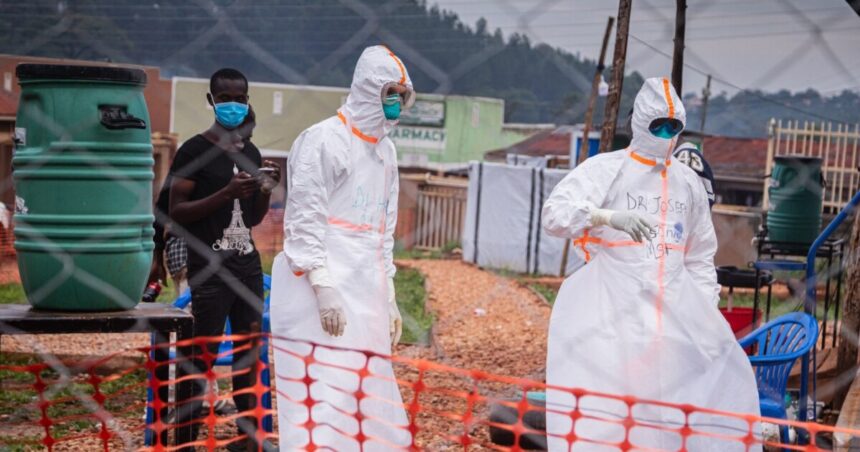
The Ministry of Health has activated national and district response structures. Teams have been deployed for screening, surveillance, and rapid response at official and informal border points, especially along the western border with DRC. A mobile laboratory has been set up at Bwera Hospital, and isolation arrangements plus infection prevention measures are in place at high-risk facilities.
WHO Director-General Tedros Adhanom Ghebreyesus visited Bunia in Ituri Province, DRC on 30 May 2026 and urged communities to practice safe burials, warning that bodies of Ebola victims remain highly contagious. He also called on countries to avoid travel bans, saying restrictions make response harder and discourage transparency.
Africa CDC is coordinating with Uganda and DRC authorities to interrupt transmission and reduce cross-border spread. WHO has convened experts to review candidate treatments and vaccines for Bundibugyo virus, though clinical trials and deployment will take time.
*Public advice*
The Ministry of Health is urging residents in Kampala, Wakiso, and border districts to maintain a high index of suspicion. Symptoms include fever, fatigue, muscle pain, headache, vomiting, and unexplained bleeding. Residents have been told to report suspected cases early and avoid contact with sick persons.
Health workers have been advised to follow safety precautions, including use of personal protective equipment. One high-risk contact linked to the index case has been isolated, and all other contacts are under quarantine and daily monitoring.
Uganda last declared an Ebola Sudan outbreak over in January 2023 after 5 months of containment. The current Bundibugyo outbreak is being driven by transmission in eastern DRC and imported cases to Uganda. Cross-border trade and movement continue to complicate containment efforts.
NNAfrica will update as the Ministry of Health releases daily situation reports.
Email Us on editorial@nnafrica.com