


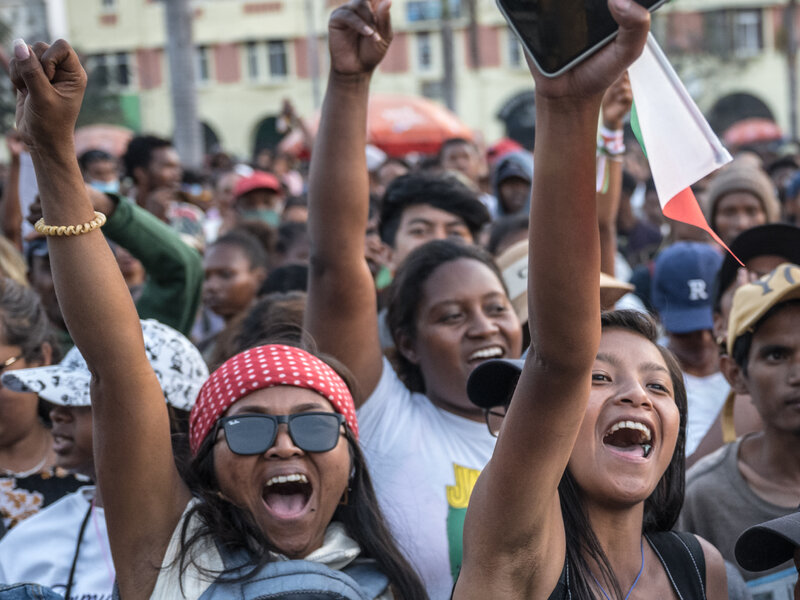
A generation raised on smartphones, social media, and instant access to information is beginning to reshape politics across Africa.
From Nairobi to Lagos, Kampala to Johannesburg, young Africans are increasingly using platforms such as TikTok, X, Instagram, and Facebook not only to entertain themselves but also to organize, mobilize, and challenge political systems they believe no longer reflect their aspirations.
In many countries, what starts as a hashtag online is now capable of becoming a national conversation—or even a nationwide protest.
The rise of Africa’s Generation Z may be one of the most important political developments on the continent today.
The Most Connected Generation in African History
Africa has the world’s youngest population.
According to United Nations estimates, more than 60 percent of Africans are under the age of 25. At the same time, smartphone ownership and internet access have expanded dramatically over the past decade.
This combination has created a generation unlike any before it.
Unlike their parents, many young Africans do not rely on traditional newspapers, radio stations, or television networks for information. Instead, they consume news directly through social media feeds, influencers, podcasts, and independent digital creators.
As a result, political narratives can spread across borders within hours.
A video recorded in one city can influence discussions thousands of kilometers away.
When Hashtags Become Movements
Across Africa, digital activism has evolved from online awareness campaigns into real-world political action.
Young people have used social media to expose corruption allegations, document police abuses, coordinate demonstrations, and pressure governments to respond to public concerns.
The speed of modern communication means that political events are no longer controlled solely by official statements.
Citizens can livestream events, share evidence, and challenge narratives in real time.
For many young Africans, social media has become a tool of accountability.
Political leaders who once communicated through press conferences and state broadcasters now find themselves responding to viral videos, online campaigns, and digital pressure from millions of users.
Why Gen Z Is Different
Previous generations often entered politics through established institutions such as political parties, unions, or community organizations.
Generation Z operates differently.
Many young activists are issue-driven rather than party-driven.
They are more likely to organize around specific concerns such as unemployment, corruption, education, governance, climate change, internet freedom, or the cost of living.
This flexibility allows movements to grow quickly.
Without centralized leadership structures, campaigns can spread organically through social networks, making them harder to predict and, in some cases, harder to contain.
The result is a new form of civic participation that relies on digital connectivity rather than traditional political hierarchies.
The Economic Frustration Behind the Activism
While social media provides the platform, economic realities often provide the motivation.
Across the continent, millions of young people face challenges including unemployment, underemployment, rising living costs, and limited economic opportunities.
Many are highly educated but struggle to find jobs that match their qualifications.
Others are navigating economies transformed by automation, artificial intelligence, and changing labor markets.
As frustrations grow, digital platforms offer an outlet for expression and organization.
Political discussions that might once have remained private now unfold publicly before massive audiences.
Young Africans increasingly expect transparency, accountability, and responsiveness from leaders—and they are using technology to demand it.
A New Relationship Between Citizens and Leaders
Governments across Africa are adapting to this new reality.
Many political leaders now maintain active social media accounts, participate in online discussions, and engage directly with younger audiences.
Election campaigns increasingly focus on digital outreach.
Political messaging is being redesigned for short-form videos, livestreams, and online communities.
At the same time, the rapid spread of information has created new challenges.
Misinformation, manipulated content, and online polarization can complicate public debate.
The same tools that empower citizens can also be used to spread false information.
This has sparked ongoing discussions about regulation, digital rights, and the future of online political engagement.
The Future of African Politics
Experts believe the influence of Generation Z will continue to grow throughout the coming decade.
As more young Africans reach voting age, enter the workforce, and assume leadership roles, their priorities are likely to shape national agendas.
Issues such as job creation, technology, entrepreneurship, education reform, digital infrastructure, and government accountability may become increasingly central to political debates.
The political leaders who succeed in the future may be those who understand not only how to govern but also how to communicate effectively with a digitally connected population.
More Than a Social Media Trend
The rise of political engagement among Africa’s youth is not simply a social media phenomenon.
It reflects deeper changes taking place across the continent.
A younger, more connected, and more informed generation is demanding a greater role in shaping the future.
Whether through voting, advocacy, entrepreneurship, or activism, Generation Z is increasingly making its voice heard.
The platforms may be digital, but the impact is becoming impossible to ignore.
Across Africa, politics is changing.
And much of that change is being driven by a generation that grew up with a smartphone in its hand and a determination to influence the world around it.
Email Us on editorial@nnafrica.com